Showing posts with label novels. Show all posts

19 April 2026

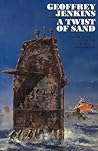
A Twist of Sand: a novel set in Namibia 65 years ago

A Twist of Sand

A Twist of Sand by Geoffrey Jenkins
My rating: 4 of 5 stars

I first read A twist of Sand about 60 years ago, before I ever went to Namibia, so because that is the setting, it played a big part in my preconceptions. It is set in the Skeleton Coast, the dry north-western part of Namibia, then known as South West Africa, and ruled by South Africa. The only other thing I had read about it was set in the same area, it was a piece in a children's encyclopedia about the wreck of the Dunedin Star on the same coast. When I saw a copy of the book in a second-hand bookshop, I thought it would be interesting to read it again, after having been in Namibia.

It is the story of the captain of a trawler operating out of Walvis Bay, Geoffrey Macdonald, who is asked by a man he takes an immediate dislike to, Dr Albert Stein, if he can charter his boat to take him up to the Skeleton Coast, an the vague pretext that he is searching for an unusual beetle.Because of his past criminal activity, we discover that Geoffrey Macdonald isn't even his real name.

A Twist of Sand was the first novel by Geoffrey Jenkins to be published, and when I read first read it, soon after publication, I enjoyed it, and thought it was quite good. I read a few of his later novels, and thought they were rather flat by comparison. On rereading it, I still enjoyed it, but became aware of things about it that I missed on the first reading. For one thing, the plot is as full of holes as a Swiss cheese. The protagonist is just as much an immoral criminal as the villain. That might not be a bad thing, in some ways, it makes the book perhaps more believable than those in which the good guys are too good and the bad guys too bad.

I first went to Namibia in 1969, just 10 years after the book was published, so the country would not have changed a great deal in that time. I got a job with the Department of Water Affairs, which took me to to most parts of the country within my first three months there. and I am pretty sure that in those three months I saw more of Namibia than most people who were born there saw in their life time. In the month I spent with Water Affairs (before being fired for suspect associations with the Anglican Church and the Christian Institute) I had been to Lüderitz in the south-west (including the Koichab Pan in the prohibited diamond area that Jenkins writes about); to Kamanjab in the northwest, and had driven down the dry beds of the Hoanib and Hoarusib Rivers, experienced a break-down in a Jeep in the Kaokoveld (the dreaded Skeleton Coast that Jenkins writes about); and gone to Rundu and Mukwe and camped on the banks for the Okavango River. On these journeys, which lasted for a week to 10 days, we camped out every night, and took a trunk of tinned food to eat on the way. Any tins left over at the end of the trip looked like rugby balls and had their labels rubbed off from bouncing over rough roads and tracks.  So I know that quite a lot of what Geoffrey Jenkins said about the country was inaccurate. 

At one point in the story he has his characters going up the dry bed of the Cunene River, but it is, in fact, one of the few perennial rivers in Namibia. All the perennial rivers in Namibia are on its borders -- the Kunene (Cunene if you're in Angola), the Okavango and the Orange. All the rivers wholly within the country are seasonal (my job at Water Affairs involved servicing instruments to measure the depth of the water in the rivers when they did flow). For any one interested, you can find more descriptions of journeys in some of the remoter areas of Namibia here.

I read some of the other reviews on GoodReads, and noted that some of the reviewers said that the book was "dated" because of the racism and sexism displayed by the characters. But at that time quite a lot of the white people in Namibia were racist or sexist or both, and that was perhaps one of the more accurate portrayals in the book. he, like The violence and criminality of the main characters in the story are perhaps exaggerated; if there were characters like that back then I didn't meet them, but the racism and sexism were not exaggerated. After I was sackedand she transformed the  from Water Affairs I worked for the time on the Windhoek Advertiser, and a South African journalist, Willie Lamprecht, came to work as the assistant editor. His wife Madeleine took over the women's page, and she was a feminist, though not one spoke of feminism back then, we said rather that she was into women's liberation, and she transformed the women's page from being full of cosy housekeeping tips into pointing out how women, including black women, were overworked and underpaid. This did not go down well with the establishment at the time, and Willie and Madeleine Lamprecht were sacked after a few months.

Jenkins contrives to give the impression that the Kaokoveld was virtually uninhabited, yet if anyone entered it without a permit the police would be on to them within 24 hours. In the desert areas along the coast it was largely uninhabited, but there were people living in most places though the population was sparse. And though the police were not quite as efficient as Jenkins suggests, they did nevertheless arrest people for being there without permits -- my wife's great-uncle, Frederick Alwyn Greene, served time in prison for being in that part of the world without a permit, and he, like the characters in the story, seems to have lived on the wrong side of the law for most of his life. 

In spite of its shortcomings, however, I still enjoyed the book on a second reading. It was a toss-up whether to give it 3 stars or 4, and in the end I thought it deserved 4.


View all my reviews

29 January 2026

Mistborn: The Final Empire -- book review

Mistborn: The Final Empire (Mistborn, #1)

Mistborn: The Final Empire by Brandon Sanderson
My rating: 3 of 5 stars

I think a couple of people recommended this book, probably at one of the literary coffee klatsches we had before Covid put an end to them. it is somewhat reminiscent of A Game of Thrones in that it deals with political rivalries and conspiracies, But whereas A Game of Thrones deals with rivalries between different kingdoms, in this one the rivalry is between aristocratic families in the same empire.

In The Final Empire there is also a clear class division between the privileged nobles and the oppressed underclass. In that respect it seemed to be a kind of parable of the old Rhodesia, with a great contrast between the privileged nobles and the oppressed underclass, the skaa.

I didn't like it as much as A Game of Thrones, and it was only after about 500 pages (of 643) that I began to feel sympathy for any of the characters. Perhaps it was partly because I don't like the genre much -- books where the heroes have superpowers of some sort, which sets them apart from other people. In this case it is due to the ability of some people to consume and "burn" metal, with different kinds of metal enhancing different abilities. Those who could do this were called "Mistborn", and there are some whose abilities are limited to one metal only, who are called Mistings. In addition there are Obligators, who form a kind of bureaucratic class, and a group of enforcers, called Inquisitors, who also have special superpowers.

Those who like superheroes with superpowers will probably enjoy it more than I did. 

Oh, and, for what it's worth, you can click here to read my review of A Game of Thrones. And (spoiler alert) I gave that series up halfway through the second book. It was just too much. 

View all my reviews

11 May 2023

The Island by Victoria Hislop -- book review

The Island

The Island by Victoria Hislop
My rating: 4 of 5 stars

This book is really about two islands, the bigger island of Crete, and the small island of Spinalonga, just off its north-eastern coast, which, in the time that the story opens, is used as a leper colony. It is also a book about family history, especially of two families that live on the coast of Crete opposite Spinalonga. Giorgias, the paterfamilias of the Petrakis family, is a kind of go-between -- he operates the ferry between Plaka, the village on the Cretan shore, and the lepers' island.

The book is full of description: description of Cretan life, society and customs, description of leprosy and its effects, physical, psychological and social. Where it describes things I know about, it seems pretty accurate, so I assume that the accuracy extends to things that I didn't know about before reading it. It seems to me that part of the purpose of the book was to describe these things, and inform the reader about them. The problem I found with the book, though, is that the description tended to dominate the story, so that the story became a kind of embellishment to the description, rather than the description being a setting for the story. In some places, therefore, the story becomes unconvincing, and the plot seems contrived. When things seem to be going well for the characters, and it seems they are all going to live happily ever after, disaster has to strike, and just when everyone starts to have a good time, something must go wrong. A kind of diabolus ex machina, as it were.

The story covers four generations of the families, and begins when Alexis Fielding, of the youngest generation, goes from London to Crete with her boyfriend, whose unattractiveness is becoming more and more evident to her. She decides to visit her mother's home village at the other end of the island, and, encouraged by her mother, visits her grandmother's best friend, who tells her the family saga, which takes up most of the book. In the family story, each generation has kept secrets from the next, for reasons that are never adequately explained. The symptoms and treatment of leprosy are explained in some detail, but the symptoms and secrets of the family malaise are not.

I first learned about leprosy at school; being a church school we had evangelistic meetings on Sunday evenings with invited speakers, and one of the regular speakers, who spoke about once a year, was Mr Ford of the Mission to Lepers, which later changed its name to the Leprosy Mission -- so I was interested to see that The Island was not at all squeamish about using terms like "lepers" rather than some euphemism like "people living with leprosy". Mr Ford told us about the (then fairly recent) discovery of a cure for leprosy, and distributed little plastic money boxes to collect money for the lepers, labelled "SOS", which stood for send over sufones -- the drugs used to treat leprosy. Though the drugs were effective, they were expensive, and many poor people could not afford them. Much of this information is given in the book, and in that way it reads a bit like a documentary.

Other things that seemed to be fairly accurately described were the rites and ceremonies of the Orthodox Church, and the place they seemed to hold in the life of the people and in community life generally. 

It was from such things that it seemed to me that the information given in the story was generally accurate. It was just that the documentary side and the story side did not seem to be very well integrated, which is why I gave it four stars rather than five.


View all my reviews

02 July 2021

She plays with the darkness

She Plays with the Darkness

She Plays with the Darkness by Zakes Mda
My rating: 5 of 5 stars

Zakes Mda tells the truth about southern Africa, in that he gives a good picture of life and what makes people tick in various parts of the subcontinent; in this case, Lesotho. People sometimes distinguish between "character-driven" and "plot-driven" novels, and this one is definitely character driven.

The protagonists are the ambitious materialistic Radisene, who is always pursuing get-rich-quick schemes, and his mystical rather other-worldly sister Dikosha. They grew up in the mountain village of Ha Samane, and Zakes Mda paints a picture of village life which one cannot help but feel is authentic (Mda, though born in South Africa, grew up in such a village in Lesotho when his parents became political refugees). Like most small rural communities, Ha Samane thrives on gossip, and everyone knows everyone's business, with the exception of Radisene, who moves to the capital Maseru as soon as he leaves school. And Dikosha, who lives in a world of her own, with people of the past.

There are other memorable characters too. There is Sorry My Darlie, the professional soccer player who incites Radisene's envy and ambition with his affluent lifestyle, but he is also consumed by a hopeless unrequited love for Dikosha. There is the policeman, Trooper Motsohi, whose fortunes rise and fall usually in opposite cycles to Radisene, and also with the political changes in Lesotho, which are punctuated by coups. So when Trooper Motsohi is in the ascendant, Radisene's fortunes decline, but when the wheel turns their positions are reversed, and as the story progressed I was constantly reminded of the Tarot card of the Wheel of Fortune, which seemed to apply to the lives of many of the characters.

I remember the 1970 coup in Lesotho, when Prime Minister Leabua Jonathan, on discovering that he had lost an election, got the army to seize power and keep him in power. At the time we thought it was Greek-style democracy, as a group of colonels had seized power in Greece three years earlier in similar circumstances. This was featured in the film Z. A couple of years later the same thing happened in Chile. There was a saying, "Where there's a coup, there's a Colonel" and we used to speak of "Colonelissimo in Excelsis Leabua Jonathan". But what we didn't realise at the time was the extent of repression of the the ordinary citizens of Lesotho, which Zakes Mda brings out in his book.

It is a rather sad book, as we follow the lives and fortunes (and misfortunes) of the main characters, but also there is the feeling of life going on, seed-time and harvest, births and funerals, continue as people appear on the scene and depart.

View all my reviews

13 November 2020

Horror as a genre

Horror has long been assumed to be a literary genre. We all know what horror is -- or do we? A couple of years ago I reviewed a book on horror as a genre (see here Horror as a literary genre (review) | Khanya), and the author failed to come up with a satisfactory definition.

My introduction to horror literature came at the age of 9, when I read a book called Uncle Arthur's Bedtime Stories, which belonged to my cousin. I found most of the stories absolutely horrific. See here Children’s literature: fantasy or moral realism?

Later I developed a taste for horror | Khanya after reading an anthology of short stories called Detection, Mystery, Horror edited by Dorothy Sayers.

Then I read my first full-length "horror" novel, Dracula. I read various books described as "horror", many of them compilations of short stories, some good, some dreck. I also read a few longer novels classified as "horror"; one of the best of them was Stephen King's zombie story, Pet Sematary. But what was the horror genre? I wasn't sure.

I read a few books about the horror genre -- see here for my reviews of some of them Horror as a literary genre (review) | Khanya, which gave no satisfactory definition of horror at all, and Danse Macabre: monsters in literature and life | Khanya by Stephen King, where he did define monsters, but do they define "horror" as a genre? Lots of books have monsters of various kinds, but we don't classify them all as "horror" -- The Hobbit, for example.

Then comes a page on GoodReads celebrating the horror genre. But are all the books listed there really "horror"? 50 Most Popular Horror Novels on Goodreads - Goodreads News & Interviews:

For Horror Week, Goodreads set out to reveal the most popular horror stories. To create our list, we focused on the books that have been added the most to Goodreads members' shelves.

From literal monsters to purely psychological terrors, these are tales of madness and pandemonium, retribution and absolution. Long heralded as the "Master of Horror," Stephen King reigns supreme, with five books on our list, but his son Joe Hill is not far behind, nabbing four spots. And along with classics from Mary Shelley and Edgar Allan Poe, Robert Kirkman's end-of-the-world comic, The Walking Dead, made the cut as well as an award-winning children's ghost story, The Graveyard Book, from Neil Gaiman.

I've come to the conclusion that horror, as a genre, is confined to short stories, and even there it is often combined with other genres. In longer works, like full-length novels, horror is an element, but does not a genre make. In The Lord of the Rings there are horror elements, at the gates of Moria, when Frodo encounters Shelob and so on. But these do not make it a book in a horror genre.

Among short stories, Stephen King's "The Jaunt" or "The Mist" are horror, but they can also be classed as science fiction. The stories in the Horror section of Dorothy Sayers's anthology were definitely horror, but in most of the longer works that end up being classified as horror the actual horrific episodes are usually no longer within the larger works than a standalone horror short story.

10 November 2020

Madame Bovary

Madame BovaryMadame Bovary by Gustave Flaubert
My rating: 4 of 5 stars

Looking for something to read during the Covid lock-down, with all the public libraries closed, when I found this in a second-hand bookshop I bought it, mainly because I thought I had seen it on one of those "books to read before you die" lists.

The blurb, however, did not sound promising -- the fantasies of a bored small-town bourgeois housewife did not sound particularly interesting. Nevertheless I started to read it.

What hooked me first was the style. Even in translation, Gustave Flaubert's descriptions -- of settings, people, their thoughts and emotions -- were brilliant. So I read it slowly, a chapter at a time, and then went off to read something else. It seemed to be the best way to read it, to savour the prose style.

It was only about three-quarter5s of the way through that I began to get hooked into the plot, and thought I must finish this book before I read anything else. The book has been around long enough that there must be spoilers everywhere, but it should still be possible to avoid them.

It reminded me of The Great Gatsby, which I read 60 years ago, and so have largely forgotten, but what stuck with me about it was that fantasy love can be so much more powerful than real love, and that one's fantasies of a person can grow until the real person becomes disappointing. And this is similar in a way to what happened to Emma Bovary in this story. 

One of the things I've been thinking quite a lot about recently is the advice given to writers of fiction that characters need to have goals -- see here On writing: conflict and goals in fiction | Khanya. Well, Emma Bovary certainly has goals, though she might find them hard to articulate to herself, but the main one is defined in the US Declaration of Independence as "the pursuit of happiness". And one of the questions this novel raises is which is the goal -- happiness, or its pursuit.

 View all my reviews

26 August 2011

In the beginning Time magazine created the heavens and the earth

The other day on Good Reads, my attention was caught by this:

To Kill a Mockingbird by Harper Lee1984 by George OrwellThe Lord of the Rings by J.R.R. TolkienThe Catcher in the Rye by J.D. SalingerThe Great Gatsby by F. Scott Fitzgerald
Time Magazine's All-Time 100 Novels

I had a look at it and was slightly puzzled at some of the choices, in particular some of the books that weren't there. No Jane Austen? No Dickens? No Conrad?

Instead there were a whole lot of books I'd never heard of, which seemed odd choices for an "all-time" list.

At the end came the explanation:


Full List - ALL TIME 100 Novels - TIME: ALL TIME 100 Novels

TIME critics Lev Grossman and Richard Lacayo pick the 100 best English-Language novels from 1923 to the present


Clearly, in the beginning Time magazine created the heavens and the earth, and time itself. Anything before 1923 was outside time and so did not count.

That must be an all-time record for hubris.


29 November 2010

In the dark: book notes

In The DarkIn The Dark by Mark Billingham

My rating: 3 of 5 stars


A run-of-the-mill crime novel.

A pregnant London police officer is on maternity leave, and her boyfriend, also a police officer, is doing things that have little relation to his everyday duties. I found the first hundred pages, which set the scene, rather dull, and at several points contemplated abanding the book. But then the story picks up and becomes more interesting as one gets involved with the remaining characters. To say uch more would give away too much of the plot.


View all my reviews

07 August 2008

Evocation of a Durban childhood

Yesterday I went to the Unisa library and found a novel by Barbara Trapido, called Frankie and Stankie. I saw it on the end of a shelf and was intrigued by a review quote on the cover that said, "There aren't many novelists whose stories one doesn't want to read, but Barbara Trapido is one of them." It seemed a strange enough recommendation, so I took it out.

In the evening I read the Barbara Trapido book, and read bits aloud to Val, because it was a very good evocation of a Durban childhood, and actually some of the people were real too -- it mentioned people I knew or knew of, like Ken and Jean Hill, who were members of the Liberal Party, and Eileen Krige, the anthropologist, whom I had heard of. I checked the cover blurb again, and found that it was not what I thought it was -- it said "There are very few novelists whose books one doesn't want to end", not "doesn't want to read", so I'd taken it out under false pretences. But I was glad I had; it brought back a lot of childhood memories, like this

Dinah continues to be a non-eater throughout her childhood. When one of her dad's colleagues visits with a packet of biscuits, he says they're 'for Lisa to eat and Dinah to play with. The biscuits are called Iced Zoological but the girls call them Animal Biscuits. Each biscuit is a scalloped rectangle with pastel icing on the top and an animal piped on to it in a contrasting colour. There are yellow giraffes on rose-pink icing and white tigers on sky-blue icing.

And this:

By eight Lisa is judged too big for the sleigh-ride through Santa's grotto in Greenacre's department store, and has to walk around to the exit to collect her present from Santa, just as Dinah comes helter-skeltering to conclusion in a cloud of fake snow and piped jingle bells.

Both Val and I remember the sleigh ride in Greenacres, though it belonged to Father Christmas rather than Santa; but that could be explained in the book by Lisa and Dinah's father being Dutch. And then

The school wash basins are all furnished with shiny pink chunks of slimy carbolic soap that look like sections of human lung.

I haven't seen Lifebuoy soap for years, but its appearance after being left in a wet soap dish can never be forgotten.

I think I spotted a few anachronisms, but they were minor ones: Cadbury's Crunchies appeared later on the scene than the time described in the book, as was the girl Julia Painting being bitten by a shark.

The name of the author, Barbara Trapido, sounded vaguely familiar, so I Googled, and found she was born in the same year as me, 1941, so it's no wonder her evocation of post-war Durban as seen through the eyes of a child was so familiar. I also checked my diary, and found I had actually met her once, on 19 August 1973:

In the afternoon there was an incredible party where there were 12 kids and 19 people altogether in the house, having separate little tea parties. Andy Argyle arrived with her children and Barbara Trapido, and Roger Aylard came round with two of his boys, and Gill Browne was there with her children. In spite of the numbers, it was amazingly peaceful, and it could hardly be noticed that so many people were
there.

And at the time I was banned, and not supposed to attend any social gatherings. Of course it was my landlady's gathering, not mine, but still. And at that time my landlady's children also attended the Berea Road Girls School, described in detail in the book.

LinkWithin

Related Posts with Thumbnails