Showing posts with label modernity. Show all posts

23 April 2026

Christianity and Civilization

When Western missionaries came to southern Africa in the 19th century to spread the gospel of Christ, they soon discovered a problem. The culture of the people they were preaching to was premodern, and the gospel they preached had, comparatively recently, been contexualised into the culture of Western modernity. The book to read on this encounter is Of Revelation and Revolution: Christianity, Colonialism, and Consciousness in South Africa by John and Jean Comaroff. Several missionaries studied the culture of the people they went to, but the Comaroffs were among the few that also studied the culture that the missionaries came from, which shaped their outlook and the way they responded to premodern cultures. 

One response of these 19th-century Western missionaries was to say that before Africans could be Christianised, they must first be civilised. The gospel they had brought had been contextualised to deal with the problems of Western modernity, problems that most Africans did not have. Therefore they must be taught to exchange their premodern problems for modern ones, ones that the Western gospel had been adapted to solve, and the way to do this was to civilise the Africans. 

The Westerners thought it important to distinguish between elements in African cultures that were compatible with Christianity, and those that weren't. They were often not as critical of elements in their own culture that were incompatible with Christianity. Western culture had undoubtedly been influenced by Christianity -- see Western civilisation and Christian values. By the middle of the 20th century the apartheid government of South Africa was claiming that it represented and was the defender of "White Western Christian Civilization", and that was the society that I grew up in -- see Christianity, Western Civilization, and me.

I've read quite a bit on this topic recently, indicating that quite a lot of people are concerned about it, and so I'm trying to bring some of the things I've read together in a traditional blog post -- traditional in the sense of a weB LOG -- an annotated log of web sites visited. Some of these are things I've written, and some have been written by others. 

One of the better ones I've seen, and also one of the most recent, is Against Christian Civilization by Paul Kingsnorth, who also quotes something that could perhaps summarise the whole theme:

It is my personal belief, after thirty-five years experience of it, that there is no such thing as “Christian civilization.” I believe that Christianity and modern civilization are opposed and irreconcilable, and the spirit of Christianity and of our ancient religion is essentially the same.

For something else on similar lines see Inculturation, indigenisation, syncretism and cultural appropriation. I also heard Thorsten Marbach speaking at TGIF[1] about Paul Kingsnorth's book Against the Machine, which I have not been able to read yet, but you can catch Thorsten's talk here. I discovered that Paul Kingsnorth had recently become an Orthodox Christian.

I have also written something on Orthodox Mission in the 21st Century, which deals with similar themes.

I will be adding more material and links to this post.   


__________

Notes & References

1. TGIF (Thank God It's Friday) meets early on alternate Fridays in the cities of Johannesburg and Tshwane, and someone speaks on some topic relating to Christianity in the modern world, followed by questions and discussion. Some of the talks have been recorded, and you can find them here.

08 October 2025

Modernised Christianity in premodern Africa

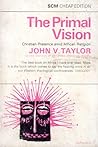
The Primal Vision

The Primal Vision by John V. Taylor
My rating: 5 of 5 stars

This is one of those life-changing books, which changed my attitude to a lot of things, and taught me things that proved useful in later life.

It is part of a series of books on Christian presence among other religions -- in this case the religions of sub-Saharan Africa. John V. Taylor, a British Anglican, served in East Africa, and read widely in books about other parts of Africa. He noted that in much of Africa Christianity was a classroom religion, because that is how it was taught to many Africans, and so it was remote from the everyday life of the people.

I later learned different words to describe what Taylor wrote about -- that sub-Saharan Africa had a premodern culture, and missionaries from the West had, by the 19th century, inculturated Christianity in to modernity, and so found it difficult to communicate it to pre-modern Africans. Western Christianity had been reshaped to deal with modern problems; and so could not help Africans with many of the problems they faced. So Western missionaries concluded that civilisation must precede Christianisation. Africans had to be modernised to that they could have the modern problems that modern Christianity had been contextualised to solve, the problems of an urban industrialising society. 

The book was written more than 60 years ago, and Africa has changed, as has the West, from which most Christian missionaries to sub-Saharan Africa  came in the 19th and early 20th centuries. It was written before the rise of Neopentecostal megachurches, which have modernised African Christianity in ways that Taylor never thought of.

I first read The Primal Vision 1967, and then again four years later. In between those readings I read The Secular City by Harvey Cox, a paean of praise to Western modernity. Where Taylor saw the value of the premodern worldview, in which the world was seen as enchanted and alive, Cox says

Both tribal man and secular man see the world from a particular, socially and historically conditioned point of view. But modern secular man knows it, and tribal man did not. Therein lies the crucial difference. The awareness that his own point of view is relative and conditioned has become for secular man an inescapable component of that point of view.
Both books show how some people, at least, saw these things in the 1960s, but they also worth reading to see how we got to where we are now. View all my reviews

18 November 2024

Western civilisation and Christian values

Dominion: The Making of the Western MindDominion: The Making of the Western Mind by Tom Holland
My rating: 5 of 5 stars

Tom Holland's thesis is that the moral and ethical values of Western Civilisation have been shaped mainly by Christianity, and in this book he tries to follow and explain the process by which this happened. He covers a broad sweep of Western Christianity, sometimes illuminating particular historical events and periods as he does so.

I think it is a book that would be useful for most Christians to read; Western Christians, because it is about them and their history; Orthodox Christians living in the West, or in any society where Western values are influential, to help them to understand the society in which they live. It would also be useful for Orthodox Christians not living in the West, because the West is influential even in places where its values are not dominant. It will be useful to people living in sub-Saharan Africa and much of Asia, especially those colonised by the West, to see what Western values are based on.

For an example of the last point, Holland makes some interesting comments on how the Western concept of "religion" came to be applied outside the West. In a sense the British East India Company applied the concept of "religion" to India. This concept had been shaped by the history of Christianity in the West, especially in the Early Modern period, and it could be said that the British East India Company invented Hinduism as a religion. Holland could, however, have said a little more about how the concept had developed in the West before being applied to India. He does point out that in the premodern period "religion" referred primarily to those who had taken monastic vows or something similar, but modernity has changed this understanding. A useful book on this topic, for those who would like to know more, is "Religion" and the Religions in the English Enlightenment by Peter Harrison.

Tom Holland is not himself a Christian, as he makes clear in the last chapter, but he acknowledges that his values are based on Christian presuppositions. In general I agree with most of what he says; I might, however, differ from him over what he does not say.

He appears to give a survey of the history of Western Christianity, but there are significant lacunae. Some of the gaps seem to have things that do not support his thesis, or that might cause readers to modify it. He does not, for example, mention the Great European Witchhunt, in which large parts of Early Modern Christendom appeared to revert to pagan values with regard to witchhunts. He should have at least made some attempt to explain such a dramatic reversal in terms of his theory. For more on this, see my article on Christian Responses to Witchcraft and Sorcery.

Another gap that stood out for me came in the penultimate chapter, dealing with fairly recent events. He describes events of the annus mirabilis 1989, when authoritarian regimes collapsed in Eastern Europe and Southern Africa and a wind of freedom blew through the world.

Holland notes that both Nelson Mandela and F.W. de Klerk tended to interpret South Africa's liberation, and that of many communist countries, in 1989/90 in biblical terms, as the writing of God's finger on the affairs of state. loving enemies etc. But Western leaders tended to see it differently. As Holland puts it:
This, however, was not how it tended to be seen by policy-makers in America and Europe. They drew a different lesson. That the paradise on earth foretold by Marx turned out instead to be closer to a hell emphasised the degree to which the true fulfilment of progress was to be found elsewhere. With the rout of communism it appeared to many in the victorious West that it was their own political and social order that constituted the ultimate, the unimprovable form of government. Secularism; liberal democracy; the concept of human rights: these were fit for the whole world to embrace. The inheritance of the Enlightenment was for everyone: a possession for all of mankind. It was promoted by the West, not because it was Western, but because it was universal. The entire world could enjoy its fruits. It was no more Christian than it was Confucian, or Muslim, or Hindu. There was neither Asian nor European. Humanity was embarked as one upon a common road. The end of history had arrived (Source: Holland 2019:489)

Secularism, liberal democracy and the concept of human rights are all values which, according to Holland, the West derived from Christianity. I don't quibble with him there. But I don't think they were the values the "policy-makers in America and Europe" thought most important. Those policy-makers included people he did not name, and those who dominated in the 1980s were Margaret Thatcher and Ronald Reagan, whose chief values were enshrined in the ideology of neoliberalism, which they had been pushing for the previous eight years and more.

The Neoliberalism they pushed for very strongly, and applied in their own countries, has continued to dominate the world economic system, and may seen as a watered down version of the ideology propagated by Ayn Rand, an atheistic despiser of Christianity and its "altruism". That ideology has been influential in the West since the 1960s, and certainly was held by some people in Reagan's administration, if not by Reagan himself.

In the five years since Holland's book was published, however, events have shown that the West is rapidly abandoning any traces of Christian values that remain.

According to Holland:

That human beings have rights; that they are born equal; that they are owed sustenance and shelter and refuge from persecution:these were never self-evident truths.

The Nazis, certainly, knew as much -- which is why, in today's demonology, they retain their starring role. Communist dictators may have been no less murderous than fascist ones; but they -- because communism was an expression of concern for the oppressed masses -- rarely seem as diabolical to people today. The measure of how Christian we as a society remain is that mass murder precipitated by racism tends to be seen as vastly more abhorrent than mass murder precipitated by an ambition to usher in a classless society.

But in the five years since Dominion was published, Tom Holland's thesis has been completely overturned. The mass murder precipitated by racism in Gaza in 2023-24 has not been seen as at all abhorrent by Western governments, as can be seen by their frequent protestations of support for the perpetrators. The Western values that Holland says are based on Christianity, like human rights, and concepts like "crimes against humanity" are safely stored away in the musical banks described in Samuel Butler's novel Erewhon.

View all my reviews

25 January 2023

Do "left" and "right" in politics or economics mean anything?

For a long time now I have found it difficult to understand what people are talking about when they use terms like "left" or "right" to describe people's political positions. It seems that they can be used to mean opposite things, and none more so than in the following article, which I came across on the web yesterday -- The concerted, cowardly #MeToo attack on Harvard professor John Comaroff - World Socialist Web Site:
John Comaroff, professor of African and African American studies and of anthropology at Harvard University, has become the target of what has all the earmarks of another filthy #MeToo witch-hunt. In August 2020 Comaroff was placed on paid administrative leave in the midst of an investigation into several allegations of "unwanted touching", "verbal sexual harassment" and "professional retaliation."
Please read the whole article, and tell me which of the parties in the dispute described there are, in your opinion, the "left" and which are the "right".

From my reading of it, the source of the article is "left", Prof John Comaroff is "centre left", and his attackers are "far right" and exponents of the "cancel culture". But what do you think?

I've blogged about the left/right confusion before (see this article on the "theological left", for example), but the Comaroff one takes the cake.

The way I discovered this article, and the many other issues it raised, is quite complicated, and shows that the world is a lot weirder than I thought it was.

It began when a friend sent me an article claiming that the QAnon conspiracy theory in the US was started by a South African cartoonist and was based on African witchcraft. That sounded like a metaconspiracy theory on its own. It was a topic my friend knew I was interested in, and I've written a couple of children's novels and an academic journal article in which witchcraft is one of the themes. One of the things that interested me was the fact that there was almost no overlap between the bibliography in my article -- Christian Responses to Witchcraft and Sorcery -- and the QAnon one.

I therefore did a web search for articles by the anthropologists Jean and John Comaroff, using the search terms "Comaroff witch devil", and the list produced on my desktop computer, which uses the DuckDuckGo search engine, contained not a single academic journal article, but only news items about some allegations against Prof John Comaroff. 

Later, working on my laptop, which uses Google as the default search engine, I wanted to read more about the controversy, and, using exactly the same search terms, not a single news article turned up, but only a list of academic journal articles. 

Intrigued by this, I tried other search terms to find some articles on the controversy, but with no result. As far as Google was concerned, the controversy did not exist. 

That is enough to make one suspect a conspiracy. 

It's a conspiracy-theory generator par excellence.

Why was Google apparently suppressing the story of that controversy? Did they think it was fake news? But reading the article, it doesn't look like fake news. And there are apparently several other articles on the same topic which I haven't read yet. And if it were fake news, surely a web search would turn up something from Harvard University denying that such a controversy had ever taken place?

And then to add to it all, someone I've known online for several years, a fellow blogger who, like me, often blogs about the Inklings literary group and their writings, announced that she has a written a paper on Christian Nationalism and the occult -- another overlapping topic -- which appears in my children's books, and is of interest to me, since Christian Nationalism was the ideology behind the apartheid policy of the South African government between 1948 and 1994, which we thought was thoroughly discredited 30 years ago, but now seems to be making a comeback in some circles in the USA and Russia (try a web search on "Dugin"). 

It looks as though I have a lot more reading to do to catch up, but sifting out the fake news and the conspiracy theories and the metaconspiracy theories is not going to make it easier, especially in a world that, like Nineveh in Jonah's time, contains millions of people who don't know their left from their right.

14 June 2022

Introduction to Mythology (book review)

Introduction to MythologyIntroduction to Mythology by Lewis Spence
My rating: 2 of 5 stars

I found this book in the local library, and after reading the first few pages I nearly took it back unread, because it simply reeked of the spirit of arrogant modernity. It was first published a century ago, in 1921, at the height of modernity, and the attitude of the author is shown in passages like this:
It will now be clear that in the present volume our concern is with the science of myth alone -- tht is with religious beliefs and conjectures as to the nature of things of primitive, ancient or barbarous peoples and not with modern religious science, philosophy or theology.
And in this the author displays the temporal chauvinism that is characteristic of modernity at its arrogant worst. The author's own time and culture are civilised, intelligent and wise; others are barbarous, savage, irrational and stupid. And so the author displays his own sense of supreiority by the frequent use of terms like "barbarian", "savage" and "lower races" for the people he is discussing. The arrogance is shown by the frequent use of words like "obviously" and "undoubtedly" when discussing a debatable or speculative point for which he has given no evidence. And so the author excludes from discussion the modern myth of progress, in which he so obviously and undoubtedly believes.

I once made a similar criticism of another book, Bantu Prophets in South Africa by Bengt Sundkler. That book was about African Independent Churches, and my article was Sundkler deconstructed: Bethesda AICs and syncretism. In that case, however, Sundkler gave a lot of very useful factual information. It was his opinions, interspersed between the facts he gave, that needed to be deconstructed. So I decided to read Spence's Introduction to Mythology in the hope that the usefulness of the facts would outweigh the arrogance of the opinions. And so, to some extent, it was.

.One of the more useful pieces of information I found in Spence's book (p 24f) was on fetishes and fetishism:

... a fetish is an object which the savage all over the world, in Africa, Asia, America, Australia, and, anciently, in Europe, believes to be inhabited by a spirit or supernatural being. Trees, water, stones are in the "animism" phase considered as the homes of such spirits, which, the savage thinks, are often forced to quit their dwelling places because they are under the spell or potent enchantment of a more powerful being. The fetish may be a bone, a stone, a bundle of feathers, a fossil, a necklace of shells, or any object of peculiar shape or appearance. Into this object the medicine man may lure the wandering or banished spirit, which henceforth becomes his servant; or, again, the spirit of its own will may take up residence there. It is not clear whether, once in residence or imprisonment, the spirit can quit the fetish, but specific instances would point to the belief that it could do so if permitted by its "master."

We must discriminate sharply between a fetish-spirit and a god, although the fetish may develop into a godling or a god. The basic difference between the fetish and the god is that whereas the god is the patron and is invoked by prayer, the fetish is a spirit subservient to the individual owner or tribe and if it would gain the state of godhead it must do so by long or marvellous service as a luck-bringer. Offerings may be made to a fetish, it may even be invoked by a prayer or spell,; but on the other hand it may be severely castigated if it fail to respond to the master's desires.

I was both a contributor to and editor of a book, African Initiatives in Healing Ministry, in which one chapter, by Lilian Dube, described the ministry of a Christian prophet from an African Independent Church, Agnes Majecha, one of whose ministries was the neutralising of a kind of fetish called a chikwambo. These were popular in parts of Zimbabwe, where a n'anga (traditional healer) would trap the spirit of a dead person in a chikwambo and sell it to people who wanted to prosper in love or business. The problem was that as time passed, the chikwambo wanted sacrifices, usually blood sacrifices, initially of small animals, but later of larger and more valuable animals, and eventually of human beings. At this point, if not before, the owner would approach someone like Agnes Majecha to neutralise it. I found Spence's description of that general class of objects, fetishes, quite useful.

Spence also gives useful descriptions and summaries of various myths and mythologies from various cultures around the world, and also of the ways in which mythologists in preceding generations, up to his time, had evaluated them. But I found his own evaluations more repellant than many of the others.

In the end, I fall back on the Orthodox philosopher, Nicolas Berdyaev, and prefer what he said about myth in his book Freedom and the Spirit:

Myth is a reality immeasurably greater than concept. It is high time that we stopped identifying myth with invention, with the illusions of primitive mentality, and with anything, in fact, which is essentially opposed to reality... The creation of myths among peoples denotes a real spiritual life, more real indeed than that of abstract concepts and rational thought. Myth is always concrete and expresses life better than abstract thought can do; its nature is bound up with that of symbol. Myth is the concrete recital of events and original phenomena of the spiritual life symbolized in the natural world, which has engraved itself on the language memory and creative energy of the people... it brings two worlds together symbolically.


View all my reviews

13 March 2012

Modernity's Debased View of Woman's Equality

Responding to a claim that the equality of the sexes was established by a technological advance, the invention of the contraceptive pill, The Pittsford Perennialist: Modernity's Debased View of Woman's Equality quotes St Gregory of Nyssa (4th century):
The gracious gift of likeness to God was not given to a mere section of humanity, to one individual man; no, it is a perfection that finds its way in equal measure to every member of the human race. This is shown by the fact that all men possess ‑ mind. Everybody has the power to think and plan, as well as all the other powers that appear distinctively in creatures that mirror the divine nature. On this score there is no difference between the first man that ever was and the last that ever will be all bear the stamp of divinity. Thus the whole of humanity was named as one man, since for the Divine Power there is neither past nor future. What is still to come, no less than what is now, is governed by his universal sway.

17 May 2010

Privacy

In my experience many people raise privacy issues in connection with web sites such as Facebook, or in genealogical research. But very few seem to be willing to discuss the underlying principles of the issues. In a recent blog post Matt Stone raises the same issues. Thinking biblically about privacy - Glocal Christianity:
I gather many believe privacy is a good thing; that it's erosion is a bad thing. But of what basis do we found such beliefs? Is the foundation biblical, or merely cultural? How might we go about articulating a cross cultural ethic for instance?

I think that is quite important, because many people do not seem to regard privacy as an issue at all. It is simply not up for debate. They say "That's private," and for them that is the end of the discussion.

But as Matt Stone points out, it is an issue. It is debatable, because many people have different ideas about what is private and what is not, and how important privacy is. He asks if this is merely cultural, and I think that for most people it is. We each have our own ideas about what is private, and what is not; about information that we are willing to share with others and information that we do not wish to share. But because we rarely discuss these with other people, there is no common standard, and no shared understanding.

In our family history research we have come across relatives who are suspicious of the whole enterprise. They prefer the past to be forgotten, and rather resent our looking into matters that they think ought to have been buried and forgotten. This sometimes extends to things that one might regard as trivial. For example, when my father-in-law, Keith Greene, died in 1983, we wrote about it in a kind of open letter to friends and family members, and included a brief obituary, as a kind of appreciation for him. Among other things we included what we regarded as an amusing incident. He worked for a shipping firm, Rennies, in Durban, and travelled to Maputo in Mocambique once a month. Relations between apartheid South Africa and newly-independent Mocambique were not cordial, and Mocambique had many shortages, so he usually took a carload of groceries and things like toothpaste for people in the Rennies office in Maputo. On one trip they had two pigeons in a cage, and since the pigeons were livestock, and would have to be smuggled in, they stopped at a lay-by just before the border, and jettisoned the cage. But when they got to the border, they found it was closed for three days. They rushed back to the lay-by to get the cage again, but it was gone, and so they not only had to find a place to keep the pigeons, but also a car-load of frozen food, until the border re-opened.

We thought it was an amusing incident that threw light on life in South Africa, and its relations with Mocambique, but my mother-in-law was furious with us for putting it in the letter. "That's private," she said. End of discussion. She clearly drew the line between what was private and what could be shared with others in a different place from where we did. And we found that that was true of many of that generation.

On the other hand, I did draw the line somewhere. The letters were posted in addressed envelopes, and we intended that they should be read by the intended recipients, though we would not have minded if they had shown it to some of their friends. We did not intend to publish it a newspaper where it could be read by anyone. Nor did we intend that it should be intercepted by the Security Police and read by their functionaries, though we knew that that was a possibility. Since Keith Greene had died, he would not be making any more trips to Mocambique, so it did not matter if they knew that he once smuggled a couple of pigeons across the border.

On the other hand, I've been writing an article about the mentality of the Security Police in South Africa in the apartheid era, based on my own file, and their reports refer frequently to "a sensitive source", and it is clear that this often refers to someone in the post office reading outgoing mail to foreign countries, which was illegal without a court order, but that did not deter the Security Police. Though we took it for granted that mail was intercepted and telephones tapped, we still regarded that as crossing the line, and as an invasion of privacy. So though we drew the line in a different place from my mother-in-law, we still drew the line somewhere, and if we had evidence of it happening today in the new democratic South Africa we would complain, probably to the Human Rights Commission.

A student friend of mine went to teach in the rural village of Postmasburg in the Northern Cape, and once in my travels I turned aside to visit her. She was amazed at the lack of privacy and the propensity for gossip. Everyone in town knew everyone else's business, and the main souces of village gossip were the operators at the (manual) telephone exchange and the doctor's receptionist.

A few years later, when we lived in a similar small town (Melmoth in Zululand) we discovered the same thing, except that an additional vector of gossip was the golf course. Local calls were free in those days, and if people were going out to dinner, they would call the exchange and let them know, and so calls would be put through to their dinner hosts. That was the equivalent of SMS, but considerably less private. And of course the party lines that went to the farms were notorious for people listening in.

So there are different privacy standards for rural areas and cities.

I think the idea of privacy is also very much linked to the modern worldview. The Renaissance, Reformation and Enlightenment encouraged the notion of the individual point of view, and perspective (based on a single viewpoint), and this notion also gave rise to the idea of privacy (see also Notes from underground: The ikon in an age of neo-tribalism).

I can't recall that anyone has defined privacy, or expounded the principles on which it is based, or said how we should decide on the limits. And the Bible records the life of premodern societies, so I very much doubt if they had very much notion of "privacy", so I don't think we will find a "biblical" view of it, or succeed in defining it biblically.

10 March 2010

The marvels of science

Anyone who reads Internet discussions regularly will be aware that there are heated debates over scientific evidence for things like global warming, and that people argue about empirical data and interpret it in radically different ways.

Now someone has done some empirical research into the debates themselves.

Fixing the communications failure : Article : Nature:
Our research suggests that this form of 'protective cognition' is a major cause of political conflict over the credibility of scientific data on climate change and other environmental risks. People with individualistic values, who prize personal initiative, and those with hierarchical values, who respect authority, tend to dismiss evidence of environmental risks, because the widespread acceptance of such evidence would lead to restrictions on commerce and industry, activities they admire. By contrast, people who subscribe to more egalitarian and communitarian values are suspicious of commerce and industry, which they see as sources of unjust disparity. They are thus more inclined to believe that such activities pose unacceptable risks and should be restricted. Such differences, we have found, explain disagreements in environmental-risk perceptions more completely than differences in gender, race, income, education level, political ideology, personality type or any other individual characteristic

At first sight it struck me as a prize-winning statement of the obvious, and I marvelled at the way people spend money on researching things that everyone knows anyway.

On second thoughts, however, it seems that there is more to it than that. Postmodernists have been saying for years that "science", even empirical science, is largely a matter of cultural perception. Now here are people using empirical methods to prove it.

Is this the death knell of modernity?

01 March 2010

Modernity: from dawn to decadence

From Dawn to Decadence From Dawn to Decadence by Jacques Barzun


My rating: 5 of 5 stars
I saw this book going cheap in a bookshop that sold remainders -- unsold copies of books returned to the publishers. I knew Jacques Barzun as one of the authors of The Modern Researcher, which I had helpful in writing my doctoral thesis. So I bought it, and I'm glad I did.

It's a kind of history and tourist's guide to modernity. It's taken me a long time to read it, because it's a long book. I read other stuff in the mean time, and when I was halfway through I forgot about it for a while. I was moved to pick it up again after an internet discussion on science, magic and miracles, and now at last I've finished it.

It covers a tremensous range of Western culture, and in this age of globalisation you could say it's global culture as well. A generation ago, back in the 1970s, the BBC did two TV series that produced books on similar topics -- Kenneth Clark on Civilisation and J. Bronowski on The ascent of man dealing with arts and science respectively. I still remember how uncomfortable I felt at seeing "civilisation" spelt thus. It needed to be spelt "civilization", and "civilisation" just looked wrong, and somehow uncivilized, though I've got used to it now.

Barzun's book deals with the last 500 years of both, and deals with culture, religion, politics and science, and how they have influenced the modern worldview. In doing so, he also draws attention to things one tends to forget or overlook. In thinking of modernity, I tend to think of the Reneaissance, the Reformation and the Englightenment as the shaping forces. Perhaps that's because, as a missiologist, I see those as the things that formed the worldview of Western missionaries who came to Africa, and that can lead to an over-simplification. I tend to overlook Romanticism, as a reaction against the Enlightenment. I don't forget it altogether, of course. I enjoy Beethoven's music, and J.M.W. Turner's paintings. But most of the 19th-century Western missionaries who came to Africa were anything but romantic in their outlook. Or if they were, they managed to hide it pretty well.

It's a long book, and that's why it took me a long time to read it, but it's also divided into short sections that make it easy to refer to a little at a time. So having read it through, I think I'll keep it at my bedside to refer to again and again.

Here are a few of my favourite bits, and there are many in a book this long:

The 18C, that is, Diderot on Painting, Lessing on the Laokoon, and finally Winckelmann on Greece, made detailed art criticism an institution. Its role is part scholarship, part advocacy. Winckelmann's lifelong work was to glorify Greek art and discredit the Roman and this to revivify Plato's belief that Beauty is divine and to be loved and worshipped. It may be a symbolic coincidence that Winckelmann was the victim of a homosexual murderer.

Every age has a different ancient Greece. Winckelmann's is the one that moved the 19C. By way of Goethe, Byron, Keats and lord Elgin, it inspired the universal urge to put a picture of the Parthenon in every schoolroom. It also aroused the Occident to support the Greeks' war of independence against the Turks.

And, of course, that helped to shape modern Greece as well. It was the Occidental supporters of Greek independence (like Byron), with their Romantic notions of the glories of ancient Greeks, that led modern Greeks to think of themselves as Hellenes rather than Romans, and to produce such abominable slogans as "Hellenism is Orthodoxy and Orthodoxy is Hellenism", and led to the inclusion of Byron in a Greek books of "Saints' names".

View all my reviews >>

09 January 2010

Current reading: a tourist's guide to modernity

From Dawn to Decadence From Dawn to Decadence by Jacques Barzun


My rating: 5 of 5 stars
I haven't finsihed reading this book, and will add to these comments when I do. I recently picked it up again after putting it aside , and then putting other books on top of it, after I'd got about halfway through.

It's a kind of history and tourist's guide to modernity. I was moved to pick it up again after an internet discussion on science, magic and miracles.

View all my reviews >>

I first came across Jacques Barzun when I was working on my masters dissertation and read The modern researcher, which he wrote with Henry Graff, and found it enormously helpful, and have recommended it to postgraduate students ever since. So when I saw this new book of his in a bookshop I had no hesitation in buying it, and i have bot een disappointed.

12 July 2009

Communication without community

In a recent post Bishop Alan’s Blog: Why ordination? Why today? Bishop Alan quotes an author, Eugene H. Peterson as saying:
The pastors of America have metamorphosed into a company of shop-keepers, and the shops they keep are churches. They are preoccupied with shop-keepers’ concerns — how to keep the customers happy, how to lure customers away from competitors down the street, how to package the goods so that the customers will lay out more money.

Some of them are very good shopkeepers. They attract a lot of customers, pull in great sums of money, develop splendid reputations. Yet it is still shop-keeping; religious shop-keeping, to be sure, but shop-keeping all the same... “A walloping great congregation is fine, and fun,” says Martin Thornton, “but what most communities really need is a couple of saints. The tragedy is that they may well be there in embryo, waiting to be discovered, waiting for sound training, waiting to be emancipated from the cult of the mediocre.”

The biblical fact is that there are no successful churches. There are, instead, communities of sinners, gathered before God week after week in towns and villages all over the world. The Holy Spirit gathers them and does his work in them.

And one of Bishop Alan's blogging friends, Simple Massing Priest, responded to this thus:
I've said before that statistics only tell you what they tell you and that's all they tell you. Thus statistics about average Sunday attendance or giving by members do tell you something about the vitality of a congregation. But what they're telling isn't always clear. And even when it's clear, it may not be important.

If only we could find some discrete statistical way to quantify the transforming work of the Holy Spirit in the life of a community and in the lives of individuals.

He goes on, however, in another post Simple Massing Priest: The Great Heresy(ies) to say:
Historically, Catholic Christianity has always seen the collective expression of the Body of Christ - that is to say the Church - as important. While never denying the importance of individual faith, individual devotion and individual piety, a Christian is properly a Christian because they are part of Christ's Body, the Church. To treat Christian faith as being an entirely individual undertaking - as seems altogether too common in some circles - is manifestly heretical. The Ethiopian eunuch came to believe as an individual, but it was baptism by Philip which grafted him into the Church. The lot fell on Matthias as an individual, but his Apostolic authority came from being 'added to the eleven Apostles.'

Now, I agree that there is, as always, a polar opposite heresy - the heresy that would emphasize the collective to the exclusion, diminution and discarding of the individual. That heresy might take many forms, but it would certainly be a heresy.

Individualism and collectivism are both Western heresies, or perhaps I should say heresies of Western modernity. And they are both related to (and are perhaps the root of) the obsession with counting, and the idea that if things are not numerically quantifiable, they aren't worth bothering with. Things must be "measurable", and this is often used as a kind of label of approval. "Measurable" is an epithet tagged on to things to make us think that they must be good.

The Orthodox theologian Christos Yannaras has a different take on it

In everyday speech we tend to distort the meaning of the word 'person'. What we call 'person' or 'personal' designates rather more the individual. We have grown accustomed to regarding the terms 'person' and 'individual' as virtually synonymous, and we use the two indifferently to express the same thing. From one point of view, however, 'person' and 'individual' are opposite in meaning. The individual is the
denial or neglect of the distinctiveness of the person, the attempt to define human existence using the objective properties of man's common nature, and quantitative
comparisons and analogies. Chiefly in the field of sociology and politics the human being is frequently identified with the idea of numerical individuality. Sometimes this rationalistic process of leveling out is considered progress, since it helps
to make the organization of society more efficient.

One manifestation of this, especially in America, is the failure to understand objections to attempts to expunge the inclusive use of the word "man" from our vocabulary. Some people insist that "man" must refer exclusively to males, and ought not, indeed cannot, include females.

They would demand that the word "man" be removed from a phrase like "reconciliation between God and man, and man and man" and replaced with some impersonal abstract collective term like "humanity", and fail to see that this changes the meaning, and the reason they fail to see this is because they cannot see the distinction between individuals and persons.

In part this is because a a deficiency in the English language. Other languages have different terms for a person of either sex and a male person. Greek has anthropos and aner, Latin has homo and vir, Zulu has umuntu and indoda, but English has to make do with "man" and "man". Zulu even has a saying umuntu ungumuntu ngabantu -- "a person is a person because of people". But because Western modernity prefers to see things that are quantifiable and countable, the idea that persons need communities in order to be persons at all seems quite alien. The Orthodox anthropology that Yannaras describes is communitarian rather than aligned with Western individualism or collectivism -- and I've discussed the economic ramifications of that in another post.

However, another blogging friend, Dion's random ramblings, writes about using social media:
Build a wide range of relationships. This is where twitter and facebook come in. The intention of these relationships is the create opportunities to interact around common interests and concerns, and particularly to drive traffic to my content! I cannot emphasize this last point strongly enough!

As should be apparent from my previous post, I have grave reservations about simply "driving traffic" without being concerned with the quality of the traffic. For example, on Blog Catalog I have 8 friends. They are people I have interacted with, either face-to-face or online. There are many more who have said that they want to be my "friend", but they haven't bothered to read any of my blogs. What kind of idea of friendship is this?

As one writer put it, we live in an age of communication without community. People say that they want to be our "friends", but they don't want to talk to us, or exchange ideas. A person is a person because of people, but in individual is an individual in isolation from other people. Occasionally feral children have been found, children that were lost and brought up by animals, and they find it very difficult to interact with other people. They may be individuals, but they find it very difficult to become persons till they have faces, and some people don't seem to want to have faces. Faces have been replaced by "avatars" and "personas".

11 June 2009

Hope Transfigured: Crusading Koreans?

Hope Transfigured: Crusading Koreans?:
With Korea now sending more cross-cultural missionaries than any other country outside the US (so Julie claimed) their missiology and methodology must be significant. I was struck by how many times Julie spoke of the Korean mindset as 'crusading' - ouch!! - but she's right in many respects. Another colleague later talked of Korean missionaries as being 'modern' (rational, linear, success oriented, goal setting) and therefore finding it difficult to address pre- and post-modern mission contexts.

When I read this paragraph in Mark Oxbrow's blog (I met Mark at the conference of the International Association of Mission Studies - IAMS - at Hammanskraal in 2000) I briefly wondered what might have caused Korean missionaries to become "modern", and then I remembered the Haggai Institute.

I attended a mission training course at the Haggai Institute in Singapore in May 1985. It lasted a month, and there were people there from nineteen different countries, including four South Africans. The aim was to train third-world leaders in mission methods in such a way that they could return to their own countries and train others. And one of the things that characterised the traning was that it was modern -- rational, linear, success-oriented, goal setting. I found the training quite useful, though some parts were more useful than others.

The teaching was done by various people, from different backgrounds. Some of was informational -- for example on religions like Islam and Hinduism. Some was academic -- a sociology lecturer from the University of Singapore taught several classes. Some were practical "how to" lessons -- one taught about writing, preparing manuscripts for publication, using audiovisual media (especially where there was no mains electricity) and so on. Some were more theological -- on the Biblical basis and theology of missions. And some were a bit like motivational speakers, and the modernity was especially apparent in what they said.

I wouldn't knock that either, however. I found it useful, not so much for setting goals myself (I tend not to work like that) but for questioning the goals of activities proposed by others and even me. Step-by-step goal-setting and working everything out on paper beforehand just isn't my style, but it can be useful when someone comes up with an idea that sounds impressive until one tries to determine the goal behind it, and then suddenly it become clear that there are many better ways of reaching that goal, and that the activity proposed might actually be counterproductive in reaching the stated goal. And if people persist in pursuing the proposed couse of action, one then needs to look for an UNstated goal. An example (with which most people are no doubt familiar) is the US invasion of Iraq. What was it intended to achieve? What did the initiators SAY it was intended to achieve? Was it the best way of achieving what they SAID they wanted to achieve? And with hindsight, what did it actually achieve.

That may seem remote from a mission goal, but remember that at one point George Bush said "mission accomplished" -- so what was the mission, and was it accomplished?

But that is an illustration. The questions about it are rhetorical, so please don't try to answer them in comments!

The point here is that goal-setting is part of the modern approach that characterises Korean missionaries. And a bit strange, that, too, talking of "Korean missionaries". Because they are all, I am fairly sure, SOUTH Korean missionaries. I have my doubts that NORTH Korean missionaries, if any, take that approach.

When I was at the Haggai Institute there was one person there from South Korea, Byung Jae Jeong. We were the 85th and 86th session, so if there was an average of one South Korean for every two sessions, by that stage the Haggai Institute would have trained about 43 from South Korea. Each of them was supposed to train 100 others, so that would be about 4300 South Koreans trained in modern methods.

I don't think that the Haggai Institute was alone in training people from Asian, African and South American countries in the use of modern methods, but it can illustrate the way in which others may have offered similar training.

In this, perhaps one can see Christianity as acting as a kind of agent of modernity in South Korea, and perhaps other Asian countries, and possibly in Africa and Latin America as well.

And using the training in goal setting I received from the Haggai Institute, I ask: what are the intended and unintended consequences of this?

08 January 2009

Reality isn't what it used to be

In considering the general topic of "Religion and science" the first question that occurs to me is "What religion? What science?"

Both "religion" and "science" are cultural constructs based on Western modernity. By "modernity" I mean the Western worldview (or "paradigm") shaped by the Renaissance, the Reformation and the Enlightenment.

Concerning religion, Peter Harrison says in his book "Religion" and the religions in the English enlightenment:

One of the effects of the Reformation was the exchange of an institutionally based understanding of exclusive salvation to a propositionally based understanding. Formerly it had been "no salvation outside the Church", now it had become "No salvation without profession of the 'true religion'" - but
which religion was the true religion? The proliferation of Protestant sects made the question exceedingly complex, and led to the production of innumerable abstracts, summaries and the like of the Christian religion, with confessions and statements of faith, in attempts to arrive at a solution. Thus there was a concern for 'fundamentals', which could therefore bring Christianity into a closer relation with other faiths, if the 'fundamentals' were broad enough to include them. Religions, in the new conception, were sets of beliefs rather
than integrated ways of life. The legacy of this view of "the religions" is the modern problem of conflicting truth claims (Harrison 1990:63-64).

The very term "interfaith" is thus a product of this conception, which is in turn a product of Western history -- the idea of religions as "faiths", that is sets of beliefs.

Harrison (1990:5-6) also points out that, in the West, there were three different understandings of 'nature', which led to three different understandings of 'religion' and 'the religions'.
  1. The natural order is opposed to the supernatural. 'Natural' religion is the result of human sin and stands in opposition to 'revealed' religion. This dichotomy was largely shaped by the Protestant reformers.
  2. An instinct, or the light of conscience (also Bacon, and Kant's 'practical reason'). This view is derived from Renaissance thought and ultimately from Stoic philosophy. In this view the natural is not opposed to the supernatural but complements it.
  3. The light of nature is that which springs from reason, sense, induction and argument (Bacon), which Kant later called 'pure reason'. It was this view that developed as the Enlightenment progressed, and led to 'religion' being investigated in the same way as phenomena of the physical universe.

There were such radical changes in religious orientation in post-Reformation England that there was in effect a diachronic religious pluralism, which led to secularization, and "the comparison of the various forms of Christianity with one another, and shaped to a significant extent the way in which the English were to see other 'religions'. The whole comparative approach to religion was directly related to confessional disputes within Christianity"(Harrison 1990:3).

In other words, the frame of reference for the understanding of "religion" has been shaped by the history of Christianity in Western Europe since 1500. To this extent "religion" is a modern Western social and cultural construct.

For more on the differences between premodern and modern Western Christianity, see my post on The ikon in an age of neo-tribalism.

Like religion, "science" is also a social construct.

In English, more than in other languages, "science" has come to refer primarily to the "hard sciences":, those that use empirical methods of verification, though even in English there is a wider meaning. In premodern times, for example, theology was called "the queen of the sciences". In that sense, "sciences" meant "branches of knowledge". And even today non-English speakers sometimes refer to people writing "scientific articles" and reading "scientific papers" on theology, whereas native English speakers would probably say the articles and papers were "academic" or "scholarly", and reserve "scientific" for the "hard" sciences, like physics, chemistry, botany and zoology. Even social scientists would be thought of as reading academic papers rather than scientific ones.

I am particularly conscious of the language difficulty from the time that I worked in the editorial department at the University of South Africa, which was bilingual in Afrikaans and English. It was a distance-education university, and all study material was prepared in both languages. Some subjects, however, were uniquely bound up with Afrikaans culture, and with white Afrikaner nationalism. One such was Fundamental Pedagogics, which claimed to be the science of education. It was not, its proponents claimed, a philosophy of education, because there can be many different philosophies. It was scientific, and there can only be one science, and so from its lofty scientific pedestal it could sit in judgement on all mere philosophies of education.

In the original Afrikaans the word was "wetenskap" and "wetenskaplike", which are usually translated as "science" and "scientific" respectively. It is the equivalent of the German Wissenschaft or the Russian nauka. Though "wetenskap" can also mean knowledge, Afrikaans also has another word, "kennis", which corresponds more closely to the English term "knowledge". To English-speaking people, however, or at least to English editors, Fundamental Pedagogics did not seems so much like a science as an ideology, and the fundamental pedagogicians, in their claims for their discipline, seemed to be including it among the natural sciences. One could never be sure whether this was a linguistic or cultural misunderstanding, or whether the fundamental pedagogicians were simply snake oil salesmen.

In English, more than in many other languages, "science" has come to be used primarily of the natural sciences. This in itself shows that the term "science" has a meaning that varies from culture to culture. Thomas Kuhn, with his concept of paradigm shifts, emphasised this even more.

Both "religion" and "science", therefore, are cultural constructs, and need to be seen in the context of the culture in which they originated.

Can one say more?

Can one bring religion and science together, and see how religion sees science or how science sees religion?

Harrison (1990:2) says of this

It is evident from the philosophy of science that objects of study are shaped to a large degree by the techniques which are used to investigate them. If we apply this principle to the history of 'religion', it can be said that the very methods of the embryonic science of religion determined to a large extent what 'religion' was to be. It would be expected that 'religion' and the strategies for its elucidation would
develop in tandem. For this reason 'religion' was constructed essentially along rationalist lines, for it was created in the image of the prevailing rationalist methods of investigation: 'religion' was cut to fit the new and much-vaunted scientific method. In this manner, 'religion' entered the realm of the intelligible.


That brings us back to the question I asked at the beginning. Which religion? Which science?

One way in which I saw them brought together was a science fiction story. It introduced me to the concept of scientific paradigm shifts some years before Thomas Kuhn's book on the subject was published. I've sometimes wondered if Kuhn read the story, and whether it perhaps gave him the germ of an idea. Or perhaps both his thesis and the story grew out of the same Zeitgeist.

The story was The new reality by Charles L. Harness, first published in 1950 (ie 12 years before Kuhn's The structure of scientific revolutions).

The story concerns a group of scientist who are investigating a theory that paradigm shifts were not just changes in human consciousness, but that the world itself actually changed each time there was a paradigm shift. When the paradigm was that the sun revolved around the earth, the sun really had revolved around the earth, and when the paradigm changed, the earth began to orbit the sun.

To test this thesis, they want to break down the current paradigm, the Einsteinian one, which is based on the speed of light. They construct an apparatus (remember the Large Hadron Collider?) that will let through exactly one photon of light and direct it at a prism set at exactly 45 degrees. When a rat in a laboratory maze is faced with a fork in the path, so that it doesn't know whether to go left or right, it hesitates. So the photon, on encountering the prism, would hesitate for a split second before deciding whether to reflect or refract. That would slow down the speed of light on which the Einsteinian paradigm is based.

The apparatus was constructed, and the machine was switched on. One of the male laboratory staff suddenly found himself naked in a garden. The laboratory and everything in it had vanished. A female colleague, likewise naked, approached him through the trees, offering him an apple.

______

Bibliography


Anderson, Walter Truett. 1990. Reality isn't what it used to be. San Francisco: Harper.
Harness, Charles L. 1998. An ornament to his profession. NESFA Press.
Harrison, Peter. 1990. "Religion" and the religions in the English Enlightenment. (Cambridge: Cambridge University Press).
Kuhn, Thomas. 1962. The structure of scientific revolutions.
_____

This post is part of an interfaith synchroblog on "Religion and science".

Here are links to other synchronised blog posts on this general topic:

01 November 2008

The emerging menace in South Africa

There have been a few blog posts recently expressing concern about the emerging menace in South Africa.

Contact Online Weblog: Why Postmodernism and the Emerging Church threaten Missions and World Evangelism:
I am told that there are Anglican churches here in South Africa embracing this new deviation of the Christian faith. which, as I understand it so far, seems to be a kind of neo-liberalism. There is more on the site linked below on the Emerging Church which may be of interest to readers

Another blogger says The Emerging Threat of the 'Emerging Church' in South Africa: Quotes from the 'Emerging Church Conversation' in South Africa
Many older pastors simply don't know the heretical ideas and viewpoints being discussed within the South African 'Emerging Church' movement - and thus fail to take action to speak up against and correct false teachings being spread by the movement. Should you have any other heretical quotes you wish to contribute to this blog, please post them as a comment below, with internet links please to authenticate. The quotes below should help everyone to see the dangerous consequences of using the ideology of postmodernism to interpret scripture.

Now I'll be the first to admit that I find this emerging church thing confusing. Since I first heard about it three years ago, I've been trying to find out what it's all about, and I'm still not sure. But it seems to me that those who are warning against it are introducing more confusion rather than trying to make sense of it. There are a few terms that help to accomplish this: "neoliberalism", "heresy" and "postmodernist ideology".

Now I'm probably more sensitive about terminology than most people, because I worked for several years as an editor of academic texts, and so I'm concerned about terms that could possibly confuse readers.

So let's look at these terms:

  • neoliberalism normally refers to the kind of free-market fundamentalism that has impoverished and underdeveloped many countries in Africa at the behest of the International Monetary Fund and the World Bank. In all my discussions with "emerging church" people in the last three years, I can't say I've noticed any who have been advocating that.
  • heresy is a term that is pretty meaningless unless you know where the speaker is coming from. Most of the people who are most free with their use of words like "heresy" and "heretics" actually hold views that seem pretty heretical to me, but I don't say so. As an Orthodox Christian, I don't regard anyone outside the Orthodox Church as a heretic, or their teachings as heresy. A heretic is a member of the Orthodox Church who reaches something that is contrary to the faith of the Orthodox Church. It is possible that Vassula Ryden, who is offering her New Age teachings in Johannesburg tomorrow, is a heretic, to the extent that she represents herself as a member of the Orthodox Church and her teachings as the teaching of the Orthodox Church. But though I disagree with many of the doctrinal presuppositions of emerging church people, I wouldn't call them heretical. OK, that's where I'm coming from -- but where is the blogger who wrote the bit I quoted above coming from?
  • postmodernist ideology is perhaps the most confusing of all. Postmodernism is even harder to put a finger on than "emerging church", so it would be interesting to know what the writer thinks this postmodernist ideology is. I've not noticed any emerging church people talking much about postmodernism. What they do talk about is how to do mission and evangelism in a postmodern world, where many people don't accept the modernist ideology, or accept it only with qualifications. The implication of that citicism is that the modernist ideology is good, and the postmodernist one is bad -- but why? And why should one interpret the Bible in terms of a modernist ideology rather than in terms of a postmodernist one? The Bible was written by premodern people, and I suspect their own understanding of what they wrote was neither modern nor postmodern.
I'm not saying that the "emerging church" movement is above criticism, but to be of any use, criticism needs to be based on something better than this.

___
Update

I've suggested ways in which South African emerging church people could respond to critics here.

30 July 2008

Why I am not a Marxist: Class war and the Anglican schism

You've got to wonder what they've been smoking to dream up stuff like this!

Class war and the Anglican schism | Links:
Dramatic events within the worldwide Anglican Communion (the international association of national Anglican churches) have revealed a “cold split” with the potential for a complete collapse of the Episcopal formation. Superficially, the debates have centred on the right of women and homosexuals to be priests and bishops, and on gay marriage. However, while theological arguments dating back centuries are being mouthed, behind them are class-war elements of more recent vintage, including some connected with the era of US President Ronald Reagan’s backing of Central American death squads in the 1980s.

African bishops have led the charge against modernity, but they are funded and organised by right-wing US think tanks and the Sydney Anglicans’ arch-reactionary Archbishop Peter Jensen. Another player is the Vatican, which has been reported as throwing its resources behind Anglican Primate Owen Williams.

They are so keen to interpret everything in terms of class war that they end up being thoroughly racist. The assumption behind this is that Africans are too thick to make up their own minds, and they need white Australians to tell them what to think.

That is very little different from the National Party regime in South Africa, which was firmly convinced that any opposition to its policies among black people must have been stirred up by white agitators (communist, of course).

I have no doubt that there are elements of class struggle in the current turmoil in the Anglican Communion, but this kind of simplistic and racist analysis does nothing to help people understand them.

13 April 2008

Neopentecostals and witch hunts

Attitudes to witch hunting seem to be changing in African independent churches.

The old Zionists generally had a more humane attitude to people suspected of witchcraft and sorcery (see my article on Christian responses to witchcraft and sorcery) but the Neopentecostals seem to be displaying similar behaviour to that seen during the Great Witch Hunt in early modern Europe.

Children are targets of Nigerian witch hunt | World news | The Observer
Pastor Joe Ita is the preacher at Liberty Gospel Church in nearby Eket. 'We base our faith on the Bible, we are led by the holy spirit and we have a programme of exposing false religion and sorcery.' Soft of voice and in his smart suit and tie, his church is being painted and he apologises for having to sit outside near his shiny new Audi to talk. There are nearly 60 branches of Liberty Gospel across the Niger Delta. It was started by a local woman, mother-of-two Helen Ukpabio, whose luxurious house and expensive white Humvee are much admired in the city of Calabar where she now lives. Many people in this area credit the popular evangelical DVDs she produces and stars in with helping to spread the child witch belief.

I've blogged about this before, but my initial impression is being confirmed by reports like these. Zionists are basically premodern. They worship wearing robes, and in their worship they beat cowhide drums. The Neopentecostals come with expensive sound systems, wearing suits and ties (the males, anyway). In Africa they seem to represent modernity, and so tend to reinforce (in my mind) the link between witch hunts and modernity.

A couple of days ago I was talking to Greg Cuthbertson, a South African historian, and Inus Daneel (a missiologist and AIC researcher) and they confirmed this impression from their own research and observations. I've been asked to take part in a couple of TV programmes recently, and in both of them concern was been expressed that people are leaving the traditional AICs and moving to the Neopentecostals. I'm not sure that that is correct, as I believe the Neopentecostals and Zionists (in South Africa) appeal to different constituencies, though as modernity takes root in Africa I believe the constituency of the Neopentecostals will grow, while that of the Zionists will shrink.

Greg Cuthbertson referred to a report from the Centre for Development and Enterprise, Under the radar: Pentecostalism in South Africa and its potential social and economic role, which referred to the role of the Pentecostal churches in promoting modernity.
This project has revealed a world of activity, energy, and entrepreneurship previously unknown to this otherwise well-informed South African think-tank. Flying under the radar screens of politicians, intellectuals, academics, and journalists are a large number of institutions and individuals that are actively concerned about and working on questions of values and personal behaviour. These concerns include family life, personal responsibility, unemployment, skills creation, and a range of other national concerns.

The last sentence could apply to many non-Pentecostal Christian groups as well. Greg Cuthbertson was somewhat sceptical about the report, saying that they tended to lump all kinds of things together under the general label of "Pentecostalism", and did not understand hoe Christian denominations worked. But I believe the general link between Neopentecostalism and modernity is there.

___

If you are interested, you can see my other blog posts on this and related topics here and here.

22 October 2007

Anthropology - individualism, collectivism or communitarianism

A conservative blog for peace quotes, with apparent approval, an article that denounces communitarians as boring, bossy and fascist.

The mind boggles!

When I hear the word "communitarian" the first person who springs to mind is Dorothy Day of the Catholic Worker movement, and anyone less boring, bossy and fascist I cannot imagine.

What is communitarianism?

To quote the Catholic Worker movement
We are working for the Communitarian revolution to oppose both the rugged individualism of the capitalist era, and the collectivism of the Communist revolution. We are working for the Personalist revolution because we believe in the dignity of man, the temple of the Holy Ghost, so beloved by God that He sent His son to take upon Himself our sins and die an ignominious and disgraceful death for us. We are Personalists because we believe that man , a person, a creature of body and soul, is greater than the State, of which as an individual he is a part. We are personalists because we oppose the vesting of all authority in the hands of the state instead of in the hands of Christ the King. We are Personalists because we believe in free will, and not in the economic determinism of the Communist philosophy.

If one sets aside the rather overblown rhetoric, this is not all that much different from the Zulu proverb frequently quoted as an example of ubuntu: "umuntu ungumuntu ngabantu" -- a person is a person because of people.

There have been a few reported cases of children who have been separated from their parents at an early age, and raised by wild animals, but in spite of the romantic legend of Romulus and Remus, such children usually find it very difficult to relate to other human beings, and are very deficient in personal development.

This is also similar to Orthodox anthropology -- see, for example, the following books, passim:
  • Vlachos, Hierotheos. 1999. The person in the Orthodox tradition. Nafpaktos: Birth of the Theotokos Monastery. ISBN: 960-7070-40-2
  • Yannaras, Christos. 1984. The freedom of morality. Crestwood, NY: St Vladimir's Seminary Press. ISBN: 0-88141-028-4

The young fogey often advocates libertarianism, as does the author he quotes. As far as I have been able to ascertain, libertarianism is liberalism on steroids, and libertarians are liberals with attitude. In other words, libertarians have turned liberalism from a political idea for governing a country into an ideology and a complete worldview. I must admit, however, that Stanley Fish has attempted to turn liberalism into such an ideology. Even though I can see what he is getting at, I am in fundamental disagreement with his thesis.

Liberals tend to see things in terms of practical politics, rather than a complete worldview. I was, briefly, a member of the Liberal Party of South Africa, at a time when its vision of a nonracial democratic South Africa was under extreme pressure from the government of the day. The Liberal Party had members of just about every racial and religious group in South Africa. Christians, Jews, Muslims, Hindus, pagans and Secular Humanists joined together in a common enterprise. Their theology and their anthropology, their understandings of human nature, may have been very different, but in spite of the differences, they were able to join in a common political vision of the kind of society they wanted South Africa to be -- with freedom, justice, the rule of law, and a nonracial democracy in which all citizens would have a say in the government of the country.

Libertaranism, on the other hand, if I have correctly understood the article cited by the Young Fogey, seeks to impose a much wider worldview, and one that, as far as I can see, is essentially antithetical to a Christian one, in many ways as much so as the Communist worldview. It is based on a view of man that is fundamentally at odds with Orthodox Christian anthropology.

As Christians we have a model, the Holy Trinity, which is neither individualist nor collectivist. The persons of the Holy Trinity are neither three individuals, nor a collective. But libertarianism begins to look like a heresy.

14 August 2007

Theology of religions

In this month's synchroblog article Christianity: inclusive or exclusive? I wrote that many Christian "theologians of religion" seemed to be asking the wrong questions. The question most of them were asking was "Is there salvation in other religions?", and, depending on the answers they gave, were classified as "inclusivist", "exclusivist" or "pluralist". The names of the categories might vary slightly, but not in any fundamental way.

If asking whether there is salvation in other religions does not lead to a theology of religions, what questions should theologians be asking?

Alan Race, in his book Christians and religious pluralism (London, SCM, 1983), quotes Wilfred Cantwell Smith as saying
From now on any serious intellectual statement of the Christian faith must include, if it is to serve its purposes among men, some doctrine of other religions. We explain the fact of the Milky Way by the doctrine of creation, but how do we explain the fact that the Bhagavad Gita is there?

Race quotes this at the beginning of his book, on page 2, yet one may read through to the end and find that he has still not even attempted to explain why the Bhagavad Gita is there. The same applied to Paul Knitter, and most of the other so-called theologians of religion.

Many Western theologians write as though religious pluralism is something new, or assert, as Race does, that "the present experience [of religious pluralism] transcends any earlier sense Christians may have had of its significance", which he ascribes to the new mobility brought about by modern means of transport, the academic study of comparative religion and the new missionary consciousness found among many non-Christian religions. This perception may arise from the peculiar circumstances of most Western Christians between the ninth and the sixteenth centuries. In that period Western Europe was nominally Christian, and other religions were to be found only on the peripheries - tribal and nature religions in the north-east, and Islam in the south and east. Only in Spain and North-West Africa did Western Christians continue to live in an Islamic society, and in North Africa the Church had practically disappeared by the eleventh century. By the sixteenth century technological developments in shipbuilding and navigation had allowed Western Europeans to bypass the Islamic world, and once again establish contact with Eastern Asia, and to make contact with most of the American continents for the first time.

For Eastern Christians, however, the picture was very different.

The Church grew in a religiously plural society, and much of this religious pluralism persisted for some time after Christianity became the dominant religion of the Roman empire. In fourth-century Antioch, for example, there were more pagan temples than Christian churches, and the educational system was still basically the Greek paideia. The rise of Islam in the seventh century meant that many Orthodox Christians were living in a predominantly Muslim society, and continue to do so to this day. In Russia, Orthodox Christians were under Tatar rule for some centuries and even in the Byzantine Empire they "felt less threatened by Mongols and Turks than by the papacy, the Teutonic Knights and the monarchies of Central Europe" (Meyendorff 1989:47).

Western theologians like to talk about the "Constantinian era", and "Christendom", but for Orthodox Christians in the Patriarchates of Alexandria, Antioch and Jerusalem the "Constantinian era" lasted for less than 300 years and was gone by AD 640.

In the Western perception, therefore, a plurality of religions is a new phenomenon, which demands a new theological explanation, while for Orthodox Christians, especially those living among Western Christians, Western theology itself is the "new" (and sometimes more puzzling) phenomenon. Nevertheless the Christian Church came into being in a world in which there was a plurality of religions, and religious pluralism is not really a new thing.

What is new is not the fact of religious pluralism, but the concept of religious pluralism, and indeed the concept of religion itself. Harrison (1990:63-64) points out that "religion", as we speak of it today, was a product of Western modernity, and the sources of Western modernity were the Renaissance, the Reformation and the Enlightenment.
One of the effects of the Reformation was the exchange of an institutionally based understanding of exclusive salvation to a propositionally based understanding. Formerly it had been "no salvation outside the Church", now it had become "No salvation without profession of the 'true religion" - but which religion was the true religion? The proliferation of Protestant sects made the question exceedingly complex, and led to the production of innumerable abstracts, summaries and the like of the Christian religion, with confessions and statements of faith, in attempts to arrive at a solution. Thus there was a concern for 'fundamentals', which could therefore bring Christianity into a closer relation with other faiths, if the 'fundamentals' were broad enough to include them. Religions, in the new conception, were sets of beliefs rather than integrated ways of life. The legacy of this view of "the religions" is the modern problem of conflicting truth claims.

The inclusive, exclusive and pluralist models all derive from and are shaped by this conception of "religion" that itself arose from historical circumstances in early modern Europe, but these classifications neither explain, nor do they purport to explain, why the Bhagavad Gita is there. They are not so much theologies of religion as attempts to classify Christian attitudes to religious pluralism. Knitter, though he has much to say about the need for "authentic dialogue", does not give much evidence of such dialogue in his book.
There were three different understandings of 'nature', which led to three different understandings of 'religion' and 'the religions'. 1) the natural order as opposed to the supernatural. 'Natural' religion is the result of human sin and stands in opposition to 'revealed' religion. This dichotomy was largely shaped by the Protestant reformers. 2) an instinct, or the light of conscience (also Bacon, and Kant's 'practical reason'. This view is derived from Renaissance thought and ultimately from Stoic philosophy.`In this view the natural is not opposed to the supernatural but complements it. 3) the light of nature is that which springs from reason, sense, induction and argument (Bacon), which Kant later called 'pure reason'. It was this view that developed as the Enlightenment progressed, and led to 'religion' being investigated in the same way as phenomena of the physical universe (Harrison 1990:5-6).

If modernity thus sidetracks the discussion of why the Bhagavad Gita is there (from a Christian point of view) perheps we can find some clues from a premodern source, the Bible.

Biblical data

The biblical view of other religions is a complex one. In Isaiah 46 there appears to be an absolute monotheism -- the Lord is God and there is no other. In other passages the gods of the nations exist, but are subordinate to the Lord, the "great King above all gods" (Ps 94(95):3). The clearest statement of this is perhaps Deuteronomy 32:8-9:
When the Most High gave the nations their inheritance,
when he separated the sons of men,
he fixed the bounds of the peoples according to the number of the sons of God.
For the LORD's portion is his people, Jacob his allotted heritage.

This translation is based on the Septuagint reading, recently confirmed by some ancient Hebrew manuscripts. The Masoretic Hebrew text says "sons of Israel" instead of "sons of God". I believe the "sons of God" reading (bene Elohim) is correct. This seems to imply that God gave each nation or people its own god, or its own religion. Israel was an exception, and had a hot line direct to YHWH himself, without having to go through a "middle man" - an angelic intermediary or go-between.

These gods of the nations were also national spirits, and were very often embodied in the human rulers of the nations, in the institution of divine kingship. They are the heavenly representatives of the earthly rulers, and stand before the throne of God. The "bene elohim" are the sons of God (Job 6), or in a Semitic metaphor, sons of gods, or simply gods.

Israel does not appear to have had one of these angelic rulers, because of its special relationship to YHWH. But after arriving in the promised land many Israelites were attracted by the political and religious arrangements of the people living there. they found all sorts of religions, and what goes with religions, kings, and they demanded a king for themselves (I Sam 8), thus rejecting YHWH's direct rule over them. So later we find that Israel too has its god, its angelic intermediary, Michael ("who is like God?").

The trouble is that the gods, and the political powers they represent, are corrupt and oppressive (Ps 81/2). The Psalmist prays for the restoration of God's direct rule over all nations, and in an almost exact parallel of the last three verses of Psalm 81(82), Jesus asserted that he had come to do just that (Jn 12:31-32). The gods have allowed injustice and oppression in the nations they have been given to rule, and their rule will be taken away from them:
I say, "You are gods, sons of the Most High, all of you;
nevertheless, you shall die like men, and fall like any prince."
Arise, O God, judge the earth; for to thee belong all the nations (Ps 81:6-8).

The picture here is not one of strict monotheism in the sense of denying that other divinities exist, but rather the assertion that the Lord is supreme over all the gods. The gods of the nations are the vice-gerents of YHWH, and are his servants. But what is interesting is that the last verses of the Psalm are almost exactly paralleled in John 12:31-32, when Jesus says: "Now is the judgment of this world, now shall the ruler of this world be cast out; and I, when I am lifted up from the earth, will draw all men to myself."

Jesus himself is the one who puts the rebellious gods in their place, and St Paul affirms this when he says: "And you, who were dead in trespasses and the uncircumcision of your flesh, God made alive together with him, having forgiven us all our trespasses, having cancelled the bond which stood against us with its legal demands; this he set aside, nailing it to the cross. He disarmed the principalities and powers and made a public example of them, triumphing over them in him" (Colossians 2:13-15).

There is indeed a theology of religions here, but its concerns are very different from those of most of the Western theologians who have written on the topic. The concern is not with questions of "religious pluralism" or "dialogue", but rather with the place of the gods in the economy of the kingdom. In the New Testament we read about the spiritual powers that later theologians, like Pseudo-Dionysius, systematized into nine orders divided into three triads: cherubim, seraphim and thrones; dominions, powers and authorities; principalities, archangels and angels. These angelic powers are identified with the stars and planets (Job 38:7) and thus with the pagan gods of Greece and Rome and several other nations. C.S. Lewis used this idea in some of his fictional writings, namely the "cosmic trilogy" and The magician's nephew.

In all this, there is no clear unambiguous statement of exactly what these spiritual powers are. Genesis 1 seems to adopt the strict monotheist approach: other nations may worship the sun and moon, but Genesis 1 does not even call them that, but just refers to the "big light" and the "little light", making them material objects to provide illumination and regulate the calendar, and so demythologizing them. But the other passages I have quoted show that the demythologizing approach is not the only one.

There is also some ambivalence about whether these powers are good or evil. Romans 13 and Revelation 13 demonstrate that ambivalence in the Christian attitude to the state, but the "authorities" of the state are not mere flesh and blood. "Authority" (exousia) in the Bible is spiritual, and Christians find themselves in conflict with "authorities" and "world-powers" (Ephesians 6:10-12). We often speak of the "demonic" and "Satanic" as if they were utterly evil and godless, yet even Satan is among the "sons of God" (Job 1). This is expressed symbolically in Revelation, where it is said that the dragon swept down a third of the stars from heaven (Rev 12:4; 13:9). It may be doubted whether this represents an exact number, or whether it is possible to identify any particular spiritual power as "good" or "evil". The proportion is probably intended to reassure Christians, as Elisha reassured his servant, that "those who are with us are more than those who are with them" (2 Ki 6:16).

The gods of the nations, then, are seen as servants of the one true God. Sometimes they are rebellious servants, sometimes they are obedient servants, but they form part of the created world. The principalities and powers, or rulers and authorities, are part of the creation of God. In relation to human beings they are gods, and yet in relation to God himself they become as nothing - "I am the true God, there is no other."

The "great king above all gods" is the creator of the bene elohim, the gods. This has been confused in modern thought by focusing on a division between the "natural" and the "supernatural". Since the late Middle Ages in the West, and continuing into modernity, beings have been classified as natural or supernatural, with God, the gods, and all spiritual powers being included in the latter classification.

Orthodox Christianity, and premodern Christianity generally, draws the line in a different place, between creator and creature. The gods, the spiritual powers, are part of the created world, the world in which we live. The "principalities and powers" are not merely "spiritual" or "supernatural" forces, but are actually closely linked with the political powers and superpowers of this world, with the economic forces that some would subject us to (like the "market forces" of the free enterprisers).

This is why, in earlier posts Notes from underground: Of egregores and angels, I wondered whether the concept of egregors could be helpful in understanding their relations.

[continued in Part 3]

Bibliography


  • Harrison, Peter. 1990. "Religion" and the religions in the English Enlightenment. Cambridge: Cambridge University Press.
  • Meyendorff, John. 1989. Byzantium and the rise of Russia. Crestwood: St Vladimir's Seminary Press.
  • Race, Alan. 1983. Christians and religious pluralism. London: SCM.

LinkWithin

Related Posts with Thumbnails