Showing posts with label mglit. Show all posts

23 June 2026

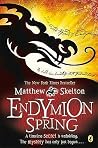
Endymion Spring

Endymion SpringEndymion Spring by Matthew Skelton
My rating: 4 of 5 stars

A semi-historical fantasy novel for children that jumps between past and present.

The eponymous Endymion Spring is an apprentice to pioneer printer Johann Gutenberg, living in 15th-century Mainz, in Germany. Johann Fust, or Faust, is a financier who backs Gutenberg's startup business, and Endymion steals some special paper from Fust to make a book, the existence of which comes to the attention of Blake Winters, a 12-year-old American boy living in Oxford, England, where is mother is doing research into the legend of Faust.

Blake, helped and sometimes hindered by his younger sister Duck, searches for a lost book that has the secret of another lost book, and discovers that several academics are also searching for it, as it is rumoured that it contains the secret of limitless power.

The plot and the setting have echoes of J.K. Rowling's Harry Potter series, and Philip Pullman's His Dark Materials and people who enjoyed those will probably enjoy this one too. It has flaws, certainly, but I enjoyed it all the same.

View all my reviews

02 October 2025

Secret of the Night Ponies (book review)

Secret of the Night PoniesSecret of the Night Ponies by Joan Hiatt Harlow
My rating: 5 of 5 stars

A historical novel set in Newfoundland, Canada in 1965, when people were being encouraged to move off smaller islands and live on the main island, where it was easier for the government to provide infrastructure and services like schools, hospitals, etc. Many ponies were left abandoned on the small islands, where they sometimes starved in winter. Thirteen-year-old Jessie Wheller had taken her own pony to the mainland, but then learned of the fate of some of the others, and urged her friends to join her in doing something about it.

Young Jessie actually has three rescue adventures in the story, first of some people whose boat is wrecked in a storm, then of a younger school friend who is abused by her foster parents. This seems to cram too many adventures into too short a time, but it's fiction, and people who have adventures in fiction usually have more than in real life. Also, her participation in the earlier rescues gives Jessie the confidence that leads her to believe that she and her friends can rescue a whole herd of ponies.

Because of the setting and the age of the main characters I found it rather similar to Anne of Green Gables, and readers who enjoyed the stories of L.M. Montgomery will probably enjoy this one too. It is an exciting adventure story, well told, and gives an interesting glimpse into place and period.

View all my reviews

05 September 2025

A Literary Mystery

 Now here is a literary mystery that puzzles me, and if you are reading this I hope you might try to help me solve it, especially if you enjoy reading books and use the GoodReads web site.

I've written four novels, three for children and one for adults, and some people who've read them have written reviews and posted them on the GoodReads web site. If a book on the GoodReads web site gets ten or more ratings (books are rated with from one to five stars), it gets a list of other books attached -- "readers who enjoyed this book also enjoyed".

I was hoping to see such lists for my books, partly because I thought that if people who enjoyed my books liked them, I might like them too. And also because, knowing what readers of my books liked could help me to know what kind of books I should write in future. So I was very pleased when one of my books, The Enchanted Grove, got the required 10 ratings and I could see what other books its readers liked.

But the result was weird:

 I can't imagine any readers of my books liking those two books, which I've never heard of. So if you've read The Enchanted Grove (ISBN 978-1-920707-65-1), or any others of my books, and rated them on GoodReads, please let me know if you're read either of those two.
 
Also, if you've read any of my books and have not rated th em on GoodReads I'd be very grateful if you would rate them, and better still, write a review, and check to see if any of your favourite books appear on this list.
 
What I think may have happened is this: I got a couple of spammy emails from people asking for a link to my book. I gave them a link, and then a couple of reviews appeared. Both were filled with fulsome praise for the book which I was pretty sure were written by AI, and that the people who had posted these reviews had not read the book at all. It looks like some kind of scam to get the two books shown above listed on my book's page as a means of promoting them. The implication is that most of the readers of The Enchanted Grove had those two books as their favourites, which I find very hard to believe. 
 
If you haven't read The Enchanted Grove, and would like to, you can find out more about it, including where to get a copy, here.

28 March 2025

Abyss

Abyss by Paul Bryers
My rating: 4 of 5 stars

I discovered, after taking this book out of the library, that it was the third book in a trilogy, and I haven't read the first two, so I've missed much of the backstory, and I'm not really qualified to review it. What drew me to it was reading the blurb and seeing that it was more or less in the same genre as most of the books I've written and am writing, so I was interested in seeing how other people do it.

In this story Jade runs away from her boarding school in Cumbria, England, just before being expelled, and her foster mother Emily meets her, and they are then chased by Jade's real father, Kobal, and escape from him with some difficulty, and they are joined by a Benedict, a long-lived member of a miliary monastic order. Benedict believes that Kobal wants to use his seven children, by seven different mothers, for an evil purpose. He had gathered six of them, but Jade had escaped (presumably in one of the earlier books) and Kobal was looking for the seventh. So the three of them set out to travel to Romania, where they hope to find the seventh child.

It was quite a pleasant read, with lots of adventures during the travels, though the denouement was a bit over the top.

One of the things I found rather disappointing is that Jade, the main character has superpowers. In this case it was integral to the plot in that she was bred for this by her father, who wanted to use her and her siblings for nefarious purposes, so she was not altogether happy about having these powers, and would probably have been happier without them, and in the earlier part of the story she rather regretted use them against bullying school fellows.

It may be just me, having this aversion to superpowers, at least for my main characters. Perhaps that is what  most readers want. Perhaps they like to picture themselves as having superpowers, and that is the attraction of such books. I suppose I was a bit like that as a teenager too. Up to the age of 12 most of my reading was of things like Biggles and Enid Blyton's adventure stories. Biggles & Co had one super skill, which made them different from most people, and that was the ability to fly aeroplanes, but it was a skill that anyone who really wanted to might be able to learn. Enid Blyton's characters were ordinary children who got into trouble and ether got out of it by their own ingenuity or by the intervention of adults.

When I was 13, however, we stayed with friends whose son, then a university student, had a huge collection of comics which he had been dumped in the garage. There was a run of Hotspur covering several years, so I was able to read complete runs of several serial stories, with each weekly episode followed by the next. Several characters in those stories either had superpowers, or access to gadgets which, like Aladdin's lamp, gave them superpowers while the possessed it. Some of the plots involved how they lost and regained possession of the gadgets. And so I pictured myself, like Jade in this story, having such a gadget, and picturing myself using it as protection or revenge against schoolfellows I feared or disliked. It was really a kind of excuse for misanthropy. A couple of years later, when I was about 15, I got similar satisfaction out of reading Gulliver's Travels, a kind of "the more I see of some people, the more I like my horse kind of thing. But it seems there are some people who never grow out of the desire for superpowers, and I wonder if they grow up to be people like Elon Musk.

View all my reviews

22 October 2024

A Game of Thrones for Kids: The Threads of Magic

The Threads of Magic

The Threads of Magic by Alison Croggon
My rating: 3 of 5 stars

A bit like A Song of Ice and Fire by George R.R. Martin, but for kids. There are some differences, however. Though both are of the sword and sorcery genre, A Song of Ice and Fire has too much sword and not enough sorcery, while The Threads of Magic has too much sorcery and not enough sword. But there is plenty of political wheeling and dealing, power struggles, and back-stabbing, on all sides.

In the city and kingdom of Clarel, the royal family had been taken over by evil being called spectres, though a non-spectral usurper had temporarily ousted the spectres from the royal family itself, but were clearly no better than spectres. The church's leadership, represented by a sole Cardinal, is possibly also infested with spectres, who eliminated their enemies, the witches, a century earlier, and have a team of assassins to ensure they never reappear.

And then there is Pip, a 12-year-old orphan who lives with his older sister Eleanor, and supports them by picking pockets in the Dickensian city. Unfortunately he picks the pocket of an assassin, getting a magical artifact in a jewelled box. He pawns the box and is about to throw away the artifact, the shrivelled heart of Clovis, the heir to the throne and next-in-line for spectreship, had the throne not been taken by the usurper and his heart by a witch when he was seven. And Clovis, whose spirit is trapped in the heart by the witch, wants Pip to keep him.

Oh, and there's a Princess Georgette, whose father wants to marry her off to a neighbouring King for the sake of a political alliance. And there are numerous other characters too, all taking part in this complicated wheeling and dealing political dance, with each party dancing to the music of its own band, playing its own tune, and out of tune and with sudden changes of tempo.

I found it hard to like any of the characters very much. They all seemed emotionally unstable, being kind one moment and nasty the next. The settings seemed inconsistent too -- witches had been eradicated a century earlier, and then one or two appear, and then suddenly they are there in large numbers and have been all along, and even dominate one quarter of the city, and are behind the running of a midsummer festival in which everyone takes part. And at the end of the story, no one seems to know, or care, what happened to the heart that started all the trouble.

While I didn't think it was a great story, I'm glad I read it, because I also write fantasy stories, mainly for kids, and this book shows a lot of the things that one should avoid -- things one should bear in mind when editing one's own writing. 

View all my reviews

03 September 2024

C.S. Lewis on Christian Nationalism

Christian Nationalism seems to be making a come-back.

Christian Nationalism was the philosophical underpinning for the apartheid ideology of the National Party that ruled South Africa from 1948 to 1994. During that period Christian Nationalism was dominant and all-pervasive. Student teachers at universities were taught that they had to teach subjects like Geology in a "Christian National way". All children in schools were to be taught to be nationalist in their thinking, and nationalism was defined as "love of one's own".

But what is "one's own"?

Many Christian groups in South Africa at that time questioned the Christian Nationalist ideology, and some explicitly and outright rejected it. Christian Nationalism grew out of an attempt to give a Christian flavour to a romantic secular nationalism that had grown up in Europe, especially Central and Eastern Europe and the Balkans, in the late 18th and early 19th centuries. For more on that, see my article on Nationalism, Violence and Reconciliation.

Now Christian Nationalism seems to be making a come-back in certain circles in North America,  in Russia, and in some other places. Many Christians find this disturbing. Those of us who were involved in the struggle against apartheid from the 1950s to the 1980s are aware that Christian Nationalism was not merely a heresy, it was a pseudo-gospel, a false offer of salvation by race, not grace.

It was not merely South Africans who were aware of that, however. C.S. Lewis (1898–1963), a professor of English literature, author, and Christian apologist, was also acutely aware of the dangers of nationalism, and two of the villains of his fiction, Professor Weston of his space trilogy, and the dwarf Nikabrik in his children's book Prince Caspian exemplify the dangers.

Devin Brown, in his book Inside Prince Caspian, makes this clear in the following passage:

The only virtue remaining in Nikabrik at the time of his death was a concern -- it would be hard to call it a love -- for his own kind. Nikabrik allowed this virtue to expand until it became the greatest virtue, erasing all others. In this way he became like another of Lewis's villains: Professor Weston from the space trilogy. Near the end of Out of the Silent Planet, the great Oyarsa, or ruler, of Mars has a long conversation with Weston, trying to understand the reasoning behind the scientist's depraved actions. The Oyarsa maintains that there are laws that all sentient beings know, "pity and straight dealing and shame and the like". He points out that Weston is willing to break all of these laws except "the love of kindred," which he notes "is not one of the greatest laws." As this law became the only law and principle for both Weston and Nikabrik, it became bent and distorted and, in the end, led to evil, not good.

The "love of kindred" that Lewis talks about there is the "love of one's own" that the Afrikaner nationalists of South Africa's National Party gave as the definition of nationalism. And "own kind" was a nationalist mantra. It was the rationale for apartheid. People must live among their "own kind". They must go to school and church with their "own kind". They could only play games and sports with their "own kind". There were government departments and legislative bodies arranged according to "own affairs". And there were laws against "improper interference" in affairs that might concern everyone, and were not regarded by the government as "own affairs".

The "own kinds" were defined by law: White, Black, Coloured and Asian. And those took precedence over everything else. Christians could not see their fellow Christians as their "own kind". Own-kindedness was determined not by faith, but by race. So, under "Christian" nationalism, Christians were expected to sell their heavenly birthright for the pottage of this sinful world (cf Genesis 25:29-34). 

For those who may be concerned about the viral spread of Christian Nationalism in the 2020s, therefore, there are remedies. Perhaps you can inoculate your children against the virus of Christian Nationalism by reading C.S. Lewis's Narnia stories to them, and noting the lessons to be learned from the failings of Nikabrik.

When they get older and become interested in "Young Adult" stories, encourage them to read Out of the Silent Planet and note the failings of Professor Weston.

And don't forget the words of Balthazar Johannes Vorster (1915-1983), who became South African Minister of Justice in 1961 (when he turned South Africa into a police state), Prime Minister in 1966, State President in 1978. But back in 1942 he said (when his country was at war with Germany, Italy and Japan):

We stand for Christian Nationalism, which is an ally of National Socialism. You can call the anti-democratic system dictatorship if you like. In Italy it is called Fascism, in Germany National Socialism, and in South Africa, Christian Nationalism.

23 March 2024

Inside the Worm

Inside the Worm by Robert Swindells
My rating: 4 of 5 stars

A small town is celebrating the millennium of the martyrdom of their patron saint, St Ceridwen (is there a real St Ceridwen?), and so a weeklong festival is planned, culminating in a play on the life of the saint, who, in addition to dying as a martyr, had defeated a dragon that plagued the small village, not my killing it, but by banishing it to a fen.

The Year 8 pupils of the BottomTop Middle School are given the responsibility of producing the play, and Felicity "Fliss" Morgan is chosen to play the part of St Ceridwen, while her best friend Lisa Watmough is one of four children playing the dragon, whose costume they create out of whatever materials they can find.

Lisa is at first reluctant to take part, as she has a strange feeling that something bad will happen, but once she gets started she participates enthusiastically, and it's Fliss's turn to get worried as Lisa seems to change, and not in a nice way, and those who are acting the dragon's part seem to become too enthusiastic. The tension increases, until the day of the festival itself. 

I found this book particularly interesting because it is in more or less the same genre as children's books I have written -- intrusive fantasy, some have called it. So I was interested to see how the author handled dialogue and the relationships between the characters. It was comparable in that way to my published book The Enchanted Grove, and even more to one I'm still putting the finishing touches to, provisionally titled The Venn Conspiracy. I rather hope that one day soon the page for The Enchanted Grove on GoodReads will have books like Inside the Worm listed under "Readers also enjoyed...", but that wont happen until more people have reviewed it.

View all my reviews

14 May 2021

Over sea, under stone

Over Sea, Under Stone

Over Sea, Under Stone by Susan Cooper
My rating: 5 of 5 stars

This book has been on my "to read" list for about four years now, as has the whole The Dark is Rising series. because friends recommended it, or wrote good reviews of it.

My search became more urgent when a reviewer compared my children's books Of Wheels and Witches and The Enchanted Grove (ISBN 978-1-920707-65-1) to the whole "The Dark is Rising" sequence, and suggested that it might have been an influence on my writing.

It couldn't have been an influence on me, because I hadn't read it yet, but there certainly are similar tropes in both my children's books -- children on a quest, getting separated and searching for each other, an older boy who is a bully, some getting captured by the villains and threatened by them. There is even a hair binding that comes undone causing one character to lose her pony tail. But my influence came more from Alan Garner and I wonder if Susan Cooper's did too. It seems that they did meet, and regarded each other as kindred spirits.

Anyway I found the book a very good read. I liked the characters, the children especially, since more than half the adult characters were evil. It is a story of three children, Simon, Jane and Barney Drew, who go with their parents and a great uncle (who is not really a relative, but rather a friend of the family) to spend a holiday in a house in Cornwall, whose owner has gone off for a holiday somewhere else. They find an abandoned document and map, which they use to play games of seeking treasure, and then find that it is really old, and some evil people are also looking for it. 

In the Good Reads page for the book there was a question about why the book was written in such an old-fashioned way, and so I watched out for that while reading it. As some people remarked, it could be because it was written over 50 years ago, and speech was different then. In the book the children wore "plimsolls", but by the time the Harry Potter books appeared, 30 years later, "plimsolls" had become "trainers", so that would probably have appeared old-fashioned even 25 years ago, when the Harry Potter books first appeared. I was particularly aware of that when I went to England in the 1960s, because I thought of "plimsolls" as marks on ships, and we called such footwear "tackies" (sometimes spelt "takkies"), both then and now -- the term is applied to any shoes with canvas uppers and rubber soles.

Some language would have appeared old-fashioned even in the 1960s -- I don't recall any children at that time referring to their male parent as "Father" with a capital F. But what really struck me as an anachronism was that one of the characters found two 50 pence pieces in his pocket, in a book published in 1965. Even in 1968, when the edition I read was alleged to have been published, though two of the new decimal coins were beginning to circulate, a 50p piece was not among them, they were still 10-bob notes. So if 10-bob notes miraculously changed into 50p coins, why did plimsolls not change into trainers? Or Father into Dad?

The edition of Over sea, under stone that I read was illustrated by pen and ink drawings by Margery Gill. The illustrations were appropriate to the text, but though the faces were drawn very well, the legs were not, and looked like those of children in pictures used to illustrate children freed from concentration camps suffering from malnutrition. Such legs could not have carried anyone fast enough to do all the running away they had to do from the villains. This particular picture, however, was one of the ones with more realistic legs. 

I recently re-read three of Alan Garner's children's books, and comparing his language to Susan Cooper's, I find his more terse and taut, which conveys a sense of urgency in the way it is written. 

I was inspired to write my children's (and other fiction) by a conversation between C.S. Lewis and J.R.R. Tolkien, in which they said that if they wanted to see more of the kind of stories they liked, they should have to write them themselves. And I liked stories by Charles Williams and Alan Garner. But it seems that Susan Cooper has also written the kind of stories I like, and all but two of them are waiting for me to read therm.

Her writings are not entirely new to me, however. Back in the 1960s I did read Mandrake by Susan Cooper, which was adult science fiction rather than children's fantasy. I was reading it on the train from London to Bournemouth at the very time Dr Verwoerd was shot, and it was in fact about an English version of the Verwoerdian dream, where a British prime minister decided that everyone had to go back to their "homeland", and enacted laws to force them to do so. I never saw another book by Susan Cooper in a bookshop after that, though I see she has written quite a lot, and I'm putting more on my "want to read" list. 

I've spent some time commenting on the language in this review, but that's because I found little else to criticise, and because someone asked a question about it. And now I hope I'll be able to find the rest of the series and renew my acquaintance with the characters. 

View all my reviews
03 March 2021

The Enchanted Grove

 My children's book, The Enchanted Grove, is available in paperback (ISBN 978-1-920707-63-7) from Lulu Bookshop. It is suitable for kids aged 9-12 (and also for those kids over 25 who enjoy children's stories like the Narnia books).

It is also available as an ebook (ISBN 978-1-920707-65-1) in various formats from most ebook retailers, like Apple, Barnes & Noble, Kobo etc. and from Smashwords. A Kindle version (ISBN 978-1-920707-64-4) is also available from Amazon.

Jeffery, Janet and Catherine spend their summer school holidays swimming and riding horses in the foothills of the Drakensberg mountains of South Africa. But then they have to deal with bullying teenagers who are into witchcraft, poachers, and the strange guardian of a cave of Bushman paintings. And just when it seems that things couldn’t possibly get worse, the children stumble across a secret government project that the police think they know far too much about. 

The story is set in December 1964, in the southern Drakensberg, in the fictional village of Pineville (so no one will be tempted to try to identify any of the characters, other than contemporary political leaders, with actual historical characters).

The Enchanted Grove is a sequel to Of Wheels and Witches, which is about an earlier adventure of Jeffery, Janet and Catherine and their friend Sipho. But each story stands on its own, and they do not need to be read in any particular order.

Read a sample chapter here:

ISBN

978-1-920707-63-7 Lulu (paperback)
978-1-920707-64-4 Kindle e-book
978-1-920707-65-1 Smashwords ebook

Of Wheels and Witches is out of print at present, but a second edition is in preparation at Shack Simple Press.

If you have read The Enchanted Grove I would be grateful if you write a review, on your blog, or in any journal or magazine you contribute to, or on the Smashwords page or the GoodReads page for the book.

LinkWithin

Related Posts with Thumbnails