Showing posts with label missiology. Show all posts

23 April 2026

Christianity and Civilization

When Western missionaries came to southern Africa in the 19th century to spread the gospel of Christ, they soon discovered a problem. The culture of the people they were preaching to was premodern, and the gospel they preached had, comparatively recently, been contexualised into the culture of Western modernity. The book to read on this encounter is Of Revelation and Revolution: Christianity, Colonialism, and Consciousness in South Africa by John and Jean Comaroff. Several missionaries studied the culture of the people they went to, but the Comaroffs were among the few that also studied the culture that the missionaries came from, which shaped their outlook and the way they responded to premodern cultures. 

One response of these 19th-century Western missionaries was to say that before Africans could be Christianised, they must first be civilised. The gospel they had brought had been contextualised to deal with the problems of Western modernity, problems that most Africans did not have. Therefore they must be taught to exchange their premodern problems for modern ones, ones that the Western gospel had been adapted to solve, and the way to do this was to civilise the Africans. 

The Westerners thought it important to distinguish between elements in African cultures that were compatible with Christianity, and those that weren't. They were often not as critical of elements in their own culture that were incompatible with Christianity. Western culture had undoubtedly been influenced by Christianity -- see Western civilisation and Christian values. By the middle of the 20th century the apartheid government of South Africa was claiming that it represented and was the defender of "White Western Christian Civilization", and that was the society that I grew up in -- see Christianity, Western Civilization, and me.

I've read quite a bit on this topic recently, indicating that quite a lot of people are concerned about it, and so I'm trying to bring some of the things I've read together in a traditional blog post -- traditional in the sense of a weB LOG -- an annotated log of web sites visited. Some of these are things I've written, and some have been written by others. 

One of the better ones I've seen, and also one of the most recent, is Against Christian Civilization by Paul Kingsnorth, who also quotes something that could perhaps summarise the whole theme:

It is my personal belief, after thirty-five years experience of it, that there is no such thing as “Christian civilization.” I believe that Christianity and modern civilization are opposed and irreconcilable, and the spirit of Christianity and of our ancient religion is essentially the same.

For something else on similar lines see Inculturation, indigenisation, syncretism and cultural appropriation. I also heard Thorsten Marbach speaking at TGIF[1] about Paul Kingsnorth's book Against the Machine, which I have not been able to read yet, but you can catch Thorsten's talk here. I discovered that Paul Kingsnorth had recently become an Orthodox Christian.

I have also written something on Orthodox Mission in the 21st Century, which deals with similar themes.

I will be adding more material and links to this post.   


__________

Notes & References

1. TGIF (Thank God It's Friday) meets early on alternate Fridays in the cities of Johannesburg and Tshwane, and someone speaks on some topic relating to Christianity in the modern world, followed by questions and discussion. Some of the talks have been recorded, and you can find them here.

12 December 2025

Generation Z and Religion

The maps on this page, though from different sources, seem to be based on the same data, showing the religious affiliations of Generation Z in Europe.

Two things struck me about them immediately:

First, that while the current map shows that secularism prevails in Western Europe, Eastern Europe is predominantly Christian. I suspect that a similar map produced 40 years ago would have shown precisely the reverse: the East would have been secular, the West Christian. Back then people in the West regarded people in the East as “godless commies”; now, it seems, the people in the West are godless capitalists.

Secondly, it has often been said by some of the more militant atheist embracers of secularism that religion has been the main cause of wars throughout history, and that if religion were abolished, wars would cease. Yet among the counties marked on the map as secularist are those that are most supportive of the current genocide being perpetrated by Israel in Gaza, especially Germany, France and the UK, and whenever there seems to be the possibility of peace in the Russia-Ukraine War, those same countries are the ones most rigidly opposed to peace, and urge Ukraine to fight on.

There are also some things of deeper significance, among which are what Samuel Huntington got wrong.

I thought Samuel Huntington's book, The Clash of Civilizations, got a lot of things right about the post-Cold War world -- that the "three-worlds" model would be exchanged for a "nine civilizations" one. But he made the mistake of thinking that Western Civilization was fundamentally Christian. As this map shows, Secularism is the established religion of the West. It doesn't matter whether you are called atheist, agnostic, or "none", it's secularism all the way down.

What do I mean by "secularism"?

Going back not 40 years, but 60 years, Western Christian theologians were concerned about the secular meaning of the gospel. There was even a book with that title -- see here. An American theologian, Harvey Cox, wrote The Secular City: Secularization and Urbanization in Theological Perspective in which he explained the important distinction between "secularization" and "secularism".

"Secular" means pertaining to this age, and Christian theology makes a distinction between "this age" and "the age to come", between what is temporal and what is eternal. Civil government, for example, is concerned with the things of this age, not with the age to come, so we speak of "secular governments".  An English monarch once ordered clergy of the Church of England to keep registers of baptisms, marriage and burials, because he wanted statisstics of citizens. Now it is good that the church should keep records of its members, but its purposes are differen It is related to the concept of separation of cht from those of the state, so in 1837 the English government began secular registration of births, marriages and deaths, for its own secular purposes. This process is called secularization. It is related to the concept of the separation of Church and State, and Harvey Cox in his book explains why he thinks it is a good thing. 

Secularism, on the  other hand, is something else. It is an ideology in which people believe that there is only this age, and no age to come. And of secularism, Harvey Cox (1965:21) says:

While secularization finds its roots in the biblical faith itself and is to some extent an authentic outcome of the impact of biblical faith on Western history, this is not the case with secularism. Like any other ism, it menaces the openness and freedom secularization has produced; it must therefore be watched carefully to prevent its becoming the ideology of a new establishment. It must be especially checked where it pretends not to be a world-view but nonetheless seeks to impose its ideology through the organs of the state.

The word "atheist" means "godless", and, in demographic terms, "none" also means "godless". If there is a difference, the main difference that one can find in English is that atheists are self-consciously godless; "nones" are equally godless, just less self-consciously so. Secularism describes the worldview of both. 


Forty years ago the equivalent of Generation Z would be the age-cohort born between 1957 and 1972,  and it was probably these that Samuel Huntington had in mind when he wrote The Clash of Civilizations. He wrote before any of the current Generation Z were even born, and so probably did not foresee the secularization of the worldview of Western Europe.

I don't think, however, that that change invalidates the main thrust of Huntington's thesis: that after the end of the Cold War conflict would not be so much between ideological blocs wedded to capitalism or communism as between civilizations clustered around a common religion. If you don't regard atheism or secularism as fitting the definition of a "religion" you can substitute "worldview" if you like.

To see the change, you can regard the area coloured yellow in the map on the left as Huntington's conception of Western Civilization, while that coloured grey on the map was the bit he didn't foresee,

Huntington believed that conflicts within civilizations would tent to remain local, while those between different civilizations would tend to become wider. 

And the question arises: how do the changes reflected in these maps affect present conflicts, and how might they lead to future conflicts? And how do these changes affect our understanding of the world we live in?

I have discussed Generation Z and religion before, and especially how some of those members of Generation Z who are turning to God also seem to be attracted to right-wing politics. If you are interested you can find more on that here.  


08 October 2025

Modernised Christianity in premodern Africa

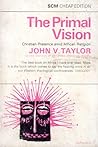
The Primal Vision

The Primal Vision by John V. Taylor
My rating: 5 of 5 stars

This is one of those life-changing books, which changed my attitude to a lot of things, and taught me things that proved useful in later life.

It is part of a series of books on Christian presence among other religions -- in this case the religions of sub-Saharan Africa. John V. Taylor, a British Anglican, served in East Africa, and read widely in books about other parts of Africa. He noted that in much of Africa Christianity was a classroom religion, because that is how it was taught to many Africans, and so it was remote from the everyday life of the people.

I later learned different words to describe what Taylor wrote about -- that sub-Saharan Africa had a premodern culture, and missionaries from the West had, by the 19th century, inculturated Christianity in to modernity, and so found it difficult to communicate it to pre-modern Africans. Western Christianity had been reshaped to deal with modern problems; and so could not help Africans with many of the problems they faced. So Western missionaries concluded that civilisation must precede Christianisation. Africans had to be modernised to that they could have the modern problems that modern Christianity had been contextualised to solve, the problems of an urban industrialising society. 

The book was written more than 60 years ago, and Africa has changed, as has the West, from which most Christian missionaries to sub-Saharan Africa  came in the 19th and early 20th centuries. It was written before the rise of Neopentecostal megachurches, which have modernised African Christianity in ways that Taylor never thought of.

I first read The Primal Vision 1967, and then again four years later. In between those readings I read The Secular City by Harvey Cox, a paean of praise to Western modernity. Where Taylor saw the value of the premodern worldview, in which the world was seen as enchanted and alive, Cox says

Both tribal man and secular man see the world from a particular, socially and historically conditioned point of view. But modern secular man knows it, and tribal man did not. Therein lies the crucial difference. The awareness that his own point of view is relative and conditioned has become for secular man an inescapable component of that point of view.
Both books show how some people, at least, saw these things in the 1960s, but they also worth reading to see how we got to where we are now. View all my reviews

22 June 2023

Gods of Power - allegedly

Gods of Power

Gods of Power by Philip M. Steyne
My rating: 3 of 5 stars

This book is quite extraordinary. The author presents a kind of Platonic ideal of animism, as he sees it, and then criticises it from the point of view of "biblical Christianity". As I read it I kept reminding myself of the saying, "To the person whose only tool is a hammer, everything looks like a nail. And so, for this author, everything looks like animism.

There is page after page about what "animist man" believes and does, because that is that the author tells us "animist man" believes and does. One page of vague generalisations follows another, often quite contradictory. "Animist man" we are told feels powerless in a universe where everything is controlled by powerful spirits, but with the right rites "animist man" can control and manipulate these spirits and become omnipotent. So the picture emerges of "animist man" as simultaneously powerless and omnipotent.

The main problem with such an approach is that "animism" appears as a purely external construct. The ubiquitous "animist man" is never asked for his opinion of what his beliefs and practices are, and there aren't even any empirical examples. The "Gods of Power" of the title is an abstraction, because none of the gods referred to is named or described.

"Animism" is a term used by anthropologist Edward Tyler (1832-1917) to describe and explain the beliefs of some people, who were not raised in the culture of Western modernity, that non-human life forms, such as animals and plants, and even objects regarded as inanimate by Western man, such as rocks, mountains and rivers, had their own personality or soul. Since it is an attempt to interpret one kind of culture in terms of another, such attempted interpretations often tell us as much or more about the interpreting culture than about the one ostensibly being interpreted. 

Steyne, however, tells us nothing of this, but instead asserts, "Animism's chief presupposition is the sovereignty of man." This is almost diametrically opposed to Tyler's point, which was that animism's chief presupposition is that humanity is merely one life-form among many, and that other life forms have their own purposes which might not necessarily coincide with human ones.

There are lots of references and the book has a fairly comprehensive bibliography; one would only have hoped that the author had made better use of it.

I said at the beginning that this was an extraordinary book. Most of it is extraordinarily bad, in that one will learn very little about animism or a Christian evaluation of it from its sweeping over-generalisations, and even less about gods of power. The first 14 chapters range from mediocre to very bad. Chapter 15 is somewhat better, but of questionable relevance. The final chapter, however, is quite extraordinarily good, and contains some excellent missiological advice, whether one is evangelising animists or not.

View all my reviews 

Well, that's my review though why anyone should now be interested in a review of a 30-year-old book I'm not sure. But for anyone interested (and if you've read this far you might be), here are some more personal thoughts on and inspired by the book. 

I spotted this book on the library shelf and took it out because I was attracted by the title, Gods of Power. I was attracted by the title because I'm exploring a theme, or a trope, in a novel I'm writing. Yes, I am a missiologist, and that no doubt influences my fiction writing when it touches upon missiological topics, as in this case.

The theme that I'm writing about in my novel is what happens to gods of people when they lose their power? Neil Gaiman wrote on a similar theme in his American Gods, about what happens to gods when their worshippers are transported to a new environment. My theme is somewhat different, though -- it's more what happens to the gods of vanished empires who have lost their worshippers. Will they go searching for new sources of power in other lands?

Unlike Steyne, I don't think all such deities are "animist", or that they were worshipped by "animist man". Several religions in the ancient Near East had notions of divine kingship, where a god personified the power of the state, and was linked to the king. Regarding rocks, mountains and rivers as personalities, or at least as occupied by spirits, is animist, but seeing abstract entities, like the state, in the same way, it seems to me, falls outside the definition of animism. So Steyne's labelling them all as animist, without giving any specific instances, was of little use to me. So his book didn't suit my purpose, but does that mean that my reaction to it is just sour grapes? I don't think so. I think that if he had stuck to the generally accepted understanding of animism and based it more on empirical evidence of actual animist beliefs and practices to justify his description and labelling, it would have been a better an more useful book generally.

And in the mean time I'm still looking for stories of gods who have lost their power because no one worships them any more.

05 June 2023

St Boniface of Crediton, church history, and missiology

Today (June 5) is the feast of St Boniface of Crediton, Apostle of Germany. 

As a missiologist, I've always found him interesting, and one of the most interesting missiologial things about him is that most missiologists pay little attention to him, and quite a lot of them are perhaps not even aware that he existed. 

He was born in Crediton in Devon in England about AD 680, and died a martyr's death in Frisia about 754. His original name was Wynfrith and he became a Benedictine monk. He went on a missionary journey to Frisia but found that no one was interested in his message there and the King opposed the Christian message.

He then travelled to Rome, and got the support  of the Roman Pope to reorganise and beef up the infant German church (which had been established by earlier rather haphazard Irish missionaries) and get it more active in mission. He did this with considerable success in Thuringia, Bavaria and Hesse. The Roman Pope Gregory II, on getting news of this summoned him to Rome and gave him more enthusiastic support. 

Boniface then returned to Germany, and the Hessian Christians, we are told, approached him with a problem. Some were pure in their faith, but others still retained practices that the purer ones thought were not compatible with the Christian faith, such as divination using the entrails of sacrificed animals, or from the flight of birds, and engaging in incantations and sacrifices. They urged Boniface to cut down a large oak tree that was much revered by pagans, and as he began to do so, amid the angry mutterings of the pagan spectators, a "blast from above" felled the tree without any human help, and we are told that most of the pagan spectators were so impressed that they converted on the spot. Boniface himself, however, in a report to Pope Gregory II, said that this account was exaggerated.

Boniface went on to reform the Frankish Church, and later became Archbishop of Mainz. Perhaps he found that too dull, and felt that he wasn't cut out to be an administrator, so he resigned and went back to being an active missionary again, on the scene of his earlier unsuccessful mission to the Frisians. He was reading the scriptures to a group of new Christians when a group of pagans attacked and killed him.

The treatment of Boniface by church historians and missiologists

My daughter, Julia Bridget Hayes, has painted an ikon of St Boniface, and he is remembered in the Orthodox Church as well as in the Western Church, though not perhaps as well as he might be, but the different treatment by church historians and missiologists is something else. 

I had done a BA degree at the University of Natal, majoring in Biblical Studies and Theology, with a couple of years of secular history as well. Later I did a BTh degree at Unisa, majoring in Church History and Missiology, which I found more interesting. The church historians made quite a big thing of Boniface, and went into some detail, and I wrote an assignment on him. 

Some time later I mentioned him in a missiology assignment. I thought it was perhaps significant that Boniface was English, and that the English had migrated to Britain from Germany over the preceding 200 years, and their kingdoms in southern Britain eventually amalgamated to form England. 

Boniface therefore went to the land that the English had originally come from, and so the language and culture of the people would not be entirely alien to him. We can still read and understand the English of the 1820s now, and so Boniface would hot have had any more difficulty in making himself understood than a US evangelist in the UK would today. He might annoy people with his message and some of his new-fangled cultural ideas, but he would be understood. 

I mentioned this in a missiology essay on cross cultural mission, and my professor, David Bosch, was quite astounded. It was clear that such a thing had never occurred to him before. He had no doubt heard of St Boniface, but obviously had never thought of him as missiologically significant. 

I began wondering about church historians and missiologists living in separate silos, each being unaware of the others were doing. The church historians found Boniface tremendously important, but not for his missionary work or his missionary methods. No, what they found important was not what he did in Germany, but the fact that he went to Rome. The significant thing about this for church history was that it marked a stage in the growing influence and power of the Pope of Rome, and it was therefore a stage in the development of the papacy.

But as a missiologist I thought there were other things worth noticing. The wandering Irish missionaries who had preceded Boniface were travelling evangelists, perhaps like the tent evangelists of the 20th century; they may have made converts, but they did not plant functioning churches. Boniface was a church-planting missionary, and one of his priorities was to establish Benedictine monasteries ans centres of Christian life and growth. He was so good at this that the Roman Pope asked him to reorganise the whole Frankish Church.

And one more thing worth remembering is that it was monastic missionaries who took the Christian message throughout Europe, and the tool for the evangelisation of Europe was forged in Africa, where Christian monasticism first developed. Long before Europeans evangelised Africa, African Christians created the tools that evangelised Europe.

18 February 2023

Deconstruction, and some weird stuff I'd never heard of

One of the weirder experiences I've had online is to come across a bunch of people discussing something I've never heard of, and they all seem to know about it, and assume that everyone else knows about it, and so see no need to explain it because they are unable to conceive of anyone not having heard about it.

I came across such a thing today -- some people were talking about deconstruction. Well, I have heard of deconstruction -- I've been hearing about it for the last 30 years or so. But these people were talking about it in a way that made no sense to me..It was sparked off by this tweet on Twitter:

Is "deconstruction" primarily a protestant experience, an evangelical experience, an American experience? I'm not suggesting there are no catholic/Anglican/Episcopal/Mainline/non-English-speaking people deconstructing, I'm just wondering if it is more the former?

It puzzled me because as far as I knew Jacques Derrida, the originator of deconstruction, was not American, but French and as far as I know he wasn't Protestant or Evangelical, and what did it matter anyway? Were there different denominational ways of doing deconstruction? I didn't think so. 

I've even written a journal article doing a bit of deconstruction: Sundkler deconstructed: Bethesda AICs and syncretism. Now I'm an Orthodox Christian and the text I was deconstructing was written by a Lutheran bishop, so perhaps that suggests that there might be different denominational varieties of deconstruction, but I didn't realise that that was so significant. 

But then the people twittering about deconstruction start talking about Fowler's stages 3 & 4. Fowler? I've heard of, and have a copy of Fowler's Modern English Eusage, but I don't recall him talking about deconstruction. I reread the article on deconstruction in The Fontana Dictionary of Modern Thought, but it's all Derrida, Derridqa, Derrida. I've seen Derrida and heard him speak, but Fowler? As Tom Lehrer says, "this I know from nothing."

Now if this was all in some field remote from my interests, it would not bother me. But they are talking about theology and liturgy and stuff like that. I have four degrees and a diploma in theology, it's my field! So how come I've never heard of it before today? And the people who are talking about it seem to assume that it is so well known as not to need any explanation -- just refer to Fowler Stages 3 & 4? I follow people on Twitter who mention theology among their interests, I participate on online discussions relating to theology. But this is entirely new to me. 

Now this has happened before. 

Some years earlier, when I started this blog, I did a search on bloggers' interests to see how many mentioned missiology, which happens to be my field. I found that about half the people who were interested in missiology were also interested in "emerging church", which I had never heard of. Search  engines were no help -- everything they took me to simply assumed that everyone who read them already knew what the "emerging church" was. Well, if you've never heard of the emerging church either, don't let it bother you -- it submerged again a few years later, leaving barely a ripple on the surface to show where it had been, but at the time it was quite big. 

But it was the same phenomenon: a bunch of people talking to each other online about something that they simply assumed everyone knew about, and thought needed no explanation. Better score, better deal.

25 May 2021

Missiology and the colour of fish

One Fish, Two Fish, Red Fish, Blue Fish

One Fish, Two Fish, Red Fish, Blue Fish by Dr. Seuss

I haven't read this, but GoodReads recommended it to me, based on the books in my Missiology shelf. That intrigued me. I see most of my GoodReads friends who have rated it gave it a high rating, -- perhaps they can tell me what it has to say about missiology. 

Here are some of the books on my missiology shelf, and I'm not sure how the Dr Seuss book fits in with these:

  • Allen, Roland 1962 [1912]. Missionary methods: St Paul's or ours.
  • Allen, Roland 1960. The spontaneous expansion of the church and the causes which hinder it.
  • Bosch, D.J 1991. Transforming mission.
  • Davies, John D. 1983. The faith abroad.
  • Kaplan, Steven 1984. The monastic holy man and the Christianization of early Solomonic Ethiopia.
  • Stamoolis, James 1986. Eastern Orthodox mission theology today.
  • Bosch, David 1980. Witness to the world: the Christian mission in theological perspective.
  • Veronis, Luke 2009. Go forth: stories of mission and resurrection in Albania.
  • Griffiths, Michael 1980. Shaking the sleeping beauty: arousing the church to its mission.
  • Ajayi, J.F. Ade 1965. Christian missions in Nigeria, 1841-1891: the making of a new elite.
  • Anderson, Gerald; Stransky, Thomas F. 1976. Mission Trends No 3: Third-World Theologies.
  • Becken, Hans-Jurgen (ed) 1973. Relevant theology for Africa.
  • Beeching, Jack 1979. An open path: Christian missionaries, 1515 - 1914.
  • Beidelman, T.O 1982. Colonial evangelism.
  • Bevans, Stephen B. & Schroeder, Roger P 2004. Constants in context: a theology of mission for today.
  • Bhebe, Ngwabi 1979. Christianity and traditional religion in western Zimbabwe 1859-1923.
  • Bonk, Jonathan 1989. The theory and practice of missionary identification 1860-1920.
  • Burridge, Kenelm 1991. In the Way: a study of Christian missionary endeavours.
  • Carter, John 1963. Methods of mission in Southern Africa.
  • Cnattingius, Hans 1952. Bishops and societies: a study of Anglican colonial and missionary expansion 1698-1850.
  • Dvornik, Francis 1970. Byzantine missions among the Slavs.
  • Ellanna, Linda J. & Balluta, Andrew 1992. Nuvendaltin Quht'ana: the people of Nondalton.
  • Farmer, Edwin 1900. The Transvaal as a mission field.
  • Fraser, Donald 1970 (1914). Winning a primitive people.
  • Gerber, Vergil 1979 [1974]. God's way to keep a church going and growing.
  • Hesselgrave, David J 1988. Today's choices for tomorrow's mission.
  • Jarrett-Kerr, Martin 1961. African pulse: scenes from an African hospital window.
  • Kraemer, Hendrik 1956. Religion and the Christian faith.
  • Linney, Barry W. 2000. 21st Century Faith: Radical Living in a new Millennium.
  • Luzbetak, Louis 1988. The church and cultures: new perspectives in missiological anthropology.
  • McGavran, Donald A 1979. Ethnic realities and the church: lessons from India.
  • Milner, Clyde A. & McNeil, Floyd A 1985. Churchmen and the Western Indians.
  • Nemer, Lawrence 1981. Anglican and Roman Catholic attitudes on missions.
  • Niles, D.T. 1963. Upon the Earth.
  • Oleksa, Michael (ed.) 1987. Alaskan missionary spirituality.
  • Oswalt, Wendell H 1990. Bashful no longer: an Alaskan Eskimo ethnohistory, 1778-1988.

I used quite a number of them for writing my doctoral thesis in missiology, but I seem to have missed the Dr Seusss one. Was my missiology thesis any the worse for that?

Actually one of my favourite missiology books doesn't seem to have made the list, so I'll give it a plug here -- it's Orthodox Alaska by Father Michael Oleksa, and you can read more about it here: Orthodox Alaska: A Theology of Mission by Michael Oleksa | Goodreads.

It too seems to have a rather strange list of "readers also liked" books -- only one of those in the top ten seemed to have anything to do with missiology, but some of them nevertheless seemed quite interesting.

So here;s a challenge to fellow missiologists on GoodReeds. Look at the books on your missiology shelf, and share what the top one is, and how many missiology books appear in your top ten. Perhaps it will show how widely-read missiologists are.

And perhaps it ought to show that, because missiology is an interdisciplinary  field of study, covering theology, history, sociology, anthropology and several other things as well. But fish?

View all my reviews

05 January 2021

Orientalism

Orientalism

Orientalism by Edward W. Said
My rating: 4 of 5 stars

I've been looking for this book for 20 years, and at last found a copy in a 2nd-hand bookshop. Since hundreds of people must have reviewed it in that period, I won't even attempt to write a review, which would simply be repeating what hundreds of other people have said. Rather I will comment on a few of the things that stuck me about it, and that I've learnt from it. 

In his book Edward Said examines the Western academic discipline of Orientalism, or, as it is sometimes called, Oriental Studies. He notes that it is entirely a Western discipline. It is a study of the way the people of "the West" study the people of "the Orient", which is that part of the world that lies to the East of "the West". In other words, it is all subjective. 

Said also looks at some of the terms the West uses to describe "the Orient" -- Near East, Middle East and Far East. Because they are subjective, these terms are rather vague, and can have different meanings at different times. Like so many subjective terms they tell you more about the people who use and devise them than it does about the people they purport to describe. If someone speaks of a place as "the Near East", that tells you little about the Near East, but tells you a bit more about the person wo whom the Near East is nearer than the Far East. To a person living in India, the "Near East" is actually the "Middle West".

Because of this particular viewpoint, therefore, the people of "the Orient" never get to talk about themselves. In "Oriental Studies" they are described and discussed as seen by outsiders. Actually, as Said points out, Orientalism was originally not much concerned with people at all; it was mainly concerned with literature and manuscripts. 

Much of what Said says in this book rang a lot of bells for me, though they are not directly related to the content of the book, which is why I'm writing about them in a blog post instead of in a review on GoodReads.

My own academic field is Missiology, the study of Christian mission, and one of my particular interests in that field is African Independent Churches (AICs). African Independent Churches were studied and defined by academics who belonged to Christian denominations that had been founded by Western Christian missionaries, and therefore, like Said's Orientals, had been studied from the outside and defined from the outside -- see African Independent Churches: Judgement through Terminology.

I wrote that article before I had even heard of Edward Said's book, but what I said in it, it seems to me, is reinforced in many ways by what Said  says in his book, even though he is writing about Muslims and I was writing about African Christians.

View all my reviews

08 August 2020

Nnedi Okorafor Deep Future Story for the Moment, Binti | A Pilgrim in Narnia

This book is quite high on my "want to read" list, but I haven't yet seen it in any book shops in the Great City of Tshwane Nnedi Okorafor Deep Future Story for the Moment, Binti | A Pilgrim in Narnia:
Binti is the award-winning novella of a young African woman with a special gift enhanced and challenged by her rugged stubbornness, deep love, and dynamic intelligence. Binti’s community is closely modelled on the Himba people of southwest Africa, including the special braiding of her hair and the red-clay otjize that coats her skin for beauty, protection, and an embodied sense of culture. Binti is a “master harmonizer,” someone who is able to use a genius for mathematics, a training in advanced technological development, and the customs of her people to “speak” into the world, bringing people and worlds together in harmony or challenge.
If you've read any of the books mentioned in that review, and especially if you've seen any of them on sale in Tshwane, please let me know.

Apart from the praise given to the books in Brenton Dickieson's review,  I have a couple of other reasons for wanting to read the books, mainly personal curiosity.

One reason is that the protagonist of the book comes from the Himba people of the Kaokoveld region of northwestern Namibia and southwestern Angola. I've met a few Himba people, and have been very impressed by them. They are related to the Herero and Mbanderu people of central Namibia and speak the same language.

I was once rummaging through some old files in the office of the Anglican Church in Namibia and came across some correspondence from and about one Thomas Ruhozu, who was said to be the only Anglican in Kaokoveld. There was an address on one of the letters so I wrote a letter to him, and six weeks later he appeared at the church office, 700 km away.

He arrived when a diocesan synod was starting, so he came to it as an observer, and someone was found who could translate the proceedings into Herero for him, and in between synod sessions we gave him a crash course in evangelism.

He told his story. He wanted to go to school so he walked 150 km to Odibo in Ovamboland, where there was an Anglican church school, and decided to become a Christian and was baptised. He got to Grade 4 but his father died, so he had to go home to look after the family cattle.

After the synod I had to take some of the delegates back to Ovamboland, and we went via Kamanjab, on the edge of the Kaokoveld, and left him there -- non-residents of the Kaokoveld were not allowed in without special permits -- this was 50 years ago. Here is a photo of us at the garage in Kamanjab vwhere we parted.
Gideon Ileka, Steve Hayes, Thomas Ruhozu

Thomas Ruhozu was a pretty active evangelist. A couple of months later a priest from Odibo visited and admitted 20 catechumens. A few months after that he visited again, baptised the first 20 and admitted 50 more.

I met a few other people from the Kaokoveld as well, and found them all pretty impressive.

My other interest in the novel that makes me want to read it is the name of the protagonist, Binti.

I had an aunt called Binti Growdon. Her maiden name was Cairncross, and my mother told me that the name Binti came from an Arabic word meaning "girl" or "daughter".

I lost touch with aunt Binti after my uncle Tommy Growdon died in 1965, though I heard she had remarried and lived in Cape Town. But I've never met anyone else with the name Binti, and would like to meet one, even if she's only a character in a novel.


14 April 2020

Into an Old Room: Edward FitzGerald

Into an Old Room: The Paradox of Edward FitzgeraldInto an Old Room: The Paradox of Edward Fitzgerald by Peter De Polnay

My rating: 4 of 5 stars


Peter de Polnay lived for a couple of years in a house that had once been occupied by Edward FitzGerald, a minor Victorian literary figure known mainly for his translation of the Rubáiyát of Omar Khayyám, which I haven't read. I'm not even sure how it got on our shelves, though I suspect that my mother may have bought it an auction about 65 years ago. But in this time of "social distancing", when bookshops and public libraries are closed for fear of the corona virus, I've been scanning our bookshelves at home for books I haven't read, or might want to read again.

FitzGerald was a country gentleman of independent means, and so had the leisure for literary pursuits, and some of his friends and contemporaries, like Alfred Tennyson and William Makepeace Thackeray, achieved more literary fame than he did.

Perhaps the best comment on FitzGerald comes from Tennyson's son Hallam, who wrote after a visit to FitzGerald in his old age,
The views that Fitz expressed to me on literature were original and interesting, but the old man never got off his own platform to look at the work of modern authors. He had always wanted men like Thackeray and my father to go along with his crochets, which were many. He had not been carried away by their genius out of himself and out of his own of Cambridge critical groove, and had not, like them, grown with the times...

Into an Old Room is not really a biography, however, but rather a criticism of biographers for portraying FitzGerald as a less interesting character than de Polnay thought he was.

I am learning some things from it, one of which is that I am gaining an inkling of the meaning of the word "snob". I had never really understood it properly. At school we used it of a person who held himself aloof from others and would not speak to them, because he thought them beneath his notice. My friend John Bolton used the word in that way, and so he taught it to me, and it meant someone who had withdrawn into a slightly offended silence. Then at the University of Natal we had English writing classes and Professor Christina van Heyningen asked our group to come up with definitions of a snob, a prude, a prig and a bourgeois. I was reasonably clear about the last three, but found it difficult to grasp the meaning of "snob". It clearly meant more than simply retreating into an offended silence. I got even more confused when Sir Garnet Wolseley (in his diary) referred to my great great grandfather, Richard Vause, as "an offensive snob", who like most of those he had met in Durban, was inclined to be "weak in his aitches". Rather than being offended, it seemed that snobs were the ones who gave offence. Now I read Into an Old Room and it describes Thackeray as a snob because he liked rubbing shoulders with those of high social status. When someone invited him to dinner, he couldn't go because he had promised to go home, and the person who invited him thought he had turned it down because there wasn't going to be a lord there. At last I begin to get the idea. But some years ago I bought a book on a sale, homing to gain enlightenment on the topic. It was called The Book of Snobs, but unfortunately it was by none other that William Makepeace Thackeray. No wonder I was confused.

Another word I leaned about from reading this book was "crotchets". I was rather surprised to learn that a "crochet" means "a whimsical fancy". I  know of the word as referring to musical notation, or a kind of knitting with one needle, and tended to think of it in this context as meaning something like a pet peeve, from association with the adjective "crotchety". But a whimsical fancy is something different.

A third thing I learned fits with my missiological interests. Peter de Polnay observed that in late Victorian times the Rubáiyát of Omar Khayyám seems to have been regarded as the agnostic's Bible. De Polnay noted:
It is, I believe, less read today than it was twenty years ago. Too many people have quoted it for their own purposes and too many ribbons of too many colours have been attached to it. It might at some not quite distant date find a temporary obscurity. The trend today is towards Christianity, the stand-by of troubled ages, and nowadays, having so proudly strayed from it, man finds himself an a pretty deep morass. The cross in a Scottish mist will become preferable to the sun on the Ganges.
De Polnay was writing immediately after the Second World War, when it had become rather more difficult to believe in the perfectibility of man by secular means.

Another contemporary book, long out of print, that dealt with that theme in more depth, was The Good Pagan's Failure by Rosalind Murray. I wonder whether, in this age of the corona virus, we might see such thinking come full circle again.

I'm not sure if the Rubáiyát of Omar Khayyám experienced an increase in popularity as World War 2 faded from living memory but if the decline of Christianity in the late 19th and early 20th century was fuelled by works like Rubáiyát giving expression to popular agnosticism, its decline in the late 20th century was fuelled by Christians themselves, who hi-jacked the charismatic renewal of the 1970s contextualised to fit the secular neo-liberal ideology of the 1980s, by producing the prosperity gospel, which has profoundly influenced the popular image of Christianity. So as we enter another troubled age, perhaps Christianity will make a comeback, if it can be found among the dross.


View all my reviews

14 February 2020

Star Wars: Theology and Popular Culture

This week we've been watching the Star Wars movies in preparation for hearing Thorsten Marbach speak about The Theology of Star Wars at TGIF.

We watched the first six films over the preceding week, in chronological order rather than in "publication order", which gives a somewhat different view of it than one would have if one watched each one as it came out.

Thorsten in his talk noted that the films had made a high cultural impact (don't blame Thorsten for all that follows in this article, however. It was inspired by seeing the films and hearing his talk, but does not necessarily reflect what he said).

We never saw the films when they first came out, and so our first contact with the Star Wars universe was through its indirect cultural effects rather than the stories themselves. Popular phrases like "the Dark Side" and "may the Force be with you" (with its concomitant date pun, "May the Fourth be with you") circulated widely, even among those who had never seen any of the films.

Tropes from the films have permeated Western popular culture and beyond, so that they have influenced popular perceptions of Christianity and expressions of Christian culture. Christians often speak of choosing an evil course of action rather than a good one as "going over to the dark side" without giving much thought to what "the Dark Side" signals or symbolises in the films.

Some of this integration of Star Wars with Christian tropes can be seen in the following picture.


Even people who haven't seen the films might get the metaphor of the laser swords, though those who have seen the films might know enough to call them lightsabers, and to see more clearly the analogy of a group of bishops with the order of Jedi knights.

Star Wars, then, provides several metaphors and links to (Western) secularised popular culture to explain the Christian faith to those unfamiliar with it.

But that kind of thing can work both ways.

Christians can use metaphors from Star Wars to help explain the Christian faith, but people who come to the Christian faith with the Star Wars views of values and meaning and of the nature of reality are just as likely to get it seriously wrong if they approach Christianity with some of those presuppositions.

The Star Wars phenomenon coincides with the rise of computer gaming, and there is a large overlap between gaming technology and that used to produce Star Wars. And programming computer games requires that different characters in the story be given different quantifiable powers. And so people ask which is more powerful. The Jedi or the Sith? Lucifer or Satan? A witch, a wizard, a warlock or a mage? The last lists of characters don't appear in Star Wars, but the Star Wars values and worldview leads people to ask the same sorts of questions about them.

Spoiler Alert: if you haven't seen the films and want to, you might want to skip what follows
.
There is something of a controversy over whether one should read C.S. Lewis's Narnia stories in publication order, or in the chronological order of the events in the human world. If you read The Magician's Nephew first, you lose the surprise of the discovery of Narnia in The Lion, the Witch and the Wardrobe, and the same thing applies in Star Wars.

If  you begin with Episode 4 (the first released) you don't know that Darth Vader is the father of Luke Skywalker and Princess Leia until the end of the second episode (Episode 5). But when you see Episode 1 (The Phantom Menace) immediately following Episode 6 (The Return of the Jedi), you already know that the innocent young Anakin Skywalker, prophesied as the Chosen One who will "balance the Force", will achieve that balance by opting for the Dark Side.

So in Star Wars there is a conflict between two worldviews: one that sees good and evil as aspects of the same impersonal Force that must be kept in "balance", and the other that sees love as stronger than power and good as something to be chosen in preference to evil. At one point it is said that evil is needed so that we can know good by contrast.

This is in contrast to the Christian worldview, which sees good as the primary reality, and evil being no more than a twisting of the good. Evil is always parasitic on good -- one can have a system of good money without counterfeit money, but one cannot have counterfeit money without a system of good money for it to be parasitic on.

Ralph Winter, a Christian missiologist, once adapted the Star Wars terminology to illustrate this. Episode 5 of Star Wars is subtitled The Empire strikes back. In it, evil, having been driven out, returns. Winter turns this around, pointing out that in the Bible history is divided into two parts. The first part, Genesis 1-11, tells how God made the world good, and evil entered and took over God's good creation and twisted it. The rest of the Bible, from Genesis 12 to the end, which could be subtitled The Kingdom strikes back, tells how the good came back. Such an allusion to Star Wars also shows the influence it has had on popular culture. 


27 June 2012

Ridiculous beliefs

I came across this when someone retweeted it on Twitter, with the comment "Ridiculous beliefs".

I agree.

The problem is, though, that I cannot recall ever meeting anyone who actually believes that.

Can you call something a "belief" if no one believes it?

If any member of the Orthodox Church said they believed such things, they would, sooner or later, be told that they were heretical. The whole thing is heretical, and every single clause is heretical.

The Roman Catholic Church, I should think, would have a similar reaction. I don't know if they still have the Inquisition, but they'd revive it pretty quickly if lots of people started saying that they believed that stuff.

Protestants?

Well, it's a bit harder to say with Protestants , because there are so many different varieties of Protestantism that it is conceivable that there is some sect, somewhere out there, that might believe one or more of those things. But, as I said, I haven't actually met anyone who believes them.

But, in one sense, that would be beside the point. It's obviously a caricature, and it's not meant to represent any beliefs that anyone actually holds.

So what is it meant to represent?

What is it supposed to communicate, about what, and to whom?

Perhaps we could try to deconstruct it.

Here are some of my attempts at deconstruction. If anyone can come up with other ideas, please add them in the comments.

1. My first thought is that it is a piece of "feel good" propaganda by militant atheists for militant atheists. By caricaturing Christian beliefs, and presenting them as ridiculous, they can feel smug and superior when comparing themselves with Christians. So it enables them to feel good about themselves. Some may be aware that it is a caricature, others may not, but that doesn't matter much, because the main point is to feel superior.

2. The second one is a little more sinister. This is that it is propaganda by by militant atheists for ordinary don't care atheists, for agnostics, for anyone who is not a Christian, and who is ignorant about Christianity, with the aim of getting them to reject Christianity because they reject a caricature. It is possibly calculated to stir up hatred for Christians. In other words, it is a caricature verging on "hate speech".

But in deconstructing it, we need to go a bit deeper than that.

Where did the caricature come from? What is its source?

A friend of mine, now a retired Anglican bishop, once wrote the following about Christian mission:
The Church exists for mission, not merely by words, but by representing Christ. Its work is not to convert, that is the Holy Spirit's work; ours is to preach (Mark 16:15). `Think not of the harvest, but only of proper sowing.' We bear witness, whether they hear or whether they forbear' (Ezekiel 2:5 etc.). Our task, and it is quite sufficient to keep us going without bothering about the consequences, is to make sure that if people reject Christ, they reject Christ and not a caricature of him, and if they accept him, that they accept Christ and not a caricature. If they reject, we remember that Christ got the same treatment - in fact half our problem is that we require something better than the success of Christ. We are not to cast pearls before swine (Matthew 7:6) - we are not to try to `fix up' people's salvation against their will; `to try to force the word on the world by hook or by crook is to make the living word of God into a mere idea, and the world would be perfectly justified in refusing to listen to an idea which did not appeal to it'. This is the way we seek Christ's success. The Church is not to be like a mighty army, pressing on regardless; it is more like a bloody doormat - a phrase which could even fit the Master of the Church himself, for it is only by the cross and precious blood of Christ that we are what we are, and he himself is the way on which we must tramp and maybe wipe our boots as we come to the Father (John 14:6). This is the kind of Saviour we represent.

And I suggest that in many ways the caricature has come from Christians themselves, from Christians who have done some of the things suggested in the paragraph I quoted -- tried to fix up people's salvation against their will, tried to make the living word of God into a mere idea, tried to present a caricature of Christ rather than Christ himself.

And that is in fact the original sin, because it goes back to the Garden of Eden, when Adam and Eve presented a caricature of God to the snake.

God said to Adam and Eve that they could eat the fruit of any tree in the garden but one. And the snake asks what God said, and Eve said that God had told them not to eat from that tree, but also not to touch it. That is an extensive exaggeration of what God said. An ogre God sounds more impressive than the true God. And right up till now there have been Christians who have presented an ogre God.

I was once at a church youth group where an evangelist was speaking. At the time there were some popular bumper stickers on cars that had a picture of a smiley face, and the legend, "Smile, God loves you."

The evangelist denounced these in no uncertain terms.

"That's wrong," he said. "God doesn't love you, he is very angry with you because you're a sinner. He was so angry that he killed His Son."

That was presenting an ogre God, a caricature. And one doesn't have to take the caricature a whole lot further to get to the statement, in the picture above, "I will kill myself as a sacrifice to myself."

So I would say that if atheists want to reject Christ, then it is better that they reject Christ rather than that they reject a caricature of him, or even accept a caricature of him.

But it is much more important that Christians should not present a caricature in the first place.

24 June 2012

Luddite theology

Last week I was at the Joint Conference of academic societies in the field of Religion and Theology, and I was struck by the almost complete absence of comment on the conference in social media, or in other electronic forums.

Only last year one of those learned societies, the Southern African Missiological Society (SAMS) held its annual congress in Pretoria, and there was a continual stream of tweets on Twitter with the #SAMS2011 hashtag. WiFi was available at the venue (a local church hall) to facilitate this, and there was even a screen set up to show the Twitter stream as it was occurring.

This year, in a far bigger conference, with 16 different societies participating, held on a university campus, there was almost no electronic sharing with those unable to attend. Though there was a good WiFi network available on the campus, conference participants were not given access to it, even though the conference was very expensive to attend. So the most we could manage during the conference was the occasional tweet from a cell phone, and the occasional picture on Facebook (and I still haven't managed to work out how to make the cell phone do these tricks, so I was never sure what was posted or not). But as far as I could see only three people tweeted using the #JCRT2012 hashtag, and one of those tweets was simply a remark that I seemed to be the only one tweeting on the conference.

Does this indicate that academics in the field of religion and theology have gone off the use of digital technology, and that SAMS 2011 was merely a flash in the pan, an incongruous exception?

There were digital projectors in all the venues where papers were presented, but I didn't use one for my paper because I didn't know beforehand what provision would be made for that, and in many cases when they were used they were distracting, as there was much fiddling with the equipment, and sometimes the wrong slide was shown, with interruptions while the right one was found, and where the equipment was used it was often only to show the text of the paper anyway.

While the lack of WiFi can be blamed on the organisers of the conference, I'm not sure that the blame lies entirely with them. If there was access, would anyone have used it?

Abstracts of all the papers being read were made available to conference participants beforehand, and I thought that that might be an opportunity of sharing what was being said and what was happening with those unable to attend. I posted a few of the abstracts in some electronic forums in the hope that they might elicit some comments or questions, but the response was zero. Perhaps that is an indication that academics in the field of religion and theology are technological luddites, and are simply not interested in using electronic media to communicate, or perhaps it was because they thought that the quality of the papers, as reflected in the abstracts, was so poor that they weren't worth reading, much less commenting on. I posted several abstracts in the missiological forum, since missiology is my field, but I also posted some in the general religion forum, the new religious movements forum, and the African Independent Churches forum. There didn't seem to be any responses in any of them.

I don't think Twitter is the best medium for commenting on or sharing what is happening at an academic conference. I think live blogging is better, as it can give more idea of the content, but without WiFi live blogging is not an option, and so we had to make do with Twitter, but it seems that most people didn't even use that.

I wonder if anyone will even read this!

I suggest that the next joint conference (in three years' time) take the form of a bosberaad, where the venue will be cheaper, with no electricity, and people can read their papers by the light of paraffin lamps.

25 April 2012

What is Klout, and how well does it work?

A few days ago I wrote on my other blog about some online software tools, among which was Klout, which I've been trying out Some online software tools | Khanya.

Klout is a website that purports to tell you how much influence you have in social networks, and who you are most in contact with. First impressions were difficult to gauge, because I discovered that Klout takes a bit of time to get up to speed. It starts off by adding your Twitter followers (or is it followees) as "friends" or "influencers", and then after a day or two goes on to Facebook, Google+ and other networks. So you probably need to use it for a week or so to see how it actually works.

Even after a week, however, it becomes apparent that it is heavily weighted towards Twitter. If you want to list your "friends" it loads the people you follow on Twitter, rather than your Facebook friends, for example, and it appears to display them in random order. Taking one of my blogging friends, Miss Eagle, and doing a comparison, I can learn what Klout thinks are our spheres of influence:
Sorry if that's a bit hard to read: you can blame the new and downgraded Blogger interface, which does not appear to let you adjust the size of such pictures before posting them. What it says is that I do 93% of my stuff on Facebook, while Miss Eagle does 100% of her stuff on Twitter. And it also says "You use Facebook as the primary way to spread your influence. Twitter is Miss Eagle's primary network of influence."

How accurate it is, I have no idea.

One of the things I remarked on in my original post was the topics in which Klout appeared to think I was influential: Some online software tools | Khanya:
Among the rather strange things Klout tells me is that I am influential in Singapore (first and last time I was there was back in 1985) and that I’m more influential in “Celebrities” than in “Christianity” — if you look at the tag cloud in the right side bar you’ll see that “Christianity” is quite big, and “celebrities”, if it appears at all, is very small.
I've since discovered that this can be altered in various ways. You can remove topics that don't really interest you. You are also given points, and you can use these to add new topics to either your own page, or to those of your friends and influencers. For example, I used five points to add "Socialism" to the topics on which another blogging friend, Chris Hall, had influenced me. Klout had apparently not detected it, and once I added it, it moved to the top of his influential topics.

But the "topics" of influence also seem arbitrary, and quite bizarre, and this, I think, is one of the biggest weaknesses of Klout. I wanted to add "Missiology", which is my academic speciality, as well as that of a lot of other people in my network, but Klout would not let me. It was not in the "topic dictionary" The nearest I could find was "Theology", which is fine as a generic topic, but I also saw "The California Pacific School of Theology (Japan)", and a couple of other similar entries. That is a really silly topic -- if you are going to add one theology school, you should add them all, but surely a "topic" is for a discipline, not a single institution. If a single school can have a topic all to itself, then surely every single theology school in the whole world should have its own topic? But it makes more sense to have a discipline as a topic, and not to include only a couple of the institutions where that discipline is taught. Yet a whole discipline, Missiology (aka Mission Studies), which is found in hundreds of schools around the world, has no topic at all.

I wrote to Klout about this, and their reply awas not reassuring. I also looked to add "Church History" as a topic. Nothing doing. They offered "Church", "Baptist Church" and "Winston Churchill".

"Baptist Church"? What about other denominations? Try "Anglican Church"? No, nothing doing. You can have "The Riverina Anglican College (University)" as a topic, but not the "Anglican Church" or "Anglican Communion".

And it gets worse. Not only can't you have Church History, you can't have History. You can have Black History Month, but you can't have History.

Now Missiology may be a fairly obscure academic discipline, but History is big. But sorry, historians have no Klout, not even if they are black historians. They only haveKlout if they are Black History Monthians.

I would thus say that Klout's topic dictionary is well and truly screwed up. It is badly thought-out, badly designed and badly implemented. It has lots of very narrow sub-sub-topics, but in many cases the main topics that they should be under are missing.

In the light of that, news stories like this are very scary indeed: What Your Klout Score Really Means | Epicenter | Wired.com:
Last spring Sam Fiorella was recruited for a VP position at a large Toronto marketing agency. With 15 years of experience consulting for major brands like AOL, Ford, and Kraft, Fiorella felt confident in his qualifications. But midway through the interview, he was caught off guard when his interviewer asked him for his Klout score. Fiorella hesitated awkwardly before confessing that he had no idea what a Klout score was.
The interviewer pulled up the web page for Klout.com—a service that purports to measure users’ online influence on a scale from 1 to 100—and angled the monitor so that Fiorella could see the humbling result for himself: His score was 34. “He cut the interview short pretty soon after that,” Fiorella says. Later he learned that he’d been eliminated as a candidate specifically because his Klout score was too low. “They hired a guy whose score was 67.”
Consider the case that I mentioned above -- Chris Hall. Klout had not picked up "Socialism" as one of his topics of interest, yet when I added it, it turned out that he was more influential in that than in any of the topics that Klout did pick up. And perhaps Klout had done something similar with Sam Fiorella in the story above, but because he did not know about Klout, there was nothing he could do about it.

If these things are flawed, there's no way of telling how Klout calculates influence even on the flawed and inadequate data it uses -- what if its algorithms are as flawed as its data?

Klout is an interesting concept, and it is quite fun to compare yourself with your friends and to see which topics you are interested or influential in. But I'm not sure how seriously it can be taken when its data are so obviously flawed.

You can do something to improve it, though. You can check your friends, and see if their topics reflect those that you discuss with them most frequently. You can help to make their scores more accurate -- provided, of course, that their areas of expertise have made it into Klout's topic database in the first place.

Oh yes, and if you're feeling kindly disposed towards me, please retweet a few of my tweets. It's not that I'm looking for a job in marketing or anything, but you never know when you're going to need it.

17 March 2012

St Patrick's Day

It is said that St Patrick drove the snakes out of Ireland, which is why there are now no native snakes there.

There have been various explanations of this, and of how it was done. I rather like this one, hat-tip to Casher O'Neill.

Here's another one, with a more scientific explanation: nourishing obscurity | St Patrick’s Day mood setter.

On a more serious note, there's this:

Saturday 17th March 2012
* Tone 6 - Third Saturday of Great Lent
* Memorial Saturday
St Alexius the Man of God, in Rome (411)
St Patrick, Bishop of Armagh, Apostle to the Irish (?461)
St Withburga, Solitary at Holkham and East Dereham (c 743)
Martyr Marinus, Soldier, at Caesarea in Palestine (260)
St Ambrose, Deacon, and disciple of St Didymus (400)
Monk-Martyr Paul of Cyprus (767)
St Macarius, Abbot, Wonderworker of Kalyazin (1483)
Hieromartyr Gabriel of Mtsyr (Georgia) (1802)
Revised Julian (New Style) Calendar

And, from Orthodox Church in America: lives of the saints:

Commemorated on March 17

Saint Patrick, the Enlightener of Ireland was born around 385, the son of Calpurnius, a Roman decurion (an official responsible for collecting taxes). He lived in the village of Bannavem Taberniae, which may have been located at the mouth of the Severn River in Wales. The district was raided by pirates when Patrick was sixteen, and he was one of those taken captive. He was brought to Ireland and sold as a slave, and was put to work as a herder of swine on a mountain identified with Slemish in Co. Antrim. During his period of slavery, Patrick acquired a proficiency in the Irish language which was very useful to him in his later mission.

He prayed during his solitude on the mountain, and lived this way for six years. He had two visions. The first told him he would return to his home. The second told him his ship was ready. Setting off on foot, Patrick walked two hundred miles to the coast. There he succeeded in boarding a ship, and returned to his parents in Britain.

Some time later, he went to Gaul and studied for the priesthood at Auxerre under St Germanus (July 31). Eventually, he was consecrated as a bishop, and was entrusted with the mission to Ireland, succeeding St Palladius (July 7). St Palladius did not achieve much success in Ireland. After about a year he went to Scotland, where he died in 432.

Patrick had a dream in which an angel came to him bearing many letters. Selecting one inscribed "The Voice of the Irish," he heard the Irish entreating him to come back to them.

Although St Patrick achieved remarkable results in spreading the Gospel, he was not the first or only missionary in Ireland. He arrived around 432 (though this date is disputed), about a year after St Palladius began his mission to Ireland. There were also other missionaries who were active on the southeast coast, but it was St Patrick who had the greatest influence and success in preaching the Gospel of Christ. Therefore, he is known as "The Enlightener of Ireland."

His autobiographical Confession tells of the many trials and disappointments he endured. Patrick had once confided to a friend that he was troubled by a certain sin he had committed before he was fifteen years old. The friend assured him of God's mercy, and even supported Patrick's nomination as bishop. Later, he turned against him and revealed what Patrick had told him in an attempt to prevent his consecration. Many years later, Patrick still grieved for his dear friend who had publicly shamed him.

St Patrick founded many churches and monasteries across Ireland, but the conversion of the Irish people was no easy task. There was much hostility, and he was assaulted several times. He faced danger, and insults, and he was reproached for being a foreigner and a former slave. There was also a very real possibility that the pagans would try to kill him. Despite many obstacles, he remained faithful to his calling, and he baptized many people into Christ.

The saint's Epistle to Coroticus is also an authentic work. In it he denounces the attack of Coroticus' men on one of his congregations. The Breastplate (Lorica) is also attributed to St Patrick. In his writings, we can see St Patrick's awareness that he had been called by God, as well as his determination and modesty in undertaking his missionary work. He refers to himself as "a sinner," "the most ignorant and of least account," and as someone who was "despised by many." He ascribes his success to God, rather than to his own talents: "I owe it to God's grace that through me so many people should be born again to Him."

By the time he established his episcopal See in Armargh in 444, St Patrick had other bishops to assist him, many native priests and deacons, and he encouraged the growth of monasticism.

St Patrick is often depicted holding a shamrock, or with snakes fleeing from him. He used the shamrock to illustrate the doctrine of the Holy Trinity. Its three leaves growing out of a single stem helped him to explain the concept of one God in three Persons. Many people now regard the story of St Patrick driving all the snakes out of Ireland as having no historical basis.

St Patrick died on March 17, 461 (some say 492). There are various accounts of his last days, but they are mostly legendary. Muirchu says that no one knows the place where St Patrick is buried. St Columba of Iona (June 9) says that the Holy Spirit revealed to him that Patrick was buried at Saul, the site of his first church. A granite slab was placed at his traditional grave site in Downpatrick in 1899.

14 October 2011

Whiteness revisited -Foreskin Man and Vulva Girl

I recently discovered a new academic discipline, or pseudo-discipline, called "Whiteness Studies", through some friends who appear to take it seriously.

From what I've been able to see, it this discipline proposes to cure racism by encouraging racist thinking, which, it seems to me, is a bit like an alcoholic thinking that the cure for his craving is another drink.

If any of this interests you, I've written a series of four blog posts on it, here:

Comments welcome, there or here.

I thought I'd written enough on it, but someone posted something on Facebook that made me change my mind: Foreskin Man and Vulva Girl Team Up to Battle Circumcision in Africa:
Foreskin Man and Vulva Girl Team Up to Battle Circumcision in Africa

Male and female circumcision collide in Foreskin Man #3 when America’s most controversial superhero attempts a daring rescue in the jungles of Kenya.

That looks like a rather good candidate for #20 Being an expert on YOUR culture | Stuff White People Like, though with a somewhat different slant on it. That seems to be the essence of Whiteness, as defined by the American discipline of Whiteness Studies.

But I'm getting ahead of the story, which begins here, in a web article someone recommended to me, about Racism 2.0, which is the racism practised by white liberals in the USA Tim Wise | With Friends Like These, Who Needs Glenn Beck? Racism and White Privilege on the Liberal-Left. And, it seems to me, the comic book Foreskin Man and Vulva Girl Team Up to Battle Circumcision in Africa seems to be a good example of Racism 2.0 as practised by white liberals in America. The gallant white superhero, representing enlightened Western values, sets out to rescue the barbaric Africans from their darkness. The cover of the comic says it all.

One of the things that human beings seem to do a lot is modify their bodies. The way they do this varies with different cultures, and as time passes cultures change, and bodily modifications fall in and out of fashion. One such fashion in the USA has been male circumcision. Another, common in the Western world, has been female ear piercing, and in some sub-cultures in the West piercing other parts of the body and sticking safety pins and other objects in the holes. A southern African varient of earpearcing, about 70-80 years ago, involved putting wooden cotton reels in holes in one's earlobes.

Other such practices are knocking out front teeth, tattooing, and lengthening necks and penises. In China there was the practice of foot-binding of girls, because small feet on women were fashionable.

Another thing about this is that bodily modifications that one culture regards as normal seem bizarre and barbaric to people from other cultures.

In the 19th and early 20th century Christian missionaries travelled from Western Europe and North America in large numbers to preach the Gospel of Jesus Christ to people in other continents, and they came across many cultural practices that they found strange, and some that they found abhorrent. Among the ones they found abhorrent ones were foot-binding and female circumcision.

In China it was Christian missionaries who founded the Natural Foot Society, to discourage the practice of foot-binding. And in parts of Africa missionaries, who were associated with colonial governments, discouraged female circumcision. In Kenya, where, in the 1920s, all schools were controlled by various religious bodies, some missionaries, led by the Church of Scotland, insisted that all teachers in the schools should take an oath against female circumcision, which was practised by the Kikuyu (Agikuyu) people. This led to the formation of independent African-led educational associations, and eventually contributed to the establishment of the Orthodox Church in Kenya (see Orthodox mission in tropical Africa).

The policy of demanding oaths came back to bite the colonialist missionaries, however, when, about 20 years later, the Mau Mau movement began getting their members to take oaths to fight against the British colonial regime. Suddenly "oath-taking ceremonies" were made illegal, and suspicion that someone had participated in one became sufficient cause for detention without trial. All Kenyan Orthodox clergy were detained.

White Western secular liberals have often been quite vociferous in condemning the way in which Christian missionaries "destroy indigenous culture", but are not averse to doing exactly the same thing when other people's cultural values conflict with their own, and using neocolonial powers to put the squeeze on people who resist.

In a way, I can empathise with those who object to female circumcision. I can still recall the shock and revulsion I felt when I read about it as a teenage schoolboy in a book called Blanket boy's moon by Peter Lanham and A.S. Mopeli-Paulus, which described the practice in Lesotho:

The first night of the (circumcision) school is known as the Marallo, the secret night. This night is spent outside the village in the dongas, where ritual dances are taught and new code names are given to the girls -- so that they can afterwards challenge the claim of any woman who states that she is circumcised.

At Marallo, too, the Khokhobisa-tsoene, or "Hiding-of-the-monkey" is encompassed. The girls are cut with a blade in their outer sexual organs, and a flap of flesh is drawn down to cover that mischievous "monkey" which can be the source of much pleasure to uncircumcised girls. The performance of this rite tends to encourage chastity among the women, for a circumcised girl can know little of the joys and passions of physical love. During this ceremony when the blood flows from the wounded flesh, black magic medicine is rubbed in as a protection against bewitchment.

It can perhaps be said that the circumcision of women not only denies the girl great pleasure and joy in the sexual act, but must in consequence lessen the happiness and exaltation of the man, and thus shut out any upliftment of the spirit -- lying with a woman, then, becomes a selfish rather than a mutual pleasure. Here in the very homeland, in this circumcision of women, lie the seeds of the physical love of man for man, which is brought to flower in the living conditions imposed on African mine workers by the white man.

As a schoolboy I found that more scary even than a description of a ritual murder elsewhere in the book.

But an interesting thing is that though the protest against the Protestant missionaries' attempt to suppress female circumcision was one of the factors that helped the Orthodox Church to grow in Kenya, very few, if any, Orthodox Christians practise female circumcision today, not because of high-handed colonial or neocolonial suppression, but rather as a result of people seeing no need for it within a Christian worldview.


Western cultural imperialism hasn't changed very much. Whether practised by Protestant missionaries or liberal secularists, it looks much the same. And I won't say it doesn't exist in South Africa. There are signs of it, for example when you get white suburbanites objecting to their black neighbours next door ritually sacrificing a goat, but generally I think white racism in South Africa takes different forms from that in North America. The North American version, with Foreskin Man going out to deal with the black savages in far-away places, is perhaps typical of the American version. And Foreskin Man doesn't seem to be interested in rescuing the people his fellow-countrymen drop bombs on, in places like Yugoslavia, Afghanistan and Iraq, where they lose a great deal more than their foreskins.

Apart from anything else, to me Foreskin Man and Vulva Girl sound utterly kitsch. But that's probably just my cultural prejudice speaking.

LinkWithin

Related Posts with Thumbnails