Showing posts with label Christian mission. Show all posts

08 October 2025

Modernised Christianity in premodern Africa

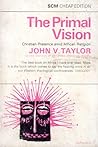
The Primal Vision

The Primal Vision by John V. Taylor
My rating: 5 of 5 stars

This is one of those life-changing books, which changed my attitude to a lot of things, and taught me things that proved useful in later life.

It is part of a series of books on Christian presence among other religions -- in this case the religions of sub-Saharan Africa. John V. Taylor, a British Anglican, served in East Africa, and read widely in books about other parts of Africa. He noted that in much of Africa Christianity was a classroom religion, because that is how it was taught to many Africans, and so it was remote from the everyday life of the people.

I later learned different words to describe what Taylor wrote about -- that sub-Saharan Africa had a premodern culture, and missionaries from the West had, by the 19th century, inculturated Christianity in to modernity, and so found it difficult to communicate it to pre-modern Africans. Western Christianity had been reshaped to deal with modern problems; and so could not help Africans with many of the problems they faced. So Western missionaries concluded that civilisation must precede Christianisation. Africans had to be modernised to that they could have the modern problems that modern Christianity had been contextualised to solve, the problems of an urban industrialising society. 

The book was written more than 60 years ago, and Africa has changed, as has the West, from which most Christian missionaries to sub-Saharan Africa  came in the 19th and early 20th centuries. It was written before the rise of Neopentecostal megachurches, which have modernised African Christianity in ways that Taylor never thought of.

I first read The Primal Vision 1967, and then again four years later. In between those readings I read The Secular City by Harvey Cox, a paean of praise to Western modernity. Where Taylor saw the value of the premodern worldview, in which the world was seen as enchanted and alive, Cox says

Both tribal man and secular man see the world from a particular, socially and historically conditioned point of view. But modern secular man knows it, and tribal man did not. Therein lies the crucial difference. The awareness that his own point of view is relative and conditioned has become for secular man an inescapable component of that point of view.
Both books show how some people, at least, saw these things in the 1960s, but they also worth reading to see how we got to where we are now. View all my reviews

05 June 2023

St Boniface of Crediton, church history, and missiology

Today (June 5) is the feast of St Boniface of Crediton, Apostle of Germany. 

As a missiologist, I've always found him interesting, and one of the most interesting missiologial things about him is that most missiologists pay little attention to him, and quite a lot of them are perhaps not even aware that he existed. 

He was born in Crediton in Devon in England about AD 680, and died a martyr's death in Frisia about 754. His original name was Wynfrith and he became a Benedictine monk. He went on a missionary journey to Frisia but found that no one was interested in his message there and the King opposed the Christian message.

He then travelled to Rome, and got the support  of the Roman Pope to reorganise and beef up the infant German church (which had been established by earlier rather haphazard Irish missionaries) and get it more active in mission. He did this with considerable success in Thuringia, Bavaria and Hesse. The Roman Pope Gregory II, on getting news of this summoned him to Rome and gave him more enthusiastic support. 

Boniface then returned to Germany, and the Hessian Christians, we are told, approached him with a problem. Some were pure in their faith, but others still retained practices that the purer ones thought were not compatible with the Christian faith, such as divination using the entrails of sacrificed animals, or from the flight of birds, and engaging in incantations and sacrifices. They urged Boniface to cut down a large oak tree that was much revered by pagans, and as he began to do so, amid the angry mutterings of the pagan spectators, a "blast from above" felled the tree without any human help, and we are told that most of the pagan spectators were so impressed that they converted on the spot. Boniface himself, however, in a report to Pope Gregory II, said that this account was exaggerated.

Boniface went on to reform the Frankish Church, and later became Archbishop of Mainz. Perhaps he found that too dull, and felt that he wasn't cut out to be an administrator, so he resigned and went back to being an active missionary again, on the scene of his earlier unsuccessful mission to the Frisians. He was reading the scriptures to a group of new Christians when a group of pagans attacked and killed him.

The treatment of Boniface by church historians and missiologists

My daughter, Julia Bridget Hayes, has painted an ikon of St Boniface, and he is remembered in the Orthodox Church as well as in the Western Church, though not perhaps as well as he might be, but the different treatment by church historians and missiologists is something else. 

I had done a BA degree at the University of Natal, majoring in Biblical Studies and Theology, with a couple of years of secular history as well. Later I did a BTh degree at Unisa, majoring in Church History and Missiology, which I found more interesting. The church historians made quite a big thing of Boniface, and went into some detail, and I wrote an assignment on him. 

Some time later I mentioned him in a missiology assignment. I thought it was perhaps significant that Boniface was English, and that the English had migrated to Britain from Germany over the preceding 200 years, and their kingdoms in southern Britain eventually amalgamated to form England. 

Boniface therefore went to the land that the English had originally come from, and so the language and culture of the people would not be entirely alien to him. We can still read and understand the English of the 1820s now, and so Boniface would hot have had any more difficulty in making himself understood than a US evangelist in the UK would today. He might annoy people with his message and some of his new-fangled cultural ideas, but he would be understood. 

I mentioned this in a missiology essay on cross cultural mission, and my professor, David Bosch, was quite astounded. It was clear that such a thing had never occurred to him before. He had no doubt heard of St Boniface, but obviously had never thought of him as missiologically significant. 

I began wondering about church historians and missiologists living in separate silos, each being unaware of the others were doing. The church historians found Boniface tremendously important, but not for his missionary work or his missionary methods. No, what they found important was not what he did in Germany, but the fact that he went to Rome. The significant thing about this for church history was that it marked a stage in the growing influence and power of the Pope of Rome, and it was therefore a stage in the development of the papacy.

But as a missiologist I thought there were other things worth noticing. The wandering Irish missionaries who had preceded Boniface were travelling evangelists, perhaps like the tent evangelists of the 20th century; they may have made converts, but they did not plant functioning churches. Boniface was a church-planting missionary, and one of his priorities was to establish Benedictine monasteries ans centres of Christian life and growth. He was so good at this that the Roman Pope asked him to reorganise the whole Frankish Church.

And one more thing worth remembering is that it was monastic missionaries who took the Christian message throughout Europe, and the tool for the evangelisation of Europe was forged in Africa, where Christian monasticism first developed. Long before Europeans evangelised Africa, African Christians created the tools that evangelised Europe.

27 June 2012

Ridiculous beliefs

I came across this when someone retweeted it on Twitter, with the comment "Ridiculous beliefs".

I agree.

The problem is, though, that I cannot recall ever meeting anyone who actually believes that.

Can you call something a "belief" if no one believes it?

If any member of the Orthodox Church said they believed such things, they would, sooner or later, be told that they were heretical. The whole thing is heretical, and every single clause is heretical.

The Roman Catholic Church, I should think, would have a similar reaction. I don't know if they still have the Inquisition, but they'd revive it pretty quickly if lots of people started saying that they believed that stuff.

Protestants?

Well, it's a bit harder to say with Protestants , because there are so many different varieties of Protestantism that it is conceivable that there is some sect, somewhere out there, that might believe one or more of those things. But, as I said, I haven't actually met anyone who believes them.

But, in one sense, that would be beside the point. It's obviously a caricature, and it's not meant to represent any beliefs that anyone actually holds.

So what is it meant to represent?

What is it supposed to communicate, about what, and to whom?

Perhaps we could try to deconstruct it.

Here are some of my attempts at deconstruction. If anyone can come up with other ideas, please add them in the comments.

1. My first thought is that it is a piece of "feel good" propaganda by militant atheists for militant atheists. By caricaturing Christian beliefs, and presenting them as ridiculous, they can feel smug and superior when comparing themselves with Christians. So it enables them to feel good about themselves. Some may be aware that it is a caricature, others may not, but that doesn't matter much, because the main point is to feel superior.

2. The second one is a little more sinister. This is that it is propaganda by by militant atheists for ordinary don't care atheists, for agnostics, for anyone who is not a Christian, and who is ignorant about Christianity, with the aim of getting them to reject Christianity because they reject a caricature. It is possibly calculated to stir up hatred for Christians. In other words, it is a caricature verging on "hate speech".

But in deconstructing it, we need to go a bit deeper than that.

Where did the caricature come from? What is its source?

A friend of mine, now a retired Anglican bishop, once wrote the following about Christian mission:
The Church exists for mission, not merely by words, but by representing Christ. Its work is not to convert, that is the Holy Spirit's work; ours is to preach (Mark 16:15). `Think not of the harvest, but only of proper sowing.' We bear witness, whether they hear or whether they forbear' (Ezekiel 2:5 etc.). Our task, and it is quite sufficient to keep us going without bothering about the consequences, is to make sure that if people reject Christ, they reject Christ and not a caricature of him, and if they accept him, that they accept Christ and not a caricature. If they reject, we remember that Christ got the same treatment - in fact half our problem is that we require something better than the success of Christ. We are not to cast pearls before swine (Matthew 7:6) - we are not to try to `fix up' people's salvation against their will; `to try to force the word on the world by hook or by crook is to make the living word of God into a mere idea, and the world would be perfectly justified in refusing to listen to an idea which did not appeal to it'. This is the way we seek Christ's success. The Church is not to be like a mighty army, pressing on regardless; it is more like a bloody doormat - a phrase which could even fit the Master of the Church himself, for it is only by the cross and precious blood of Christ that we are what we are, and he himself is the way on which we must tramp and maybe wipe our boots as we come to the Father (John 14:6). This is the kind of Saviour we represent.

And I suggest that in many ways the caricature has come from Christians themselves, from Christians who have done some of the things suggested in the paragraph I quoted -- tried to fix up people's salvation against their will, tried to make the living word of God into a mere idea, tried to present a caricature of Christ rather than Christ himself.

And that is in fact the original sin, because it goes back to the Garden of Eden, when Adam and Eve presented a caricature of God to the snake.

God said to Adam and Eve that they could eat the fruit of any tree in the garden but one. And the snake asks what God said, and Eve said that God had told them not to eat from that tree, but also not to touch it. That is an extensive exaggeration of what God said. An ogre God sounds more impressive than the true God. And right up till now there have been Christians who have presented an ogre God.

I was once at a church youth group where an evangelist was speaking. At the time there were some popular bumper stickers on cars that had a picture of a smiley face, and the legend, "Smile, God loves you."

The evangelist denounced these in no uncertain terms.

"That's wrong," he said. "God doesn't love you, he is very angry with you because you're a sinner. He was so angry that he killed His Son."

That was presenting an ogre God, a caricature. And one doesn't have to take the caricature a whole lot further to get to the statement, in the picture above, "I will kill myself as a sacrifice to myself."

So I would say that if atheists want to reject Christ, then it is better that they reject Christ rather than that they reject a caricature of him, or even accept a caricature of him.

But it is much more important that Christians should not present a caricature in the first place.
17 March 2012

St Patrick's Day

It is said that St Patrick drove the snakes out of Ireland, which is why there are now no native snakes there.

There have been various explanations of this, and of how it was done. I rather like this one, hat-tip to Casher O'Neill.

Here's another one, with a more scientific explanation: nourishing obscurity | St Patrick’s Day mood setter.

On a more serious note, there's this:

Saturday 17th March 2012
* Tone 6 - Third Saturday of Great Lent
* Memorial Saturday
St Alexius the Man of God, in Rome (411)
St Patrick, Bishop of Armagh, Apostle to the Irish (?461)
St Withburga, Solitary at Holkham and East Dereham (c 743)
Martyr Marinus, Soldier, at Caesarea in Palestine (260)
St Ambrose, Deacon, and disciple of St Didymus (400)
Monk-Martyr Paul of Cyprus (767)
St Macarius, Abbot, Wonderworker of Kalyazin (1483)
Hieromartyr Gabriel of Mtsyr (Georgia) (1802)
Revised Julian (New Style) Calendar

And, from Orthodox Church in America: lives of the saints:

Commemorated on March 17

Saint Patrick, the Enlightener of Ireland was born around 385, the son of Calpurnius, a Roman decurion (an official responsible for collecting taxes). He lived in the village of Bannavem Taberniae, which may have been located at the mouth of the Severn River in Wales. The district was raided by pirates when Patrick was sixteen, and he was one of those taken captive. He was brought to Ireland and sold as a slave, and was put to work as a herder of swine on a mountain identified with Slemish in Co. Antrim. During his period of slavery, Patrick acquired a proficiency in the Irish language which was very useful to him in his later mission.

He prayed during his solitude on the mountain, and lived this way for six years. He had two visions. The first told him he would return to his home. The second told him his ship was ready. Setting off on foot, Patrick walked two hundred miles to the coast. There he succeeded in boarding a ship, and returned to his parents in Britain.

Some time later, he went to Gaul and studied for the priesthood at Auxerre under St Germanus (July 31). Eventually, he was consecrated as a bishop, and was entrusted with the mission to Ireland, succeeding St Palladius (July 7). St Palladius did not achieve much success in Ireland. After about a year he went to Scotland, where he died in 432.

Patrick had a dream in which an angel came to him bearing many letters. Selecting one inscribed "The Voice of the Irish," he heard the Irish entreating him to come back to them.

Although St Patrick achieved remarkable results in spreading the Gospel, he was not the first or only missionary in Ireland. He arrived around 432 (though this date is disputed), about a year after St Palladius began his mission to Ireland. There were also other missionaries who were active on the southeast coast, but it was St Patrick who had the greatest influence and success in preaching the Gospel of Christ. Therefore, he is known as "The Enlightener of Ireland."

His autobiographical Confession tells of the many trials and disappointments he endured. Patrick had once confided to a friend that he was troubled by a certain sin he had committed before he was fifteen years old. The friend assured him of God's mercy, and even supported Patrick's nomination as bishop. Later, he turned against him and revealed what Patrick had told him in an attempt to prevent his consecration. Many years later, Patrick still grieved for his dear friend who had publicly shamed him.

St Patrick founded many churches and monasteries across Ireland, but the conversion of the Irish people was no easy task. There was much hostility, and he was assaulted several times. He faced danger, and insults, and he was reproached for being a foreigner and a former slave. There was also a very real possibility that the pagans would try to kill him. Despite many obstacles, he remained faithful to his calling, and he baptized many people into Christ.

The saint's Epistle to Coroticus is also an authentic work. In it he denounces the attack of Coroticus' men on one of his congregations. The Breastplate (Lorica) is also attributed to St Patrick. In his writings, we can see St Patrick's awareness that he had been called by God, as well as his determination and modesty in undertaking his missionary work. He refers to himself as "a sinner," "the most ignorant and of least account," and as someone who was "despised by many." He ascribes his success to God, rather than to his own talents: "I owe it to God's grace that through me so many people should be born again to Him."

By the time he established his episcopal See in Armargh in 444, St Patrick had other bishops to assist him, many native priests and deacons, and he encouraged the growth of monasticism.

St Patrick is often depicted holding a shamrock, or with snakes fleeing from him. He used the shamrock to illustrate the doctrine of the Holy Trinity. Its three leaves growing out of a single stem helped him to explain the concept of one God in three Persons. Many people now regard the story of St Patrick driving all the snakes out of Ireland as having no historical basis.

St Patrick died on March 17, 461 (some say 492). There are various accounts of his last days, but they are mostly legendary. Muirchu says that no one knows the place where St Patrick is buried. St Columba of Iona (June 9) says that the Holy Spirit revealed to him that Patrick was buried at Saul, the site of his first church. A granite slab was placed at his traditional grave site in Downpatrick in 1899.

09 October 2010

Tall Skinny Kiwi: Get Ready for Lausanne World Congress

For the last couple of months I've been keeping an eye on the Lausanne Conversation, but there has been very little about it in the South African blogosphere. Perhaps a prophet is not without honour, except in his own country. Here's what a New Zealander living in Europe has to say about it Tall Skinny Kiwi: Get Ready for Lausanne World Congress:
The global mission event of the century is only a week away! Its the Third Lausanne World Congress on World Evangelization also known as Lausanne 3.

Its huge.

We're talking 5000 invited delegates from all over the world.

Its bigger than Lausanne 1 and even bigger than Lausanne 2.

Its bigger than Edinburgh 1910 and 2010

Its the most wired, webbed, blogged, twittered, streamed missions event EVER!

Its also more SOUTHERLY than any missions conference you have ever followed.

It happens in Cape Town, South Africa and it starts next week. Like Oct 16 - 25th

Overblown hype? A lot of South Africans seem to think so, to judge from the way most South African bloggers are ignoring it.

Andrew Jones, alias Tall Skinny Kiwi, is one of the gurus of the emerging church movement. you can engage with him on his blog, or at the Lausanne Conversation here.

01 October 2010

The Western Confucian: A Tale of Two Missiologies

More than a hat-tip to The Western Confucian: A Tale of Two Missiologies

  • Father Maryknoller in Korea on "what it was like in the [Catholic] mission stations during the early days of persecution" — How the Early Christians Nurtured the Church in Korea — and on the queen who "while her husband was torturing priests and thousands of native [Catholic] Christians... was secretly studying the catechism and preparing herself for baptism" — A True Story by Bishop Mutel, Bishop of Seoul, 1890.

  • Robert Neff on "violent Christian [Protestant] missionaries who did not respect Korean culture and the needs of the local people" and came only after the persecution ended — Were early Christian missionaries in Joseon Korea violent?


  • I would be interested to learn most about how this was affected by John Nevius, who, I have heard, had a different approach from that of most Protestant missionaries of his time (1890s) -- see Nevius, Allen, Kasatkin | Khanya.

    St Nicholas of Japan (Orthodox, in Japan), Roland Allen (Anglican, in China) and John Nevius (Presbyterian, in Korea) advocated methods that differed from those of their contemporaries, and which Robert Neff's article complains about. I know least about Nevius, and would be interested in learning how his methods contrasted with those described in Neff's article.

    25 January 2010

    Brethren, what shall we do?

    In looking at other blogs this morning, I came across three in a row that dealt with questions about what Christians can do about injustice and suffereing in the world. Not just talk about it, not just deplore it, not just theologise about it, but DO something about it.

    My friend Jim Forest writes in his blog On Pilgrimage: Works of mercy:
    For many Protestants, the single criterion for salvation is making a “decision for Christ” -- an intellectual affirmation that Christ is Lord. It has very little to do with how we live and everything to do with how we think. But Jesus, as we meet him in the New Testament, says very little about the criteria for salvation at the Last Judgment. Mainly the Gospel has to do with how we live here and now and how we relate to each other. Jesus sums up the law and the prophets in just a few words: to love God with all one's heart, mind and soul, and to love one's neighbor as oneself. Just one sentence.

    and goes on to say

    Main point? The works of mercy (feeding the hungry, giving drink to the thirsty, etc.) connect us to the God of Mercy.

    There are many works of art that give visual expression to this crucial aspect of the Gospel. Among those I find most impressive is a very local work of art made in 1504 by an artist who is known only as "the Master of Alkmaar." Originally his seven-panel work hung in the Holy Spirit House of Hospitality in Alkmaar. Later it was moved to the town's cathedral. In the last century, it became part of the Rijksmuseum collection in Amsterdam. Currently, while the Rijksmuseum is undergoing reconstruction, it hangs in Rotterdam at the Boijmans Museum, where Nancy and I visited it yesterday.

    In five of the seven panels, Christ -- without a halo -- is present but unrecognized. In this first panel, he looks directly toward the viewer. Only in the panel of the burial of the dead, sitting on a rainbow, is Christ revealed as Pantocrator, Lord of the Cosmos.

    And then Julie Clawson writes in Walking the Justice Walk: onehandclapping:
    in the large sessions I attended at Urbana, I heard a lot about the pain in the world. I saw that there were starving and hurting people. I was also told that I am self-centered for Facebooking and Twittering. I heard the stories of immigrants who have nothing and are desperately trying to survive. I was shown the magnitude of my consumption habits. And Shane Claiborne even told me how evil it is to live in empire that hurts instead of helps the world. I got the message. I felt guilty. I understood that I should care for others. But nowhere did I hear what I should be doing instead. I heard loud and clear what is wrong with the world, but nothing about what I need to do to make it right.

    Perhaps one possible answer is to be found at Margaret Pfeil: Tradition is a living thing | Faith & Leadership:
    Catholic Worker houses were founded by Day (1897-1980) and seek to foster practice of the church’s traditional corporal works of mercy (to feed the hungry, give drink to the thirsty, clothe the naked, visit and ransom the captives, shelter the homeless, visit the sick and bury the dead) and spiritual works of mercy (to admonish sinners, instruct the ignorant, counsel the doubtful, comfort the sorrowful, bear wrongs patiently, forgive all injuries and pray for the living and the dead). Catholic Worker houses also advocate for social justice in their local communities and beyond. Hat-tip to A Pinch of Salt: Margaret Pfeil on Dorothy Day

    And I am reminded of a book I read more than 40 years ago, on the eve of writing a doctrine exam. It was far more interesting than my textbook, which I should have been reading. One way of escaping, as I said, is to theologise about it. We need a new theolo9gy of this or a new theology of that, people say. I know, I've been there, done that, made that excuse myself, and perhaps am guilty of that right now by blogging about it instead of doing something about it. And the book, by Colin Morris, a Methodist missionary in Zambia, put it in a nutshell:

    That phrase Revolutionary Christianity is fashionable. But what it describes is more often a way of talking than a way of walking. It is revolution at the level of argument rather than action. We take daring liberties with the Christianity of the Creeds and the traditional ideas about God. We go into the fray armed to rend an Altizer or Woolwich apart of defend them to the death. We sup the heady wine of controversy and nail our colours to the mast -- mixing our metaphors in the excitement! The Church, we cry, is in ferment. She has bestirred herself out of her defensive positions and is on the march! And so she is -- on the march to the nearest bookshop or theological lecture room or avant garde church to expose herself to the latest hail of verbal or paper missiles. This is not revolution. It has more in common with the frenzied scratching of a dog to rid itself of fleas than an epic march on the Bastille or the Winter Palace. Revolutionary Christianity is so uncomplicated in comparison that it is almost embarassing to have to put it into words. It is simply doing costly things for Jesus' sake.

    Dorothy Day did that, and so did Methodist Bishop Paul Verryn, but what about the rest of us?

    11 June 2009

    Hope Transfigured: Crusading Koreans?

    Hope Transfigured: Crusading Koreans?:
    With Korea now sending more cross-cultural missionaries than any other country outside the US (so Julie claimed) their missiology and methodology must be significant. I was struck by how many times Julie spoke of the Korean mindset as 'crusading' - ouch!! - but she's right in many respects. Another colleague later talked of Korean missionaries as being 'modern' (rational, linear, success oriented, goal setting) and therefore finding it difficult to address pre- and post-modern mission contexts.

    When I read this paragraph in Mark Oxbrow's blog (I met Mark at the conference of the International Association of Mission Studies - IAMS - at Hammanskraal in 2000) I briefly wondered what might have caused Korean missionaries to become "modern", and then I remembered the Haggai Institute.

    I attended a mission training course at the Haggai Institute in Singapore in May 1985. It lasted a month, and there were people there from nineteen different countries, including four South Africans. The aim was to train third-world leaders in mission methods in such a way that they could return to their own countries and train others. And one of the things that characterised the traning was that it was modern -- rational, linear, success-oriented, goal setting. I found the training quite useful, though some parts were more useful than others.

    The teaching was done by various people, from different backgrounds. Some of was informational -- for example on religions like Islam and Hinduism. Some was academic -- a sociology lecturer from the University of Singapore taught several classes. Some were practical "how to" lessons -- one taught about writing, preparing manuscripts for publication, using audiovisual media (especially where there was no mains electricity) and so on. Some were more theological -- on the Biblical basis and theology of missions. And some were a bit like motivational speakers, and the modernity was especially apparent in what they said.

    I wouldn't knock that either, however. I found it useful, not so much for setting goals myself (I tend not to work like that) but for questioning the goals of activities proposed by others and even me. Step-by-step goal-setting and working everything out on paper beforehand just isn't my style, but it can be useful when someone comes up with an idea that sounds impressive until one tries to determine the goal behind it, and then suddenly it become clear that there are many better ways of reaching that goal, and that the activity proposed might actually be counterproductive in reaching the stated goal. And if people persist in pursuing the proposed couse of action, one then needs to look for an UNstated goal. An example (with which most people are no doubt familiar) is the US invasion of Iraq. What was it intended to achieve? What did the initiators SAY it was intended to achieve? Was it the best way of achieving what they SAID they wanted to achieve? And with hindsight, what did it actually achieve.

    That may seem remote from a mission goal, but remember that at one point George Bush said "mission accomplished" -- so what was the mission, and was it accomplished?

    But that is an illustration. The questions about it are rhetorical, so please don't try to answer them in comments!

    The point here is that goal-setting is part of the modern approach that characterises Korean missionaries. And a bit strange, that, too, talking of "Korean missionaries". Because they are all, I am fairly sure, SOUTH Korean missionaries. I have my doubts that NORTH Korean missionaries, if any, take that approach.

    When I was at the Haggai Institute there was one person there from South Korea, Byung Jae Jeong. We were the 85th and 86th session, so if there was an average of one South Korean for every two sessions, by that stage the Haggai Institute would have trained about 43 from South Korea. Each of them was supposed to train 100 others, so that would be about 4300 South Koreans trained in modern methods.

    I don't think that the Haggai Institute was alone in training people from Asian, African and South American countries in the use of modern methods, but it can illustrate the way in which others may have offered similar training.

    In this, perhaps one can see Christianity as acting as a kind of agent of modernity in South Korea, and perhaps other Asian countries, and possibly in Africa and Latin America as well.

    And using the training in goal setting I received from the Haggai Institute, I ask: what are the intended and unintended consequences of this?

    30 May 2009

    A Constantinian moment for China?

    Western missiologists seem to have a fixation on Constantine as the prime villain of Christian history (see Notes from underground: St Constantine, Scapegoat of the West) but some are now hinting at a new Constantinian moment in the East.

    The Western Confucian: A Chinese Constantine?:
    Father Francesco Sisci says the 'exponential growth of Christianity in China would not have been possible without the forbearance and tacit encouragement of the regime' and that 'the Chinese government has shifted from persecution of Christians to subtle—and sometimes even open—encouragement of Christianity' — China's Catholic Moment.

    He goes as far as to suggest that 'it is not an exaggeration to say we are near a Constantinian moment for the Chinese Empire, as the government looks to Christianity—particularly Catholicism—for an instrument of social cohesion.'

    27 May 2009

    Missions pioneer Ralph Winter dies : Townhall.com

    I never met Ralph Winter, the missiologist who died last week, but through his writing and speaking and ideas he changed my life.

    A few days ago I wrote a blog post in which I mentioned Ralph Winter, and the next day I learned that he had died.

    News Headlines - Missions pioneer Ralph Winter dies : Townhall.com:
    Ralph Winter a veteran missiologist who 35 years ago sparked an emphasis on unreached people groups worldwide died at his home in Pasadena Calif. May 20 after a struggle with cancer. He was 84. In 2005 Time magazine listed Winter as one of the 25 most influential evangelicals in America noting that in 1974 at the International Congress on World Evangelization in Lausanne Switzerland Winter revolutionized missionary work overseas by calling Christians to look beyond national borders and serve the world's 'unreached people.'

    Winter's influence on me began when I attended SACLA, the South African Christian Leadership Assembly, in 1979.

    There was a hall there where various Christian groups and NGOs were displaying their wares, and among them were many mission societies. It took me back to my schooldays when we had had speakers many of from some these mission societies, and I was rather surprised to find that they still existed. I collected their leaflets: the Sudan Interior Mission, the Sudan United Mission, the Leprosy Mission (formerly Mission to Lepers), and the Overseas Missionary Fellowship (formerly the China Inland Mission).

    I remembered the last one well. A former missionary called Melsopp came to speak to us at school on several occasions, and he showed us Chinese dress, and spoke about Chinese culture, and emphasised the efforts of the missionaries of the China Inland Mission to identify with Chinese culture. Along with other Western missionaries, he had been kicked out of China in 1950 after the communist revolution there.

    But there was one stall that had something new and different. It was about "Unreached Peoples", and it was manned by Debbie Bliss. I talked to her for quite a while, and she explained to me Ralph Winter's concept of "unreached peoples", and gave me more literature, which I read.

    I was studying for History Honours at the University of South Africa (Unisa), and had done the first two Honours papers, but when I came to the last three the university put the fees up so that I could no longer afford them (I later worked for Unisa, and was able to complete the degree ten years later, with the help of a staff discount). But to continue studying I registered for a second bachelors degree, a B.Th., majoring in missiology -- a choice influenced by Ralph Winter's thought. At that time the B.Th. course was divided into 30 modules, which were cheaper than the postgraduate honours papers, so I could afford them.

    At that time I was Director of Training for Ministries for the Anglican Diocese of Zululand, and my main work was training self-supporting priests and deacons. An influential section of the church-supported clergy were opposed to self-supporting ministry, and introduced rules and regulations designed to make it more difficult for people to join the training programme, so I left to become Director of Mission and Evangelism in the Anglican Diocese of Pretoria, and one of the things we did there was hold an "Institute of International Studies", with the help of David Bliss (husband of the aforementioned Debbie Bliss). The course was based on a book edited by Ralph Winter, Perspectives on the world Christian movement, a collection of essays on various missiological topics. The essays in the book were a mixed bag, but the ones that impressed me most were two by Winter himself -- The kingdom strikes back and The two structures of God's redemptive mission.

    At the "Perspectives" course we also had a video of Ralph Winter speaking about "The Kingdom strikes back", and that was even more impressive than it was on paper. It changed the way I looked at church and mission history.

    One of the points that Winter makes is in the section on "No saints in the middle?":

    It is wise to interrupt the story here. If you haven’t heard this story before you may confront a psychological problem. In church circles today we have fled, feared or forgot- these ten middle centuries. Hopefully, fewer and fewer of us will continue to think in terms of what may be called a fairly extreme form of the “BOBO” theory—that the Christian faith somehow “Blinked Out” after the Apostles and “Blinked On” again in our time, or whenever our modern “prophets” arose, be they Luther, Calvin, Wesley, Joseph Smith, Ellen White or John Wimber. The result of this kind of BOBO approach is that you have “early” saints and “latter-day” saints, but no saints in the middle.

    Thus, many Evangelicals are not much interested in what happened prior to the Protestant Reformation. They have the vague impression that the Church was apostate before Luther and Calvin, and whatever there was of real Christianity consisted of a few persecuted individuals here and there. For example, in the multi-volume Twenty Centuries of Great Preaching, only half of the first volume is devoted to the first 15 centuries! In evangelical Sunday Schools, children are busy as beavers with the story of God’s work from Genesis to Revelation, from Adam to the Apostles—and their Sunday School publishers may even boast about their “all-Bible curriculum.” But this only really means that these children do not get exposed to all the incredible things God did with that Bible between the times of the Apostles and the Reformers, a period which is staggering proof of the unique power of the Bible! To many people, it is as if there were “no saints in the middle.”

    And I discovered that the Missiology Department at Unisa also operated on that assumption. After a look at the "Biblical basis of mission" they would jump straight to Western missionary movements after the Renaissance -- there were no saints in the middle.

    I remember in one essay I mentioned St Boniface, the English apostle to the Germans. I noted that since the English had immigrated to Britain from Germany in the preceding centuries, Boniface would probably not have had as many language difficulties as missionaries going from other places. Prof. David Bosch, who marked my essay, was quite incredulous. The idea had never occurred to him. Western missiologists, with one notable exception, simply ignored anything that happened in that period. The exception was Ralph D. Winter.

    So when I came to do my doctoral thesis on Orthodox mission methods I modelled it, in part, on Ralph Winter's The Kingdom strikes back. Winter's account of ten epochs of redemptive history mainly followed Western mission, but I thought the same could, and should be done for Orthodox mission, to highlight the "saints in the middle". Some warned that this was far too broad for a doctoral thesis, which should be on a very narrow topic. But I thought that Western missiology was far too narrow-minded, and that something broader was needed. And Ralph D. Winter provided the inspiration to broaden it.

    Thirty years ago the focus of my life switched to mission and missiology, and in that switch the thought of Ralph D. Winter played no small part.

    So that's how Ralph Winter influenced me. He influenced many other people, in many different ways. You can read about how he influenced Tall Skinny Kiwi here, for example.

    20 July 2008

    Credo: the average Anglican is a black, female teenager -Times Online

    Credo: the average Anglican is a black, female teenager -Times Online:
    Recently a friend informed me that missiology is really just “a white man’s theology.” As a student of missiology and a woman, I felt the need to counter this. Yet what is missiology? Well, my friend was right that it began with white men taking Christianity, commerce and civilisation beyond Europe. This is exactly what missiology endeavours to study. It is a critical reflection on theories of mission, research into mission and critique on how mission is done.

    It's a moot point, however.

    Missiology, like ecclesiology, is indeed pretty recent as an academic discipline. Both began within the last 150 years, if not more recently. But their field of study goes back a long way before -- the Christian church and mission began long before there were names for academic disciplines devoted to studying them, and go back to a time before there were any Christian white men in Europe.

    Yes, Christianity did first reach North and South America from Western Europe, but missiology can also study they way in which Christianity first reached some of the countries in Western Europe that took Christianity to those places. Christianity began in Asia, and reached parts of Africa before it reached northern Europe, even if it was people from northern Europe who first brought Christianity to southern Africa.

    It actually works both ways. African missionaries evangelised parts of Europe long before and European missionaries came to Africa.

    It depends on your perspective, that's all.

    23 June 2008

    Missional Synchroblog

    Today there will be a Missional synchroblog, where 50 bloggers discuss the term "missional" and what it means to them.

    In calling for a missional synchroblog Rick Meigs says:

    I have a continuing concern that the term missional has become over used and wrongly used….I think it is time to make a bigger effort to reclaim the term, a term which describe what happens when you and I replace the “come to us” invitations with a “go to them” life. A life where “the way of Jesus” informs and radically transforms our existence to one wholly focused on sacrificially living for him and others and where we adopt a missionary stance in relation to our culture. It speaks of the very nature of the Jesus follower.

    Rick also says quite a bit about the word “missional” on his Web page Friend of Missional.

    My contribution is posted on my Khanya blog.

    You may find the participating blogs at the links below:

    Alan Hirsch
    Alan Knox
    Andrew Jones
    Barb Peters
    Bill Kinnon
    Brad Brisco
    Brad Grinnen
    Brad Sargent
    Brother Maynard
    Bryan Riley
    Chad Brooks
    Chris Wignall
    Cobus Van Wyngaard
    Dave DeVries
    David Best
    David Fitch
    David Wierzbicki
    DoSi
    Doug Jones
    Duncan McFadzean
    Erika Haub
    Grace
    Jamie Arpin-Ricci
    Jeff McQuilkin
    John Smulo
    Jonathan Brink
    JR Rozko
    Kathy Escobar
    Len Hjalmarson
    Makeesha Fisher
    Malcolm Lanham
    Mark Berry
    Mark Petersen
    Mark Priddy
    Michael Crane
    Michael Stewart
    Nick Loyd
    Patrick Oden
    Peggy Brown
    Phil Wyman
    Richard Pool
    Rick Meigs
    Rob Robinson
    Ron Cole
    Scott Marshall
    Sonja Andrews
    Stephen Shields
    Steve Hayes
    Tim Thompson
    Thom Turner

    06 May 2008

    Putin picks a church?

    Another example of the truism that the media just don't "get" religion!

    But this article from the New York Times is more than that. It illustrates some of the huge cultural barriers to understanding between Christians of different understandings and traditions, especially when they are filtered through nationalistic spectacles.
    clipped from www.nytimes.com

    There was a time after the fall of Communism when small Protestant congregations blossomed here in southwestern Russia, when a church was almost as easy to set up as a general store. Today, this industrial region has become emblematic of the suppression of religious freedom under President Vladimir V. Putin.

    Just as the government has tightened control over political life, so, too, has it intruded in matters of faith. The Kremlin’s surrogates in many areas have turned the Russian Orthodox Church into a de facto official religion, warding off other Christian denominations that seem to offer the most significant competition for worshipers.

    Mr. Putin makes frequent appearances with the church’s leader, Patriarch Aleksei II, on the Kremlin-controlled national television networks. Last week, Mr. Putin was shown prominently accepting an invitation from Aleksei II to attend services for Russian Orthodox Easter, which is this Sunday.

    blog it


    There is an excellent cultural deconstruction of this article from an American Orthodox Christian, who has had some experience of both religious cultures (Orthodox and Protestant) and both national cultures (Russian and American) -- Notes from a Common-place Book: "Putin Picks a Church":
    There are several problems with the story, however. For starters, the title itself is ludicrous: 'At Expense of Others, Putin Picks a Church.' I find this image of Putin choosing among churches as an American would shop between denominations to be amusing. Can you really imagine Vladimir Putin trying to decide between, say, the Freewill Baptists, or Missouri Synod Lutherans, or say the New Life Covenant Believers Outreach Center (or is it the New Covenant Believers Outreach Life Center?), rather than say, the Orthodox church which has been the faith of his nation and forebears for over 1,000 years now?
    Another quote:
    Others complain that some government bureaucrats and Orthodox priests do not show proper respect to Protestants, labeling them "sects" and "heretics." We are accustomed to making distinctions between the term "denomination" (which is acceptable) and "sect" (which is unacceptable). Many Americans assume our situation to be normative, and one that should be a model for less enlightened lands. We are too deep in the forest to see the truth behind the shopping mall this is American religiosity. Our situation is nothing short of bizarre. Russians see little substantive differences between denomination and sect. Why should we expect them to play our silly word games?
    And of course the word games also work the other way:
    Many Russians perceive it as alien to their culture. This suspicion was not helped when Western missionaries rushed in after the fall of communism. Eager evangelicals viewed the society as completely atheistic. To the extent that they were aware of Russian Orthodox Christians, they were dismissed as superstitious quasi-Catholics, who were not really Christian at all. I know, for I was an evangelical in those days. The Russian Orthodox Church, which had to begin rebuilding, retraining and teaching at that same time, was obviously frustrated by the crush of Western missionaries. But the situation is changing. The Church is resurgent in Russia today. Recent polls find that 71% of the nation considers themselves Orthodox. Studies also point out that there is something of a "baby boom" underway, and that with such, Russia may be slowing turning from the path of demographic suicide.
    Lest it be thought that this is simply Orthodox prejudice, back in 1995 Prof Willem Saayman, the head of the Missiology Department at the University of South Africa and a Protestant, visited Russia in 1995, and on his return he said very emphatically that he thought Protestant missionaries from the West should be banned from Russia because of their cultural insensitivity and blatant cultural imperialism.

    The Russian Church was like the man going from Jerusalem to Jericho who fell among thieves, and Western Christians came but, unlike the priest and the Levite in the story, they did not pass by on the other side, but rifled the victim's pockets while he was still unconscious to see what the robbers had left.

    And it was not only Orthodox Christians who suffered from this process, Russian Protestants did as well. The story was told of one Protestant church where the congregation had not heard their own pastor preach for more than a year, because there were so many American visitors who were absolutely convinced that the Lord had laid a message on their hearts that they simply had to give that congregation.

    For a Russian Protestant viewpoint on this process, see Mission in post-perestroika Russia by Johannes Reimer. Though the article is somewhat dated, it does give the background against which the present Russian suspicion of foreign Protestant mission groups needs to be seen.

    One of the interesting thing about the rush of Western Protestant missionaries to the former Second World in the early 1990s is that quite a surprising number of them have become Orthodox. Something that impressed them was the faith of Orthodox Christians who had lived under atheist hegemony.

    Back in the 1970s, when atheistic communism seemed well entrenched in the Second World, I met a Croatian Catholic priest at a Catholic charismatic prayer meeting in Durban. He remarked that everywhere he went in the West, Christians prayed for those behind the iron curtain, that they would have faith. "They may lack many things," he said, "but one thing they do not lack is faith. Their faith is far stronger than that of most of the Western Christians I have met."

    30 March 2008

    Juggling with Jelly: A new church

    There's a lot of talk these days about the emerging church. Here's a story about church growth and the submerging church.

    A church building closed for rebuilding, and the congregation split up and scattered, and, as it were, sank out of sight. Then it re-emerged after the building alterations were completed, and found they had added 100 members.

    Juggling with Jelly: A new church
    Before closing the church building our net annual growth had been an average of one person. Transfers out as people moved away, transfers in as people came to the area, new converts. Balanced. During our nine months without a building the net growth has been over 100 (yes one hundred). And that's just counting new converts. We have well-known evangelists amongst the congregation. They had little to do with these local converts being off elsewhere in the world.


    I discovered this story accidentally in a moribund blog that hasn't been updated for years. I sometimes want to read something different, and went interest surfing in Blogger profiles. I click on one of my interests, and see who else is interested. In this case I clicked on one of my favourite books, The Greater Trumps. It seemed quite an interesting story and worth sharing.

    21 March 2008

    Celtic spirituality

    At various times I have come across and even got involved in discussions about Celtic spirituality and the Celtic Church, topics that seem to be very popular in certain circles.

    One of the things that surprised me was the misinformation and disinformation circulating about the topic. People expressed interest in the Celtic Church, but when they came to give reasons for their interest, the reasons were often spurious, and their understanding of the Celtic Church was often completely a-historical.

    Hat-tip to A conservative blog for peace for giving a pointer to this article, which gives a good historical summary: Celtic Spirituality: Just what does it mean? [Thinking Faith - the online journal of the British Jesuits]
    But what would St Patrick - arguably the most famous Celtic saint - make of the practices and beliefs called 'Celtic Spirituality' today? Liam Tracey OSM examines whether the Celtic church was really anything like the romantic picture often painted of it.

    Tracey says of this phenomenon:
    What is so attractive about these long forgotten figures and cultures? Why has there been such a remarkable renaissance in interest in what ultimately is a small windswept island on the Western fringes of Europe? It’s hard to know and one sometimes gets the impression in looking at the phenomenon that is called ‘Celtic Spirituality,’ that what you are encountering is a screen on which is projected many contemporary desires, anxieties and preoccupations, little to do with the past and more especially with the past of these islands. Of course, one of the major problems with many of these treatments of things ‘Celtic’ is the lack of historical awareness that groups all manner of practices and writings together, with little reference to the social, religious and political context of the past and a failure to note that the same thing, seen as ‘Celtic’ was happening right throughout Western Christianity.

    Scottish Presbyterians, have, of course, long been interested in Celtic Christianity, and may have been partly responsible for the popularity of the topic, because it was Irish missionaries who first took Christianity to Scotland, and in fact the Scots were originally immigrants to Scotland from Ireland, displacing the native Picts. Calvinists are not usually given to naming churches after saints, but Celtic saints, like St Columba and St Mungo are exceptions, and one sometimes finds Presbyterian churches named for these saints.

    Anglo-Catholics, too, have sometimes stressed the role of the Celtic Church in evangelising the heathen Anglo-Saxon invaders, to diminish the idea of the Church of England's dependence on Rome. The Roman mission to Kent, led by St Augustine of Canterbury, cannot be denied, but it was mostly Celtic missionaries who evangelised the northern English.

    All this is interesting from the point of view of church history, especially if one lives in the British Isles, or is a member of a Christian denomination that had its origins there. It has even been made the subject of a popular historical novel, Credo by Melvyn Bragg.

    But it is also interesting missiologically.

    An interesting book to read is The coming of Christianity to Anglo-Saxon England by Henry Mayr-Harting (London, Batsford, 1991). ISBN: 0-7134-6589-1. It gives a good example of premodern mission methods, and the differences and similarities between the methods used by Celtic and Roman missionaries. They were far more similar to each other than either were to modern mission.

    As with Kievan Rus some centuries later, mission began with royal courts. It was King Oswald, who had just united Deira and Bernicia into the kingdom of Northumbria who asked for a missionary. He had become a Christian before he had become king, while he was living among the Irish. The first missionary proved unsuitable, so Oswald chose another, Aidan, who established a monastery on the island of Lindisfarne. Though he was bishop of the Northumbrians, he appointed an abbot to rule the monastery to whom he himself, as a monk, was subject. This was a characteristic of Celtic Christianity that has often been distorted in modern telling.

    Both the Irish and English societies, like that of Kievan Rus, were warrior and tribal societies, with economies based partly on trade, and partly on conquest and looting. In such a society a "royal mission" can seem almost a contradiction in terms. The kings in such a society were warlords whose authority in the eyes of their followers was based, at least in part, on their success in conquest. After a war raid, the warriors would return with their booty and have a feasts to celebrate. The generosity of kings in giving such feasts for their victorious followers was what cemented the bonds between leader and followers. Today we would call it "organised crime".

    Christianity, with its ethic of love and meekness, hardly seemed calculated to appeal to such people. Yet it did appeal, and, once accepted, it transformed the societies into something else. Prince Vladimir of Rus, for example, abolished capital punishment, and though he still gave feasts and banquets, he invited the poor and weak, and not just the strong, the warriors.

    The contrast between the royal courts and monasteries was perhaps significant in this. Many of the monks, including the abbots of important monasteries, refused to ride horses, but rode donkeys. Monasticism was thus a counterbalance to royal power. And several kings in that era retired to monasteries in their old age.

    Monastic missionaries in the medieval period seemed to use similar methods, from the forests of northern Russia to the British Isles, and south into the mountains of Ethiopia. The monastic missionary was

    • the exorcist, delivering people from the power of evil spirits
    • the angel, living the angelic life, constant in prayer
    • the healer, taking no money
    • the lion tamer, protecting people from dangerous wild animals

    And, unlike modern medical missionaries, they did not heal by building clinics; they healed through prayer, fasting, the sign of the cross, holy water, saliva and miracle-working ikons.

    I've sometimes wondered what might have happened if the court of King Shaka in Zululand had he had a missionary like St Aidan in Oswald's court, rather than the post-Enlightenment missionaries with their many words and rationalising arguments.

    LinkWithin

    Related Posts with Thumbnails