19 April 2026

A Twist of Sand: a novel set in Namibia 65 years ago

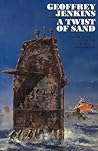
A Twist of Sand

A Twist of Sand by Geoffrey Jenkins
My rating: 4 of 5 stars

I first read A twist of Sand about 60 years ago, before I ever went to Namibia, so because that is the setting, it played a big part in my preconceptions. It is set in the Skeleton Coast, the dry north-western part of Namibia, then known as South West Africa, and ruled by South Africa. The only other thing I had read about it was set in the same area, it was a piece in a children's encyclopedia about the wreck of the Dunedin Star on the same coast. When I saw a copy of the book in a second-hand bookshop, I thought it would be interesting to read it again, after having been in Namibia.

It is the story of the captain of a trawler operating out of Walvis Bay, Geoffrey Macdonald, who is asked by a man he takes an immediate dislike to, Dr Albert Stein, if he can charter his boat to take him up to the Skeleton Coast, an the vague pretext that he is searching for an unusual beetle.Because of his past criminal activity, we discover that Geoffrey Macdonald isn't even his real name.

A Twist of Sand was the first novel by Geoffrey Jenkins to be published, and when I read first read it, soon after publication, I enjoyed it, and thought it was quite good. I read a few of his later novels, and thought they were rather flat by comparison. On rereading it, I still enjoyed it, but became aware of things about it that I missed on the first reading. For one thing, the plot is as full of holes as a Swiss cheese. The protagonist is just as much an immoral criminal as the villain. That might not be a bad thing, in some ways, it makes the book perhaps more believable than those in which the good guys are too good and the bad guys too bad.

I first went to Namibia in 1969, just 10 years after the book was published, so the country would not have changed a great deal in that time. I got a job with the Department of Water Affairs, which took me to to most parts of the country within my first three months there. and I am pretty sure that in those three months I saw more of Namibia than most people who were born there saw in their life time. In the month I spent with Water Affairs (before being fired for suspect associations with the Anglican Church and the Christian Institute) I had been to Lüderitz in the south-west (including the Koichab Pan in the prohibited diamond area that Jenkins writes about); to Kamanjab in the northwest, and had driven down the dry beds of the Hoanib and Hoarusib Rivers, experienced a break-down in a Jeep in the Kaokoveld (the dreaded Skeleton Coast that Jenkins writes about); and gone to Rundu and Mukwe and camped on the banks for the Okavango River. On these journeys, which lasted for a week to 10 days, we camped out every night, and took a trunk of tinned food to eat on the way. Any tins left over at the end of the trip looked like rugby balls and had their labels rubbed off from bouncing over rough roads and tracks.  So I know that quite a lot of what Geoffrey Jenkins said about the country was inaccurate. 

At one point in the story he has his characters going up the dry bed of the Cunene River, but it is, in fact, one of the few perennial rivers in Namibia. All the perennial rivers in Namibia are on its borders -- the Kunene (Cunene if you're in Angola), the Okavango and the Orange. All the rivers wholly within the country are seasonal (my job at Water Affairs involved servicing instruments to measure the depth of the water in the rivers when they did flow). For any one interested, you can find more descriptions of journeys in some of the remoter areas of Namibia here.

I read some of the other reviews on GoodReads, and noted that some of the reviewers said that the book was "dated" because of the racism and sexism displayed by the characters. But at that time quite a lot of the white people in Namibia were racist or sexist or both, and that was perhaps one of the more accurate portrayals in the book. he, like The violence and criminality of the main characters in the story are perhaps exaggerated; if there were characters like that back then I didn't meet them, but the racism and sexism were not exaggerated. After I was sackedand she transformed the  from Water Affairs I worked for the time on the Windhoek Advertiser, and a South African journalist, Willie Lamprecht, came to work as the assistant editor. His wife Madeleine took over the women's page, and she was a feminist, though not one spoke of feminism back then, we said rather that she was into women's liberation, and she transformed the women's page from being full of cosy housekeeping tips into pointing out how women, including black women, were overworked and underpaid. This did not go down well with the establishment at the time, and Willie and Madeleine Lamprecht were sacked after a few months.

Jenkins contrives to give the impression that the Kaokoveld was virtually uninhabited, yet if anyone entered it without a permit the police would be on to them within 24 hours. In the desert areas along the coast it was largely uninhabited, but there were people living in most places though the population was sparse. And though the police were not quite as efficient as Jenkins suggests, they did nevertheless arrest people for being there without permits -- my wife's great-uncle, Frederick Alwyn Greene, served time in prison for being in that part of the world without a permit, and he, like the characters in the story, seems to have lived on the wrong side of the law for most of his life. 

In spite of its shortcomings, however, I still enjoyed the book on a second reading. It was a toss-up whether to give it 3 stars or 4, and in the end I thought it deserved 4.


View all my reviews

17 April 2026

The Sea -- a novel of first love, marriage, loss and death

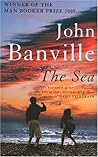
The SeaThe Sea by John Banville
My rating: 5 of 5 stars

Max Morden reflects on some of the turning points of his life after his wife dies and he tries to come to terms with widowerhood. He recalls first love, marriage, being a parent and experiencing the loss of people he has loved.

I looked at a few of the other reviews, and see that some complained that it had no plot, or that it was too slow-moving. Earlier today I read on social media about some children's programmes on TV that were said to be too fast, and recommended that parents should not allow their children to watch them, because studies had shown that they ruined children's attention span. They were fast, noisy, and no scene lasted longer than three seconds.

I found something different. The Sea was in a batch of books I had bought at a second-hand book shop a few days ago, and I looked at them all to see what I had got. And having picked this one up, I couldn't put it down. I put other books I had been reading aside, so I could finish this one. It was, as they say, a "pageturner". But why?

I think in part it was because of Banfield's detailed descriptions, both of settings and people. It made the people and places in the story seem more real, more three-dimensional. I cared what happened to them and their relationships, not only to the protagonist, but to each other. As Max Morden reflected on his experience of other people, so I reflected on mine. I appreciated the detail that came with the slow pace, which one would never see in a TV programme with scenes lasting 3 seconds or less.


View all my reviews

04 April 2026

The Other Inklings: interviews with scholars of the Oxford Inklings

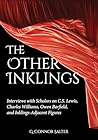
The Other Inklings: Interviews with Scholars on C.S. Lewis, Charles Williams, Owen Barfield, and Inklings-Adjacent Figures

The Other Inklings: Interviews with Scholars on C.S. Lewis, Charles Williams, Owen Barfield, and Inklings-Adjacent Figures by G. Connor Salter
My rating: 4 of 5 stars

I have often found that I enjoy reading literary biographies as much as, and sometimes more than I enjoy the works of the authors themselves. Though The Other Inklings is not biographical, but rather a series of interviews with people who have studied the work of the Oxford Inklings, I enjoyed it immensely.

In reading it I came across several names that I was familiar with, either because I had read what they had written in books, journals or blogs, or because I had seen their names in footnotes or bibliographies. I was pleased to learn something about them and how they had encountered and enjoyed books that I too had enjoyed. I also appreciated the way in which G. Connor Salter had added comprehensive references to each of the interviews, making it easy to follow up things I wanted to know more about.

There were, however, a couple of deficiencies (the reason I did not give it five stars). One is that it had no index. Of course in the ebook edition, which I read, it is possible to search for text, but even so it is good to have at least a list of names of persons mentioned in the text. The other deficiency was that there were more than the usual number of typing or spelling errors. I know it is not possible to get rid of such errors completely, and I've often checked something for the fifth time and then spotted a new error as the page comes out of the printer. Some of the errors were in the names of authors or the titles of books and articles.

One thing that I was not expecting was that nearly half the interviews were of scholars of the work of William Lindsay Gresham, the biological father of C.S. Lewis's stepchildren. I'm not complaining; it just came as a bit of a surprise. Gresham was the first husband of Joy Davidman, who later married C.S. Lewis. Gresham therefore does fit the description "Inklings adjacent", and also, I learned, wrote an introduction to one edition of The Greater Trumps by Charles Williams. From those interviews I learned that both Gresham and Davidman were authors in their own right, and had been quite prominent figures in the American Literary Left.

There were some things that I had half-hoped to find, and didn't. This is not a flaw in the book, but just a hint for future research, or perhaps a second volume. Why no interview with Brenton Dickieson, when one of the citations was to a guest post by G. Connor Salter in Dickieson's blog A Pilgrim in Narnia? Why no Tolkien scholars?

When I first got access to the Web, thirty years ago, I looked for fellow Inklings fans, and one of the first I found was The Avenging Aardvark, fellow by the name of Ross Pavlac. Alas he died soon after I discovered his pages, but I half-hoped that his name might crop up in one of the interviews. 

And I wondered why I seemed to be the only one (yes, I was among the interviewees) who mentioned fantasy authors like Alan Garner or Phil Rickman whose fantasy works seemed comparable with those of the Inklings?

Anyway, many thanks to G. Connor Salter for giving us this book, and I hope there will soon be a second volume, and perhaps a third.

View all my reviews

01 April 2026

The Day we met a Saint

Thirty years ago today we met a man I believe should be numbered among the Saints. 

On Monday 1 April 1996 I spent most of the day working at my job as an editor at the University of South Africa, editing a Science of Religion study guide. When I got home, Fr Nektarios Kellis phoned. 

He was a missionary priest in Madagascar, and said he was on his way back to Madagascar from
Zimbabwe, and was staying in a hotel near the airport waiting for his connecting flight which only left the next morning. The hotel he was staying in was in an industrial area, so there was nothing to do there. Going for a walk among dark empty factories closed for the night was not an appealing prospect, so he tried to phone someone just to talk to. He had my phone number as a contact, and so he phoned me.

I had never met Fr Nektarios, but I knew of him from a student of his whom I had met in Nairobi the previous year when I was doing research for my doctoral thesis on Orthodox mission methods. As part of my research I had interviewed Jean Christos Tsakanias, who came from Madagascar. 

He told me that the Orthodox Church there had been started by Greeks in 1953, and had been purely Greek. It had closed in 1972, when foreigners, including the priest, had been expelled after political disturbances on the island. It had remained closed until last year, when the Greek community made announcements in various periodicals, and an Australian priest, Archimandrite Kellis, had come to the
island, and began active mission right away. They were then under Bishop Chrysostomos of Zimbabwe, who had already ordained several local priests, and the Divine Liturgy was celebrated in the Malagasy
language. 

It sounded as though Father Nektarios had achieved an amazing amount in the 18 months he had been there. Jean Christos told me he would travel with Fr Nektarios down the east coast of Madagascar, and when he saw a village without a church he would stop, and ask the chief of that place if he could meet any people who might be interested in Orthodox Christianity. If the chief agreed, he would make a date to return and speak to the people, and if any were interested, would start a new parish there. In this way he started about 12 parishes within 18 months.

So when Fr Nektarios phoned on that Monday afternoon I didn't just want to alleviate his boredom by chatting on the phone, I wanted to meet him. My wife Val then worked in Klipfontein, which was halfway to Kempton Park, where the airport was, so she went to fetch Fr Nektarios from the hotel after work and brought him to our house in Kilner Park, Pretoria. I thought we could take him out to supper, so he could be with people instead of just sitting in a hotel room. 

We took him down to Johannesburg to show him the parish we then belonged to, the Church of St Nicholas of Japan in Brixton. Then we looked for a place to eat, but being Monday, all the restaurants were closed. 

We took him to see Fr Chrysostom, then our parish priest, and then took him back to his hotel at 11 pm. 

In the course of all this driving around Father Nektarios told us a bit of how he had got to Madagascar. He had been in Adelaide, South Australia, as chaplain to an old age home, and read an article in a publication from Greece about Madagascar, appealing for a priest there. It turned out later that the article was phony -- no one in Madagascar was appealing for a priest, just someone in the magazine office thought it would be a good idea.  But he thought God was calling him to Madagascar anyway, though he had a difficult job persuading his bishop, who was reluctant to lose a priest from his diocese. Eventually the bishop allowed him to go only because he saw that he would be resentful if forced to stay. 

Father Nektarios had been visiting Zimbabwe, where the Patriarch of Alexandria was blessing a monument to the first bishop, who had died in Bulawayo. While they were there the Metropolitan of
Zimbabwe, Archbishop Chrysostomos, had had a heart attack, and had only just come out of hospital, so Fr Nektarios had stayed until he was well enough to go home, and so only now was he returning to Madagascar. There were no direct flights from Harare to Madagascar, which was why he had had to come to Johannesburg and stay overnight. 

Fr Nektarios was very interested in mission and was keen to see mission happening in Mocambique and other places in the diocese. He thought we should go to Zambia, where there were several people who wanted to become Orthodox.

Well, that was thirty years ago, and a lot has happened since then. Madagascar was later made a diocese in its own right, and Fr Nektarios was elected as its first bishop. Sad to say, he was killed in a helicopter crash along with several other clergy, including the Pope and Patriarch of Alexandria, Petros VII, on 11 September 2004.

May their memory be eternal!


LinkWithin

Related Posts with Thumbnails