Showing posts with label book reviews. Show all posts

19 September 2026

The Last Anniversary -- a quintessentially Australian book

The Last Anniversary

The Last Anniversary by Liane Moriarty
My rating: 4 of 5 stars

A quintessentially Australian book.

While reading it I was reminded of other Australian novels I have read, like The Slap, The Glade Within the Grove and The Only Daughter. Of these stories one could say, "only in Australia".

Is this a recommendation?

In a way it is. I think that if you enjoyed any of those books, you will probably also enjoy this one.

I've never been to Australia, so I'm not quite sure what makes me think that all four of them have a uniquely Australian "feel", and I'm rather hoping that some of my friends who have lived in both Australia and South Africa might be able to tell me!

The Last Anniversary is set mostly on an island near Sydney, whose inhabitants are all connected with a single family whose lives were shaped by an event that took place in 1932, when two teenage girls discovered an abandoned baby whose parents had apparently disappeared without a trace. The girls grow up and turn the story into a lucrative business, which involves the "baby", named Enigma, and now grown up, with her children and grandchildren. Tourists visit the island to learn about the ancient mystery, especially on the anniversary of the discovery of the baby and the vanished parents.

One of the original sisters dies and leaves her house to the ex-girlfriend of one of Enigma's grandchildren, Sophie Honeywell, who moves to the island, the first outsider do so without joining the established "family". Her arrival changes both her and "the family".

The story explores marriage, family life, and the meaning for family, relationships within a close community, and with outsiders.

There were a few puzzling anachronisms that looked as though they might be clues to the mystery, and turn up later in the story, but they didn't. 

1. The abandoned house is said to be kept in the condition it was in when the baby was found, in 1932. This includes a half-completed crossword puzzle, with a Bic pen that was being used to write the words. But Bic pens were ballpoints, and ball point pens were only invented after the Second World War. So clearly the pen could not have been used on the crossword in 1932. 

2. The sisters tell of growing up on the island and their care-free lives, but there father had been wounded in the First World War and was never the same, and he wouldn't stand up for God save the Queen. But if that was in the 1930s, when they were growing up, it would have been God save the King.3. They speak of their mother dying in the same period, of pneumonia, and say she needed a dose of antibiotics, but went to hospital too late. But most antibiotics before 1935 were for treating syphilis, not pneumonia.

I thought something might be said about these in relation to the mystery, but it wasn't. 

View all my reviews

23 June 2026

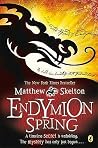
Endymion Spring

Endymion SpringEndymion Spring by Matthew Skelton
My rating: 4 of 5 stars

A semi-historical fantasy novel for children that jumps between past and present.

The eponymous Endymion Spring is an apprentice to pioneer printer Johann Gutenberg, living in 15th-century Mainz, in Germany. Johann Fust, or Faust, is a financier who backs Gutenberg's startup business, and Endymion steals some special paper from Fust to make a book, the existence of which comes to the attention of Blake Winters, a 12-year-old American boy living in Oxford, England, where is mother is doing research into the legend of Faust.

Blake, helped and sometimes hindered by his younger sister Duck, searches for a lost book that has the secret of another lost book, and discovers that several academics are also searching for it, as it is rumoured that it contains the secret of limitless power.

The plot and the setting have echoes of J.K. Rowling's Harry Potter series, and Philip Pullman's His Dark Materials and people who enjoyed those will probably enjoy this one too. It has flaws, certainly, but I enjoyed it all the same.

View all my reviews

19 April 2026

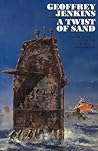
A Twist of Sand: a novel set in Namibia 65 years ago

A Twist of Sand

A Twist of Sand by Geoffrey Jenkins
My rating: 4 of 5 stars

I first read A twist of Sand about 60 years ago, before I ever went to Namibia, so because that is the setting, it played a big part in my preconceptions. It is set in the Skeleton Coast, the dry north-western part of Namibia, then known as South West Africa, and ruled by South Africa. The only other thing I had read about it was set in the same area, it was a piece in a children's encyclopedia about the wreck of the Dunedin Star on the same coast. When I saw a copy of the book in a second-hand bookshop, I thought it would be interesting to read it again, after having been in Namibia.

It is the story of the captain of a trawler operating out of Walvis Bay, Geoffrey Macdonald, who is asked by a man he takes an immediate dislike to, Dr Albert Stein, if he can charter his boat to take him up to the Skeleton Coast, an the vague pretext that he is searching for an unusual beetle.Because of his past criminal activity, we discover that Geoffrey Macdonald isn't even his real name.

A Twist of Sand was the first novel by Geoffrey Jenkins to be published, and when I read first read it, soon after publication, I enjoyed it, and thought it was quite good. I read a few of his later novels, and thought they were rather flat by comparison. On rereading it, I still enjoyed it, but became aware of things about it that I missed on the first reading. For one thing, the plot is as full of holes as a Swiss cheese. The protagonist is just as much an immoral criminal as the villain. That might not be a bad thing, in some ways, it makes the book perhaps more believable than those in which the good guys are too good and the bad guys too bad.

I first went to Namibia in 1969, just 10 years after the book was published, so the country would not have changed a great deal in that time. I got a job with the Department of Water Affairs, which took me to to most parts of the country within my first three months there. and I am pretty sure that in those three months I saw more of Namibia than most people who were born there saw in their life time. In the month I spent with Water Affairs (before being fired for suspect associations with the Anglican Church and the Christian Institute) I had been to Lüderitz in the south-west (including the Koichab Pan in the prohibited diamond area that Jenkins writes about); to Kamanjab in the northwest, and had driven down the dry beds of the Hoanib and Hoarusib Rivers, experienced a break-down in a Jeep in the Kaokoveld (the dreaded Skeleton Coast that Jenkins writes about); and gone to Rundu and Mukwe and camped on the banks for the Okavango River. On these journeys, which lasted for a week to 10 days, we camped out every night, and took a trunk of tinned food to eat on the way. Any tins left over at the end of the trip looked like rugby balls and had their labels rubbed off from bouncing over rough roads and tracks.  So I know that quite a lot of what Geoffrey Jenkins said about the country was inaccurate. 

At one point in the story he has his characters going up the dry bed of the Cunene River, but it is, in fact, one of the few perennial rivers in Namibia. All the perennial rivers in Namibia are on its borders -- the Kunene (Cunene if you're in Angola), the Okavango and the Orange. All the rivers wholly within the country are seasonal (my job at Water Affairs involved servicing instruments to measure the depth of the water in the rivers when they did flow). For any one interested, you can find more descriptions of journeys in some of the remoter areas of Namibia here.

I read some of the other reviews on GoodReads, and noted that some of the reviewers said that the book was "dated" because of the racism and sexism displayed by the characters. But at that time quite a lot of the white people in Namibia were racist or sexist or both, and that was perhaps one of the more accurate portrayals in the book. he, like The violence and criminality of the main characters in the story are perhaps exaggerated; if there were characters like that back then I didn't meet them, but the racism and sexism were not exaggerated. After I was sackedand she transformed the  from Water Affairs I worked for the time on the Windhoek Advertiser, and a South African journalist, Willie Lamprecht, came to work as the assistant editor. His wife Madeleine took over the women's page, and she was a feminist, though not one spoke of feminism back then, we said rather that she was into women's liberation, and she transformed the women's page from being full of cosy housekeeping tips into pointing out how women, including black women, were overworked and underpaid. This did not go down well with the establishment at the time, and Willie and Madeleine Lamprecht were sacked after a few months.

Jenkins contrives to give the impression that the Kaokoveld was virtually uninhabited, yet if anyone entered it without a permit the police would be on to them within 24 hours. In the desert areas along the coast it was largely uninhabited, but there were people living in most places though the population was sparse. And though the police were not quite as efficient as Jenkins suggests, they did nevertheless arrest people for being there without permits -- my wife's great-uncle, Frederick Alwyn Greene, served time in prison for being in that part of the world without a permit, and he, like the characters in the story, seems to have lived on the wrong side of the law for most of his life. 

In spite of its shortcomings, however, I still enjoyed the book on a second reading. It was a toss-up whether to give it 3 stars or 4, and in the end I thought it deserved 4.


View all my reviews

17 April 2026

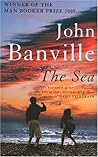
The Sea -- a novel of first love, marriage, loss and death

The SeaThe Sea by John Banville
My rating: 5 of 5 stars

Max Morden reflects on some of the turning points of his life after his wife dies and he tries to come to terms with widowerhood. He recalls first love, marriage, being a parent and experiencing the loss of people he has loved.

I looked at a few of the other reviews, and see that some complained that it had no plot, or that it was too slow-moving. Earlier today I read on social media about some children's programmes on TV that were said to be too fast, and recommended that parents should not allow their children to watch them, because studies had shown that they ruined children's attention span. They were fast, noisy, and no scene lasted longer than three seconds.

I found something different. The Sea was in a batch of books I had bought at a second-hand book shop a few days ago, and I looked at them all to see what I had got. And having picked this one up, I couldn't put it down. I put other books I had been reading aside, so I could finish this one. It was, as they say, a "pageturner". But why?

I think in part it was because of Banfield's detailed descriptions, both of settings and people. It made the people and places in the story seem more real, more three-dimensional. I cared what happened to them and their relationships, not only to the protagonist, but to each other. As Max Morden reflected on his experience of other people, so I reflected on mine. I appreciated the detail that came with the slow pace, which one would never see in a TV programme with scenes lasting 3 seconds or less.


View all my reviews

29 January 2026

Mistborn: The Final Empire -- book review

Mistborn: The Final Empire (Mistborn, #1)

Mistborn: The Final Empire by Brandon Sanderson
My rating: 3 of 5 stars

I think a couple of people recommended this book, probably at one of the literary coffee klatsches we had before Covid put an end to them. it is somewhat reminiscent of A Game of Thrones in that it deals with political rivalries and conspiracies, But whereas A Game of Thrones deals with rivalries between different kingdoms, in this one the rivalry is between aristocratic families in the same empire.

In The Final Empire there is also a clear class division between the privileged nobles and the oppressed underclass. In that respect it seemed to be a kind of parable of the old Rhodesia, with a great contrast between the privileged nobles and the oppressed underclass, the skaa.

I didn't like it as much as A Game of Thrones, and it was only after about 500 pages (of 643) that I began to feel sympathy for any of the characters. Perhaps it was partly because I don't like the genre much -- books where the heroes have superpowers of some sort, which sets them apart from other people. In this case it is due to the ability of some people to consume and "burn" metal, with different kinds of metal enhancing different abilities. Those who could do this were called "Mistborn", and there are some whose abilities are limited to one metal only, who are called Mistings. In addition there are Obligators, who form a kind of bureaucratic class, and a group of enforcers, called Inquisitors, who also have special superpowers.

Those who like superheroes with superpowers will probably enjoy it more than I did. 

Oh, and, for what it's worth, you can click here to read my review of A Game of Thrones. And (spoiler alert) I gave that series up halfway through the second book. It was just too much. 

View all my reviews

02 October 2025

Secret of the Night Ponies (book review)

Secret of the Night PoniesSecret of the Night Ponies by Joan Hiatt Harlow
My rating: 5 of 5 stars

A historical novel set in Newfoundland, Canada in 1965, when people were being encouraged to move off smaller islands and live on the main island, where it was easier for the government to provide infrastructure and services like schools, hospitals, etc. Many ponies were left abandoned on the small islands, where they sometimes starved in winter. Thirteen-year-old Jessie Wheller had taken her own pony to the mainland, but then learned of the fate of some of the others, and urged her friends to join her in doing something about it.

Young Jessie actually has three rescue adventures in the story, first of some people whose boat is wrecked in a storm, then of a younger school friend who is abused by her foster parents. This seems to cram too many adventures into too short a time, but it's fiction, and people who have adventures in fiction usually have more than in real life. Also, her participation in the earlier rescues gives Jessie the confidence that leads her to believe that she and her friends can rescue a whole herd of ponies.

Because of the setting and the age of the main characters I found it rather similar to Anne of Green Gables, and readers who enjoyed the stories of L.M. Montgomery will probably enjoy this one too. It is an exciting adventure story, well told, and gives an interesting glimpse into place and period.

View all my reviews

05 September 2025

A Literary Mystery

 Now here is a literary mystery that puzzles me, and if you are reading this I hope you might try to help me solve it, especially if you enjoy reading books and use the GoodReads web site.

I've written four novels, three for children and one for adults, and some people who've read them have written reviews and posted them on the GoodReads web site. If a book on the GoodReads web site gets ten or more ratings (books are rated with from one to five stars), it gets a list of other books attached -- "readers who enjoyed this book also enjoyed".

I was hoping to see such lists for my books, partly because I thought that if people who enjoyed my books liked them, I might like them too. And also because, knowing what readers of my books liked could help me to know what kind of books I should write in future. So I was very pleased when one of my books, The Enchanted Grove, got the required 10 ratings and I could see what other books its readers liked.

But the result was weird:

 I can't imagine any readers of my books liking those two books, which I've never heard of. So if you've read The Enchanted Grove (ISBN 978-1-920707-65-1), or any others of my books, and rated them on GoodReads, please let me know if you're read either of those two.
 
Also, if you've read any of my books and have not rated th em on GoodReads I'd be very grateful if you would rate them, and better still, write a review, and check to see if any of your favourite books appear on this list.
 
What I think may have happened is this: I got a couple of spammy emails from people asking for a link to my book. I gave them a link, and then a couple of reviews appeared. Both were filled with fulsome praise for the book which I was pretty sure were written by AI, and that the people who had posted these reviews had not read the book at all. It looks like some kind of scam to get the two books shown above listed on my book's page as a means of promoting them. The implication is that most of the readers of The Enchanted Grove had those two books as their favourites, which I find very hard to believe. 
 
If you haven't read The Enchanted Grove, and would like to, you can find out more about it, including where to get a copy, here.

03 July 2025

The Inklings and King Arthur (book review)

The Inklings and King Arthur: J. R. R. Tolkien, Charles Williams, C. S. Lewis, and Owen Barfield on the Matter of Britain

The Inklings and King Arthur: J. R. R. Tolkien, Charles Williams, C. S. Lewis, and Owen Barfield on the Matter of Britain by Sørina Higgins
My rating: 5 of 5 stars

Several of the Oxford Inklings wrote about King Arthur though for most of them Arthur was not the main focus of their work. Roger Lancelyn Green's prose retelling probably did a great deal to make the Arthurian stories accessible to 20th-century readers, and Charles Williams devoted quite a lot of poetry to Arthurian themes, but for the other Inklings, Arthur, though not central, was always present.

This book looks at the ways in which the four main Inklings -- Barfields, Lewis, Tolkien and Williams -- handled the "Matter of Britain" in their writings, and how they themselves contributed to it. In such a project, one of the first things that needs to be decided is what makes a particular text "Arthurian". In the first chapter editor Sørina Higgins deals with this question and generally adopts an inclusive approach. Any reference to the Arthurian legend, explicit or implicit, is included. So the book also includes a list of all the writings of the four main Inklings, published or unpublished, that contain such references.

This alone would make the book useful to Inklings scholars, or indeed anyone wanting to know about 20th-century Arthuriana, but the main articles deal with it comprehensively from various points of view, including a survey of the source material, the writings of the Inklings themselves analysed from various points of view, and much more.

I found it especially valuable because much of my own knowledge of "The Matter of Britain" comes from the Inklings. As a child I had read a children's edition of Stories of King Arthur by Stuart Campbell, and likewise a child's edition of Spenser's The Faerie Queen (during the reading of which I fell in love with Britomart). So when I read Arthurian bits of the Inklings, that was my reference point, and things that were not mentioned there (like the Fisher King) passed right over my head. So this book helps to anchor the Inklings' Arthurian references in a wider tradition, and helps one to make sense of them.

There is not much mention in this book of Roger Lancelyn Green, a minor Inkling, whose retelling of the stories of King Arthur helped me to put them in context. I've said more about that in South African Camelot.


View all my reviews

17 March 2025

The Comedians

The Comedians

The Comedians by Graham Greene
My rating: 4 of 5 stars

A group of travellers who meet on a ship sailing from New York to the Caribbean find their lives entwined long after they step ashore in Haiti, under the dictatorial rule of "Papa Doc" Duvalier and his dreaded secret police, the Tonton Macoute.

Brown, the narrator, is a hotelier, returning from an unsuccessful trip to New York attempting to sell the hotel, which he had inherited from his mother. Among his travelling companions are Mr and Mrs Smith, vegetarians hoping to establish a vegetarian centre in Haiti, and "Major" Jones, who turns out to be a con man. The Smiths stay at Brown's hotel, and make it their base for preaching the benefits of vegetarianism.

These expatriates are the comedians of the title, and at many points in the story I was reminded of Jean Genet's play The Balcony, where the setting is a brothel, and the clients are given an opportunity to act out their fantasies. So the comedians play their roles in a society in which everything seems unreal, like a stage set. Over it all hovers the spectral figure of Baron Samedi, the Voodoo lwa of the dead, who functioned (in real life as well as in the novel) as the evil genius of Papa Doc Duvalier.

Brown, who is having an affair with a diplomat's wife, wants to elope with her, but is trapped by, among other things, the corrupt bureaucracy of the authoritarian state, whose ministers tend to disappear when they fall out of favour, and whose bodies disappear even during their funerals.

Graham Greene manages to convey the atmosphere of an authoritarian state well, with the ruthless elimination of those perceived as enemies of the regime. Some of his descriptions of encounters with the Tonton Macoute reminded me of encounters with the South African Security Police 50-60 years ago. and actually contemporary with The Comedians. There are similarities between all authoritarian states, but there are also differences. One of the differences is ideology. Some totalitarian states have an official ideology, such as Communism in the USSR, Nazism in Hitler's Germany, Fascism in Mussolini's Italy. In South Africa the ideology was Apartheid, which grew out of Christian Nationalism. Apartheid didn't begin as an ideology. Under Dr Malan it was an election slogan and a principle to be opposed to that of the previous United Party government. Under J.G. Strijdom it was a policy. It only developed into a fully-fledged ideology under Verwoerd, after which the tendency was simply towards naked power.

In Haiti the progress toward naked power was more rapid and far-reaching, because the ideological roots were weaker. Papa Doc Duvalier doesn't make a personal appearance in The Comedians, but his ministers do, and what is most obvious about them in the book is the insecurity of their positions. They disappear, and their bodies are not found. The comedians of the title are the expatriate characters, but it could just as well be the whole society, the regime and its opponents.

And reading it now, when Donald Trump and his minions are doing a Papa Doc on the USA. makes the story more relevant. There is little ideology, other than a distorted vision of neoliberalism, And the model seems to be that of Humpty Dumpty in Through the Looking-Glass, and What Alice Found There: "the question is, which is to be master -- that's all." Like the apartheid regime, the Trump regime has the support of Christian Nationalists, but Christian Nationalism is not the ideology of the regime. Perhaps it is that Baron Samedi has migrated to the mainland, and is one of the few immigrants who is not in danger of deportation.
 
View all my reviews

05 February 2025

The Drawing of the Dark

The Drawing of the Dark

The Drawing of the Dark by Tim Powers
My rating: 4 of 5 stars

I have often expressed the wish to be able to read more novels of the kind written by Charles Williams and various people have been recommending books by Tim Powers, telling me that they are a similar genre. After searching in vain in bookshops and libraries for years, I was given some money and got the ebook version of this one. and yes, I can say it is in the genre of Williams's novels, which means that in writing about this one, I'm inevitably comparing it with Williams. Another book one could say is in a similar genre is Jonathan Strange & Mr Norrell, which I tried to read and didn't finish.

In The Drawing of the Dark Brian Duffy, an Irish mercenary soldier of the 16th century, is down-and-out in a port town somewhere in southern Europe (I've forgotten the name of the town, and Kindle won't let me page back to look it up, perhaps it was Trieste or Venice) when he is recruited by a strange character as a bouncer for his pub in Vienna. Duffy travels to Vienna to take up his employment, with several strange adventures on the way.

On arriving in Vienna, he is not welcomed by the manager of the pub, but is pleased to meet an old girlfriend. Epiphany, who had married someone else, but her first husband had died, giving him something to hope for. When his employer eventually arrives in Vienna, Brian Duffy discovers that being a bouncer is only the start of his duties. The year is 1529 and Suleiman the Magnificent in Constantinople is preparing to send his army to capture Vienna. His object however, seems to be not so much the city itself as a certain barrel of beer, which it is said, will revive the Fisher King of Arthurian legend and give magical powers to those who drink it. The army of the Sultan approaches, the city is besieged, but behind the conventional battle to attack the city walls, there is a magical battle for control of the beer, with rival magicians on each side seeking to control armies of supernatural creatures.

There are physical battles with swords and cannons and mines and sorties, so there is plenty of action in the story. There are also the magical battles between the rival magicians and characters channelling Merlin and King Arthur. But though the elements are there, Charles Williams it isn't. The appearance of the supernatural creatures is described, but they don't seem to mean anything. In Williams's story the supernatural creatures are significant in themselves, but in The Drawing of the Dark they are simply tools in the hands of the rival magicians. And the ending was disappointing -- the title suggested it would end with the drawing of the dark beer, but that happens offstage, as it were, if it happened at all. The dark is never actually drawn.

In Charles Williams's novels, "magicians" of the kind portrayed here are usually evil, with evil intentions, the prime example being Sir Giles Tumulty. I don't know about Tim Powers, but Charles Williams seems to have moved in circles of magicians or would-be magicians, and his portrait of them in his novels is not flattering. The world of Tim Powers seems to be driven by Renaissance magic, and so this book, at least, seems to resemble Jonathan Strange & Mr Norrell more than anything Williams wrote. Merlin and Ibrahim are magicians or witches rather than wizards.


View all my reviews

02 January 2025

The Dragonfly Pool

The Dragonfly Pool by Eva Ibbotson
My rating: 5 of 5 stars

A historical novel for children, The Dragonfly Pool is set at the beginning of the Second World War. Tally Hamilton is the daughter of a doctor in a poor area of London, and war seemed increasingly likely she is given a scholarship to a boarding school in Devon, where her family think she will be safer from the expected air raids.

Tally goes reluctantly, especially when her snobby cousins tell her what their posh boarding school is like, but she discovers that it is quite different. It's a kind of progressive school where the children have a lot of freedom, and tally really enjoys it, and makes some good friends. She persuades the school to enter a folk-dancing competition in an obscure East European country threatened with a Nazi takeover, and Tally and her friends find themselves in a position to attempt to foil a plot against Prince Karil, who find the free English school children a refreshing change from stuffy court protocol. But the danger is real and they have to find a way to escape it.

Author Eva Ibbotson was herself a refugee in a similar position, and also attended a school similar to the Delderton School in her story, and so her descriptions of the setting and events ring true, and gives the reader a feel of what it was like to be there.

There was a point, about two-thirds of the way through the book, where it felt as though some of the descriptions were overdone, and at that point I was thinking of giving it four stars, but it recovered again towards the end. 

Though it was just a book I picked up randomly in the library, I found it quite absorbing, not least because if overlaps at some point with a genre of books I myself have tried to write -- historical novels for children, though mine are set mainly in the apartheid era in South Africa, and have more of an element of fantasy. The war, which begins in the middle of the story, remains in the background, but the menace is always there, though my 11-year-old self would probably have preferred to see some more military action.

I see Eva Ibbotson has written several other books, so I'll be looking out for them, as this one was certaingy a good read.  

View all my reviews

25 December 2024

Two very different books: Mr Mercedes and 1001 Nights

I've just finished reading two very different books, one a crime novel by Stephen King, which I finished in less than a week, and the other an anthology of short stories compiled about a millennium earlier, which took me nine months to read.

Mr. Mercedes (Bill Hodges Trilogy, #1)Mr. Mercedes by Stephen King
My rating: 4 of 5 stars

Bill Hodges is a retired detective, bored with his retirement, facing the question "why kill time when you can kill yourself" when a letter drops into his mail box, claiming to me from the perpetrator of one of his biggest unsolved cases, a mass murder in which a stolen car was driven into a queue of job seekers.

Bill knows he should take the letter to his old colleagues in the police, but the letter invites him to an internet chat site, where the killer taunts him, and he turns private detective, seriously seeking to catch the killer before he kills again. And the closer he gets, they more it becomes clear that only he, and his associates, a young black student and a middle-aged woman with mental health problems, will be in a position to stop the killer before he kills again.

It's not a whodunit, since the reader knows who that is all along, but rather the story of a race against time to find where the killer is going to strike next, and to stop him.

Tales from the Thousand and One NightsTales from the Thousand and One Nights by Anonymous
My rating: 3 of 5 stars

This is the kind of book one hears about long before one actually reads it. I saw it in the library and thought such a book of short stories would be nice to read before going to bed.

I'd read bowdlerised versions of some of them as a child, such as the story of Aladdin and the magic lamp, which has found its way into children's anthologies of short stories, as have some of the others, such as those concerning Sindbad the Sailor; actually he wasn't a sailor, he was a businessman who chartered ships to carry his merchandise, but the ships invariably got wrecked, casting him up on a strange shore, where after some hardships he usually acquired more merchandise, and restored to prosperity, returned home.

Most of the stories have the same or similar tropes, which can be summarised by the song from Gilbert & Sullivan's comic opera "The Mikado" --
Taken from the county jail
By a set of curious chances
Liberated then on bail
On my own recognizances
Wafted by a favouring gale
As one sometimes is in trances
To a height that few can scale
Save by long and weary dances
Surely never had a male
Under such-like circumstances
So adventurous a tale
Which may rank with most romances.
And many of the romances that it may rank with are those in this book.

View all my reviews

18 November 2024

Western civilisation and Christian values

Dominion: The Making of the Western MindDominion: The Making of the Western Mind by Tom Holland
My rating: 5 of 5 stars

Tom Holland's thesis is that the moral and ethical values of Western Civilisation have been shaped mainly by Christianity, and in this book he tries to follow and explain the process by which this happened. He covers a broad sweep of Western Christianity, sometimes illuminating particular historical events and periods as he does so.

I think it is a book that would be useful for most Christians to read; Western Christians, because it is about them and their history; Orthodox Christians living in the West, or in any society where Western values are influential, to help them to understand the society in which they live. It would also be useful for Orthodox Christians not living in the West, because the West is influential even in places where its values are not dominant. It will be useful to people living in sub-Saharan Africa and much of Asia, especially those colonised by the West, to see what Western values are based on.

For an example of the last point, Holland makes some interesting comments on how the Western concept of "religion" came to be applied outside the West. In a sense the British East India Company applied the concept of "religion" to India. This concept had been shaped by the history of Christianity in the West, especially in the Early Modern period, and it could be said that the British East India Company invented Hinduism as a religion. Holland could, however, have said a little more about how the concept had developed in the West before being applied to India. He does point out that in the premodern period "religion" referred primarily to those who had taken monastic vows or something similar, but modernity has changed this understanding. A useful book on this topic, for those who would like to know more, is "Religion" and the Religions in the English Enlightenment by Peter Harrison.

Tom Holland is not himself a Christian, as he makes clear in the last chapter, but he acknowledges that his values are based on Christian presuppositions. In general I agree with most of what he says; I might, however, differ from him over what he does not say.

He appears to give a survey of the history of Western Christianity, but there are significant lacunae. Some of the gaps seem to have things that do not support his thesis, or that might cause readers to modify it. He does not, for example, mention the Great European Witchhunt, in which large parts of Early Modern Christendom appeared to revert to pagan values with regard to witchhunts. He should have at least made some attempt to explain such a dramatic reversal in terms of his theory. For more on this, see my article on Christian Responses to Witchcraft and Sorcery.

Another gap that stood out for me came in the penultimate chapter, dealing with fairly recent events. He describes events of the annus mirabilis 1989, when authoritarian regimes collapsed in Eastern Europe and Southern Africa and a wind of freedom blew through the world.

Holland notes that both Nelson Mandela and F.W. de Klerk tended to interpret South Africa's liberation, and that of many communist countries, in 1989/90 in biblical terms, as the writing of God's finger on the affairs of state. loving enemies etc. But Western leaders tended to see it differently. As Holland puts it:
This, however, was not how it tended to be seen by policy-makers in America and Europe. They drew a different lesson. That the paradise on earth foretold by Marx turned out instead to be closer to a hell emphasised the degree to which the true fulfilment of progress was to be found elsewhere. With the rout of communism it appeared to many in the victorious West that it was their own political and social order that constituted the ultimate, the unimprovable form of government. Secularism; liberal democracy; the concept of human rights: these were fit for the whole world to embrace. The inheritance of the Enlightenment was for everyone: a possession for all of mankind. It was promoted by the West, not because it was Western, but because it was universal. The entire world could enjoy its fruits. It was no more Christian than it was Confucian, or Muslim, or Hindu. There was neither Asian nor European. Humanity was embarked as one upon a common road. The end of history had arrived (Source: Holland 2019:489)

Secularism, liberal democracy and the concept of human rights are all values which, according to Holland, the West derived from Christianity. I don't quibble with him there. But I don't think they were the values the "policy-makers in America and Europe" thought most important. Those policy-makers included people he did not name, and those who dominated in the 1980s were Margaret Thatcher and Ronald Reagan, whose chief values were enshrined in the ideology of neoliberalism, which they had been pushing for the previous eight years and more.

The Neoliberalism they pushed for very strongly, and applied in their own countries, has continued to dominate the world economic system, and may seen as a watered down version of the ideology propagated by Ayn Rand, an atheistic despiser of Christianity and its "altruism". That ideology has been influential in the West since the 1960s, and certainly was held by some people in Reagan's administration, if not by Reagan himself.

In the five years since Holland's book was published, however, events have shown that the West is rapidly abandoning any traces of Christian values that remain.

According to Holland:

That human beings have rights; that they are born equal; that they are owed sustenance and shelter and refuge from persecution:these were never self-evident truths.

The Nazis, certainly, knew as much -- which is why, in today's demonology, they retain their starring role. Communist dictators may have been no less murderous than fascist ones; but they -- because communism was an expression of concern for the oppressed masses -- rarely seem as diabolical to people today. The measure of how Christian we as a society remain is that mass murder precipitated by racism tends to be seen as vastly more abhorrent than mass murder precipitated by an ambition to usher in a classless society.

But in the five years since Dominion was published, Tom Holland's thesis has been completely overturned. The mass murder precipitated by racism in Gaza in 2023-24 has not been seen as at all abhorrent by Western governments, as can be seen by their frequent protestations of support for the perpetrators. The Western values that Holland says are based on Christianity, like human rights, and concepts like "crimes against humanity" are safely stored away in the musical banks described in Samuel Butler's novel Erewhon.

View all my reviews

06 November 2024

Living at the Edge of the World

Living at the Edge of the World - Winter

Living at the Edge of the World - Winter by S.J. Barratt
My rating: 4 of 5 stars

Two children from London are sent by their parents to spend a few months with their great-uncle in the Shetland Islands.

Tabitha and Timothy Brown are twins, but though they share the same birthday, their interests are very different. Tabitha is at home in the bustling capital, has a wide range of social media contacts, and is appalled at the prospect of living in a remote rural area with iffy WiFi. Timothy seems on track to become a zoologist, reading up about the flora and fauna of the island before he gets there. Though he does find a few aspects or rural life surprising, he is adaptable and more willing to learn than his sister.

Great-uncle Tamhas welcomes them, and the story is about how they adapt and learn about the local culture, the slower pace of rural life, farm animals, and living in a small community where everyone knows everyone else. They go to the local school, where to the local children they seem like exotic foreigners, but they are not the only ones, and one of their fellow-pupils is a Syrian refugee.

I found it easy reading, and though it isn't very exciting or dramatic, I was interested in its description of how the townies adapted to rural life. It was a little bit rough in the beginning, where some of the dialogue seemed rather stilted and didactic for twelve-year-olds, even if they were trying to impart information, but once into the story it moved more easily.

It reminded me in a way of my own childhood; when I was 7 my father got a new job, and we moved from Westville, just outside Durban, to Sunningdale, just outside Johannesburg. Westville was suburban: no WiFi back then, but we did have urban conveniences like mains electricity and a telephone (landline).  In Sunningdale we didn't have such things. We lived on a smallholding with cows and horses and chickens. So as in the story, we had fresh eggs and milk and butter. But we used paraffin lamps, a paraffin stove for cooking, an icebox for keeping stuff cold, and we had to start a diesel motor to pump water. In my recollection I adapted to the rural way of life pretty quickly, and missed it when we had to leave when I was 13. But that experience made made it easy for me to identify with Tabitha and Timothy in the story.

The problem I found with it, though, is that was billed as an "adventure", but nothing really exciting happens. There are no real villains. It's just about urban kids discovering what rural life is like, and that is partly what makes it seem didactic. There were some points at which it seemed possible that an adventure could happen. The children were told about selkies, the seal people and I thought of Alan Garner's children's stories, where 12-year-old twins go to stay on a farm and have the same experience of rural life, but are not only told about creatures from folklore, but actually meet them.

The book was quite short, however, and the "winter" in the title hints at a sequel, so maybe spring and summer will be more adventurous. Tabitha's transformation seems to be the opposite of the problem of Susan in the Narnia stories, but at least Susan has some real adventures.

I received a free copy of this book via Booksprout and am voluntarily leaving a review.

View all my reviews

02 October 2024

The Magic Cottage

The Magic Cottage

The Magic Cottage by James Herbert
My rating: 3 of 5 stars

A book that started off in a fairly promising way, but seemed to lose the plot towards the end.

Mike Stringer, a musician, and his girlfriend Midge Gudgeon, a musician, buy a cottage in the New Forest in Hampshire. The cottage, called Gramarye, was part of a deceased estate, and they had to undergo some kind of test by the executors of the will.

Not far away is an old manor house that is home to a community of selfstyled Synergists, led by a man called Mycroft. Members of the community are initially friendly and welcoming, but when Mycroft promises to enable Midge to make contact with her dead parents, a nasty side appears. The local vicar warns them to have nothing to do with the Synergists, and appears to think they are evil Mike is sceptical, both of the Synergists' beliefs and the vicar's fears.

The cottage initially seems to have mysterious healing properties but when the Synergists visit the healing properties seem to be corrupted.

After an interesting build-up the story seemed to fall apart in the end, and seemed designed for a B-movie with spectacular special effects. There was a growing atmosphere of evil, but the bits that were supposed to be really scary at the end weren't scary at all, and were just boring. My mind kept wandering off, or I kept dropping off to sleep.

And one rather curious thing I noticed about it was that it has a surprising number of Americanisms for a book written by an Englishman, and published in England: flashlight where I would have expected torch; sneakers where I would have expected plimsolls or trainers; and braids where I would have expected plaits or pigtails. On the other hand, it had presently meaning shortly afterwards, which I don't think is the way an American would use the word. 

In a way, it had some echoes of That Hideous Strength by C.S. Lewis: a couple whose relationship is deteriorating, and the Synergists had echoes of the N.I.C.E. but the characteristics of their group were largely New Age/Theosophist cliches. There wasn't a contrasting "good" community. It might have been That Hideous Strength as reimagined by Dennis Wheatley, except that I think Dennis Wheatley might have made a better job of it.

17 September 2024

Searching for icons in Russia

THE KATERINA ICON

THE KATERINA ICON by Robert Mitchell
My rating: 4 of 5 stars

Amateur versus professional crooks.

A couple of Australian tourists in Russia rescue an old man from drowning, and in gratitude he tells them of an ancestor of his who, during the civil war that followed the Russian Revolution, attacked a train and stole some icons that had been stolen by the Bolsheviks from the Russian royal family. One of the Australians is of Russian ancestry, and the old man tells him that if he can find the hidden icons, he can keep them, and gives him one of his own family icons, which is said to hold the key to the secret location of the icons.

The tourists, an accountant and a dentist, return to Australia and when they believe they may have found a clue to the location of the icons, decide, after many arguments, to return to Russia and look for them. Their arguments continue throughout the book. First one is keen on the project, and the other is lukewarm, and then the one who was lukewarm becomes keen and the other is sceptical.

Their enterprise is of dubious legality and morality, and thus they need to keep it secret, but they take it in turns to boast about it and to warn against doing so. First one says too much, and the other warns him not to, and then they exchange roles. As a result of this, several others, including professional criminals, become aware of the treasure hunt, and the two amateurs find themselves in serious trouble and great danger again and again, usually because one has done something foolish that the other has warned him against.

The battle between the amateurs and the professionals goes right through the book, and I thought the theme was a little overplayed. The protagonists never seemed to learn from their mistakes, and went on making the same mistakes over and over again, and getting into similar trouble over and over again. One would take precautions that the other would get angry about, or one would neglect precautions that the other would get angry about.

View all my reviews on GoodReads 

So much for the review of this particular book, but I have more comments on the theme, since I myself have written a book on a similar theme, or at least with a similar trope -- ikons that went missing in Russia after the Bolshevik revolution (I prefer the spelling ikon with a k for the holy images. Icons with a c belong on computer screens). You can see reviews of my book The Year of the Dragon here on GoodReads.There are other and more comprehensive reviews on the Smashwords page, where you can also get a copy of the book. 

Apart from the icon/ikon trope, there are other superficial similarities. In The Katerina Icon the protagonists are two middle-aged men, a dentist and an accountant; in The Year of the Dragon the protagonists are two young men, a lawyer and an auctioneer. In both a woman dies because of the icons/ikons, though the circumstances are different.

But the differences are perhaps more more significant, and it is these that struck me most strongly. In The Katerina Icon, the protagonists are driven purely by greed. They know the price of everything and the value of nothing. Their only interest in the icons is the price they will fetch, nothing else counts. In the story, they are the "good" guys, the characters the reader is supposed to root for, but their values are identical with those of the "bad" guys, who are likewise motivated purely by greed. And one cannot help thinking that these are the values that triumphed at the end of the Cold War. 

The young protagonists in The Year of the Dragon start off in much the same way. The young lawyer has to wind up the estate of a murdered woman, and takes his auctioneer friend along to inspect the property and help him assess its monetary value. But as the story proceeds they gradually discover that there is more at stake, and that the value of the ikons, in particular, cannot be calculated only on the price they will fetch on the market. They come to see that there is more, and that the "more" is actually more important.

So with The Katerina Ikon I wavered between 3 and 4 stars, and put the 4 stars there to compensate for my prejudice in having written a comparable novel, which I thought went deeper than the rather superficial greed displayed by the characters in The Katerina Icon, in which there were really no good guys or bad guys, only winners and losers, and it wouldn't have mattered in the end which lot won or lost. The Neoliberal Revolution at the end of the Cold War ended up much the same as the Bolshevik Revolution as portrayed in George Orwell's Animal Farm -- the other animals looked from man to pig, and from pig to man, and could no longer tell the difference.

01 September 2024

11.22.63 by Stephen King

11.22.63

11.22.63 by Stephen King
My rating: 5 of 5 stars

Stephen King's books are a mixed bag -- some very good, some very bad, and some mediocre. This one, I think, is one of his best. It's also difficult to classify. It involves time travel, so perhaps it is science fiction, but the time travel is not the result of any scientific discovery, and its mechanism is never explained. Fantasy then? But no, everything else in the story, apart from the time travel, is pretty mundane In that respect, it most resembles The Time Traveler's Wife by Audrey Niffenegger. It's also, to some extent, a love story, so one could perhaps add "romance" to the list of genres covered.

In the story Jake Epping, a school teacher in Maine, USA, is told by his friend Al Templeton about a time gateway, and Al tries to persuade him to go back in time from 2011 to prevent the assassination of President John Kennedy in 1963. The gateway, however, will only take him back to 1958, so if he accepts the task it will take five years of his life.

It has an interesting plot, and I had a great deal of sympathy for the main characters, and even for several of the minor ones.

The story has a great deal of historical information about the assassination of President Kennedy, and to some extent that part of the story was familiar to me. The names Lee Harvey Oswald and his killer Jack Ruby were familiar, as were references to the "grassy knoll" and the Texas Book Depository, not from reading history, but from contemporary news reports.

View all my reviews

15 July 2024

A Gentleman in Moscow -- the mind and face of Bolshevism

A Gentleman in MoscowA Gentleman in Moscow by Amor Towles
My rating: 5 of 5 stars

The best book I've read so far this year.

Count Alexander Rostov is sentenced by the Bolsheviks to indefinite house arrest in the Hotel Metropole in Moscow's theatre district. He becomes head waiter of the hotel, with friends among the staff and some of the regular guests, including an actress and a nine-year-old girl who has acquired a master key to all the hotel rooms, and shows him all the secret places. His life is so bound up with the hotel that it almost becomes a character in the story.

Through the life of the hotel Count Rostov (and the reader) learn of the changes of Soviet society. Once, many years ago, I read a book called The Mind and Face of Bolshevism and this book reminded me of that one at several points, in that it actually gives one a fairly good picture of Soviet life during that period. The Mind and Face of Bolshevism must be a fairly rare book. The copy I read was at the library of the KwaNzimela Centre in Zululand, but when we visited it in 2012 about three-quarters of the books had disappeared from the library, including that one.

It is also a book to savour, like a good wine. I found I only wanted to read a chapter, or sometimes a scene or two, and think about them before reading on, so I interspersed my reading of it with several other books. One needs to pause after each scene to think about it.

View all my reviews

05 July 2024

The Dictionary of Lost Words -- and lost printing technology

The Dictionary of Lost Words

The Dictionary of Lost Words by Pip Williams
My rating: 5 of 5 stars

Esmé Nicoll's widowed father was an assistant to James Murray, the editor of the first Oxford Dictionary, and because her mother was dead, she accompanied her father to the Scriptorium, the shed in the Murrays' garden, where the work of compiling the dictionary was carried on. While they sorted the slips of paper with the entries, many sent in by volunteers, five-year-old Esmé sat quietly under the table, noting the shoes and socks worn by the editorial assistants.

One day one of the slips falls from the table, and when no one bends down to retrieve it, Esmé puts it in her pocket, and later hides it away in an old trunk belonging to Lizzie Lester, the Murrays' housemaid, who is only a few years older than Esmé herself. So Esmé becomes a collector of lost words, words that are discarded from the dictionary, words that are lost inadvertently, and a few that she pilfers from the sorting table. When her pilfering ways are discovered, she is banished for a while from the Scriptorium, but her interest in words continues and as she grows older she begins collect them on her own account.

She also becomes aware that the all-male lexicographers are not aware of, or not interested in words that are used only by women, or words that are spoken by the common people rather than by the educated classes, and so becomes aware of social inequalities in late-Victorian and Edwardian England.

The Dictionary of Lost Words is only semi-fictional. Not for Pip Williams the usual disclaimer that none of the characters bear any resemblance to any actual person, living or dead. James Murray and most of the other editorial assistants, including members of Murray's family, are the real people, and they appear in a photograph at the end of the book. Of course their conversations are imagined, but some of the things they say are taken from their own writings, or contemporary reports and memoranda. One can learn quite a lot of the way in which the Oxford Dictionary was compiled from the book.

I really enjoyed reading it, not just because, having worked as a proof reader and editor at various times, I have an interest in words and how they are used, but also because Esmé and the other characters, fictional or otherwise, come across as real people, so that one shares their joys and sorrows, and cares about what happens to them.

The book also sparked lots of memories for me, which don't belong in a GoodReads review, as they go beyond the merits of the book itself, but I'll share some of them here. 

Esmé visits the Bodleian Library, and the Oxford University Press, where she becomes friendly with one of the compositors, and describes the work of the compositor in setting up the page for printing. And that recalled to me my time as a proof reader on the Windhoek Advertiser in the early 1970s, which was the end of the hot-metal type printing era.

When I began working as a proof reader I sat at a table in the works near the typesetters, who were mostly German-speaking, and worked on Intertype machines which set each line of type in hot lead. The lines were collected in "galleys", and once they had finished the story they would bring me a galley proof, which I would correct, not merely as a proof reader, following copy, but also as a line editor, checking for errors of fact, grammar and spelling. These would go back to the typesetters, who would set the corrections, often with much swearing.

The galleys would then go to the sub-editor and the compositor, who fitted them into the page, sometimes shortening the story to fit, and added the headlines. Once the page was set up, the page proof would come back to me for final corrections -- the most common mistake being transposed or missing lines. Then paper maché clichés or stereotypes would be made from the set page, from which the moulded lead plates would be made for the rotary press. All this was a much longer process than the book printing described in The Dictionary of Lost Words, where the compositor appears to have done the typesetting as well.

While I was at the Windhoek Advertiser however, electronic typesetting was introduced. A typist in the newsroom would type the story on a machine that produced a punched paper tape, which was then fed into an attachment on the Intertype machines, and the skilled typesetters became mere machine minders. They fed the paper tape into the machine and watched it work. The only time they touched the keyboard was to set the corrections.

Then I moved to Durban, and my wife Val had a cousin who married a compositor on The Daily News. He had just completed a five-year apprenticeship, and was almost immediately made redundant when the newspaper switched from hot-metal printing to offset litho. The job of compositor, as described in The Dictionary of Lost Words, had ceased to exist.

I read an article in the same Daily News about the journalist's experience with the new Atex computerised typesetting system. The journalist would compose the article on the machine, polishing and correcting it as it went. The sub-editor would read it on the same machine, edit, cut it and write the headline, and it would then go to the people who did page makeup, all marked by codes on the same machine. I wanted one. That was in about 1974, fifty years ago. I dreamed of having a machine that could store whatever text I wrote, and could correct and change without retyping.

Twelve years later I got my wish. I went to work in the Editorial Department of the University of South Africa in 1986, editing academic texts on their Atex system. It was not as exciting as I thought it would be, though, because by then I already had an Osborne portable (well, luggable) microcomputer and could use the Wordstar word processor. The Atex system was clunky by comparison. If you wanted to save a document you were working on, you could walk to the canteen and have a cup of coffee and a chat while waiting for it to return to the screen.

The following year, however, we got microcomputers, where the Atex system had been ported in a new word processing program called XyWrite, which was much faster, and, for sheer word-processing power, has still not been surpassed 35 years later. It may lack the bells and whistles of the latest word processors, but still has more pistons and cylinders, and the whole thing fitted on a 360K floppy disk.

All these memories, and many others, came back while reading The Dictionary of Lost Words. I thought the book was very good indeed, but perhaps that's just me, because of my experience with words and meanings and putting them into books. But I still think it's worth five stars.

 View all my reviews

08 June 2024

The Color Purple (Book Review)

The Color PurpleThe Color Purple by Alice Walker
My rating: 4 of 5 stars

An epistolary novel.

It's set in the southern USA in the 1930s & 1940s. and is about the life of a poor black family there.

Celie is raped by her stepfather and has a couple of children who disappear. She is then more or less forced to marry a man, Albert ____, who doesn't love her and treats her badly. Celie is gay and doesn't love him. Initially the story is told in a series of letters she writes to God.

Celie's sister Nettie goes to Africa as an au pair with a couple of missionaries and their adopted children, and writes to Celie, with descriptions of what is happening in the place where they live. This, for me was the best part of the book, reminiscent, in a way, of The Poisonwood Bible. It describes how an overseas rubber plantation company dispossesses the local people, forcing them to move off their land, and destroys their way of life -- "expropriation without compensation" is the latest political buzz-phrase for that kind of thing. Though the book is set in the 1930s and 1940s, it is the kind of thing that could still happen in South Africa 80 years on.

Celie, however, doesn't at first receive her sister's letter, because her husband hides them, but nevertheless switches from writing to God to writing to her sister. Celie eventually leaves her husband, finds someone who loves her, and starts a business, but things go wrong again.

In many ways it is a very sad book, all about people's messed up relationships, and how they manage to cope with them. I also found it quite a complex book, and had to read the first few chapters again when I was halfway through, just to keep track of the characters' relationships.

View all my reviews

LinkWithin

Related Posts with Thumbnails