Showing posts with label crime novels. Show all posts

25 December 2024

Two very different books: Mr Mercedes and 1001 Nights

I've just finished reading two very different books, one a crime novel by Stephen King, which I finished in less than a week, and the other an anthology of short stories compiled about a millennium earlier, which took me nine months to read.

Mr. Mercedes (Bill Hodges Trilogy, #1)Mr. Mercedes by Stephen King
My rating: 4 of 5 stars

Bill Hodges is a retired detective, bored with his retirement, facing the question "why kill time when you can kill yourself" when a letter drops into his mail box, claiming to me from the perpetrator of one of his biggest unsolved cases, a mass murder in which a stolen car was driven into a queue of job seekers.

Bill knows he should take the letter to his old colleagues in the police, but the letter invites him to an internet chat site, where the killer taunts him, and he turns private detective, seriously seeking to catch the killer before he kills again. And the closer he gets, they more it becomes clear that only he, and his associates, a young black student and a middle-aged woman with mental health problems, will be in a position to stop the killer before he kills again.

It's not a whodunit, since the reader knows who that is all along, but rather the story of a race against time to find where the killer is going to strike next, and to stop him.

Tales from the Thousand and One NightsTales from the Thousand and One Nights by Anonymous
My rating: 3 of 5 stars

This is the kind of book one hears about long before one actually reads it. I saw it in the library and thought such a book of short stories would be nice to read before going to bed.

I'd read bowdlerised versions of some of them as a child, such as the story of Aladdin and the magic lamp, which has found its way into children's anthologies of short stories, as have some of the others, such as those concerning Sindbad the Sailor; actually he wasn't a sailor, he was a businessman who chartered ships to carry his merchandise, but the ships invariably got wrecked, casting him up on a strange shore, where after some hardships he usually acquired more merchandise, and restored to prosperity, returned home.

Most of the stories have the same or similar tropes, which can be summarised by the song from Gilbert & Sullivan's comic opera "The Mikado" --
Taken from the county jail
By a set of curious chances
Liberated then on bail
On my own recognizances
Wafted by a favouring gale
As one sometimes is in trances
To a height that few can scale
Save by long and weary dances
Surely never had a male
Under such-like circumstances
So adventurous a tale
Which may rank with most romances.
And many of the romances that it may rank with are those in this book.

View all my reviews

10 April 2024

Rites of Spring

Rites of Spring (Seasonal Quartet, #4)

Rites of Spring by Anders de la Motte
My rating: 5 of 5 stars

A Scandinavian whodunit with a difference -- the protagonist isn't a boozy detective drinking himself to divorce and death.

Instead the protagonist is a doctor, Thea Lind, who goes to the small town in southern Sweden where her husband David had grown up. He goes back to start a restaurant, while Thea starts working at the local clinic. She soon discovers that there is a secret in the village that affects her husband David, something that happened on Walpurgis Night several years before. She gradually learns that the events back then had affected her husband when he was a child, and a young girl had been killed in a ceremony to mark the night.

The story moves back and forth between past and present, in a manner reminiscent of the books of Robert Goddard, and the past events are written in the past tense, which those in the story present are written in the present tense.

St Walpurgis Night (strictly St Walburga's Eve) is celebrated in Sweden and several other northern European countries to celebrate the canonisation of St Walburga, an 8th-century English missionary nun who worked in Germany. It took place on the night of 30 April, and her feast day was 1 May, which also marked the beginning of summer in Sweden. 

In the story some elements of English folklore have also been incorporated into the celebration, including the Green Man. The "green man" folklore has grown up around the foliate heads that appear in the decoration of churches in various parts of Europe, and in the story the Green Man is treated as a person who appeared on St Walpurgis Night, and the girl who was killed was enacting a rite of sacrifice to the Green Man.

The more Thea discovers about those past events, the more opposition she encounters from those who want to keep the secret, but Thea has secrets in her own past as well.

It's a gripping story and well written.

It also interested me in ways that go beyond this particular story, and that is the incorporation of motifs from folklore into the story, even quite recent folklore, such as that of the Green Man. I like writing such stories myself, and so I find it interesting to see how other writers do it.

The "Green Man" legend goes back about 85 years or so, and was originally applied to the names of pubs, which was then linked to the foliate heads found in churches, and a quite extensive folklore has developed around the linked symbols. 

The legend has been used and developed in several novels. I recently reviewed another novel, Wildwood, that also incorporated it. That was a so-called "young adult" (teenage) story, and each such story adds to the legend. A Facebook friend, who was a fellow student at university with me, recently posted an interesting article on Facebook linking it to the Arthurian story of the Green Knight and the Green Chapel.

While I haven't used this particular story in books I've written, one of my children's stories, The Enchanted Grove, incorporates creatures from Zulu folklore, while another, Cross Purposes has them from Russian and Mongolian folklore.

Rites of Spring doesn't incorporate anything from the life of St Walburga, but I looked it up anyway, and found that German Christians asked her to protect them from various diseases and witchcraft. That didn't seem to form any part of the Swedish celebrations, but then neither, apart from in this story, did the Green Man.


View all my reviews

18 July 2020

Lockdown reading: The Brothers Karamazov

The Brothers KaramazovThe Brothers Karamazov by Fyodor Dostoyevsky

My rating: 5 of 5 stars


Having just finished reading it for the third time, I up my rating from four to five stars. It took me three readings to really appreciate this book. Perhaps in part that is because it is a long and complex book with many characters and incidents, and it took me three readings before I could hold them together enough to follow the thread of the story properly.

I began re-reading The Brothers Karamazov this time partly because I had recently finished Resurrection by Leo Tolstoy, and wanted to compare them, and partly because I wanted to check on Dostoevsky's alleged views on Christian socialists (which turned out to be very different from what was alleged). I have dealt with those points in a blog post here Notes from underground: Dostoevsky and Tolstoy on Orthodox Christian worship.

And now, having reached the end of The Brothers Karamazov. I can perhaps take the comparison further, because it now seems clear to me that Tolstoy probably wrote User:Denghu, CC BY 3.0, Link title="Resurrection by Leo Tolstoy">Resurrection as a reply to, and perhaps as an intended refutation of The Brothers Karamazov.

Tolstoy was clearly the "woke" Russian author of his time, with a passion for justice. So he embarks on a crusade against against the injustice of the Russian criminal justice system, probing its weaknesses -- the fallibili8ty of its judges and judgements, the cruelty of its prisons, and so on.

Dostoevsky does not do this. He just describes, and lets the reader decide.

Tolstoy writes about injustice, with a passion for justice. But Dostoevsky writes about love, and justice is congealed love.

The Brothers Karamazov is, on one level, a crime novel, a whodunit. It is also a courtroom drama. It is also a love story, where the eternal triangle becomes the infernal pentagon. But it is also a story of resurrection and love and and reconciliation. And this is what shines through the character of the youngest Karamazov brother, Alyosha, whose love and goodness leads others to love, who leads schoolchildren and members of his own family to the beginnings of forgiveness and reconciliation where there had previously been hatred and enmity.

Tolstoy gave his book the title Resurrection, but the story of the resurrection of a dog in Dostoevsky is far more impressive that the story of the "resurrection" of the protagonist in Tolstoy's story.I get the impression that Tolstoy would give his body to be burned, but had not love (I Cor 13:3)

I am grateful to all the Orthodox priests of my acquaintance who, ignoring the rubric that says some prayers should be said by the priest sotto voce, have said aloud the prayer from the Liturgy of St Basil that contains the phrase "Preserve the good in goodness and make the evil be good by Thy goodness", for that is the main message of The Brothers Karamazov.


View all my reviews

03 April 2015

Dead Like You (Roy Grace, #6)Dead Like You by Peter James

My rating: 3 of 5 stars


The trouble with reading these Roy Grace books out of order is that the baby keeps popping back into the womb, and in this case it is made more complicated by flashbacks to 12 years before, so keeping track of the action gets a bit complicated.

It's nevertheless a readable crime novel, though more of a police procedural than a whodunit -- the reader knows more than the police, and so it is easier to work out who the perpetrator is.

Roy Grace also seems to make some serious mistakes this time. Saying what they are would be giving too much of the plot away, but even though the reader has more clues than the police, Grace seems to miss some of the clues that he does have.

There are also some oddities of language. Is Peter James American, like Elizabeth George? I thought cars in the UK had number plates rather than licence plates.


View all my reviews

22 May 2012

Blind fury (book review)

Blind FuryBlind Fury by Lynda La Plante

My rating: 3 of 5 stars


If, in the field of crime novels, one distinguishes between sub-genres like whodunits and police procedurals, this book definitely falls into the latter category. Whodunits usually have lots of suspects, and the search is to find which one committed the crime. In this book, however, the emphasis is on how the police go about gathering evidence, first of all to charge, and then to convict a suspect.

In this story a young woman is murdered, and her body is dumped beside a motorway. It seems similar to some earlier cold cases, and the police try to find whether the same person committed all the crimes. There are no real surprises in the story, and much spaces is taken up by the police reinterviewing witnesses who did not give full information the first time they were interviewed. It all gets a bit tedious after a while, and the book (at 501 pages) is about 200 pages too long.


View all my reviews

12 April 2012

Believing the lie: Book Review

Believing the Lie. by Elizabeth GeorgeBelieving the Lie. by Elizabeth George by Elizabeth George

My rating: 4 of 5 stars


Like most of Elizabeth George's crime novels, this one has the usual cast of Detective Inspector Thomas Lynley, his partner Barbara Havers, and his friends Simon and Deborah St James. Lynley is asked to travel to Cumbria for a semi-official investigation of the death of Ian Cresswell, which had been ruled accidental by an inquest. Cresswell was accountant in the firm of his uncle, Bernard Fairclough, who had asked for the investigation.

It transpires that lots of people, including some members of the family, could have quite strong motives for wanting Cresswell dead, but misunderstandings and deliberate deception make the investigation difficult.

The story is told from multiple viewpoints of the various characters involved, so the reader is one step ahead of most of the characters in knowing what is going on, but generally only discovers things with one or other of the characters. So this is a good mystery tale, well told.


View all my reviews

18 November 2011

The white lioness (book review)

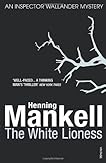
The White LionessThe White Lioness by Henning Mankell

My rating: 3 of 5 stars


Unlike most of Henning Mankell's "Wallander" novels, this one is set at least partly in South Africa, which gives it additional interest to me. It is set in the period between the release of Nelson Mandela from prison in 1990 and the first democratic elections in 1994. It was a period of great uncertainty, when no one knew quite what would happen. Though the National Party had already shed its ultra right wing (to the HNP in the late 1960s), and its far right wing (to the Conservative Party in the late 1970s), the bulk of its support was still pretty much on the right, and the unbanning of the left opposition parties tended to make its supporters nervous, including many in the security forces and the army. One of the possibilities was a right-wing military coup, and attempts to create disorder in order to facilitate such a coup. And there were such attempts, by the mysterious "third force", and others.

So Mankell's main plot, which is based on the training of a South African political assassin in Sweden, is quite believable. After all, Chris Hani was assassinated in just such a plot about the time that the novel was published. Mankell does a fairly good job of showing some of the tensions and ambiguities of South Africn society at that time.

But I also have the problem that I tend to read novels set in places that are familiar to me more critically, and tend to find it more jarring when things are oui of place. Because relatively few novels of this type are set in South Africa, its not something that happens very often, but I wonder how people who live in places where lots of crime novels are set feel when they read them. It's OK with Ruth Rendell's Inspector Wexford novels, which are set in a fictional town, but when actual places are mentioned, I wonder how people who live in them feel when there are inaccurate descriptions. Perhaps I'm also more sensitive to such things than most readers, having worked as a proofreader and editor, where it was my job to detect and correct such slip-ups.

Another novel I read, set in the same period, and with a similar plot line, was Vortex by Larry Bond, which was spoilt for me because some of the action took place in locations that were geographically impossible.

At first Henning Mankell's slip-ups were relatively minor -- a car parked under a baobab tree in the Transkei (I've never seen a baobab tree in the Transkei), someone working on a mine in Verwoerdburg (I lived there in the 1980s, and there were no mines there then). These are minor errors, and concerned only minor characters, but they are jarring none the less.

But there were some things that did affect more important characters, and the plot.

One is that Mankell refers to the "Transkei Province", where it affects police looking for suspects in the Transkei. Yet at that time Transkei was an "independent" homeland, and though its independence wasn't recognised by anyone but South Africa, police procedures at that period would surely have to take some account of the "independent" status of the Transkei, and so in a novel whose genre is a "police procedural" rather than a whodunit, this is a more serious error.

Some of Mankell's descriptions of African culture also strike me as somewhat odd. South Africa is a very multicultural country, and I'm not familiar with every single cultural nuance out there, but still, I wonder what Mankell's conception of a sangoma is. He has characters talking about "my sanhoma" the way some Americans talk about "my shrink", and though there are some ways in whch a sangoma's role in South African society is similar to that of a shrink in America, I've never heard anyone speak of "my sangoma. Mankell also writes about people's relations to spirits that also don't fit, especially since the character in question is a Zulu, and one of the better books on the topic, Zulu thought-patterns and symbolism was written by a fellow Swede, Axel-Ivar Berglund.

Mankell also has urban African characters using using rural imagery of wild animals. I think he underestimates the extent of urbanisation in South African society. I once took a group of students to a work camp in rural Zululand, and one of them, from Soweto, wondered how the local people could survive when they lived so far from the shops.

Never having been to Sweden, I have no idea whether there are similar discrepancies in the Swedish settings, but there do seem to be some rather large plot holes relating to the villain-in-chief, but to say more about that would reveal too much of the plot.

In spite of these flaws, however, it is an enjoyable read.


View all my reviews

20 July 2011

Book Review: Havana Bay

Havana Bay (Arkady Renko, #4)Havana Bay by Martin Cruz Smith

My rating: 3 of 5 stars


I was looking for some light bedtime reading, and looked through our bookshelves and picked up some books that I wasn't sure if I had read or not, and then checked on my computer and found that I had read them, but they had proved to be rather forgettable. Then I picked up this book, which has been lying around for ages, but I hadn't read it.

It was quite an interesting read.

Russian investigator Arkady Renko goes to Cuba to find out what had happened to a dead Russian, a sugar attache at the Russian Embassy in Cuba, who was found dead after he had been missing for several days. Renko wants the Cuban authorities to investigate his death, but finds that they are reluctant to do so. Since the fall of the Bosheviks from power the Russians have downsized their embassy in Cuba and the remaining Russians are not very popular, and Russians investigating possible crimes on Cuban soil are even less so.

Renko soon finds that something big is going on, something bigger than he first suspected, and the more he discovers, the bigger it gets.

To say motre would reveal too much of the plot, but there is also lots of local colour, and some interesting sidelights on Afro-Caribbean religion, and the role that semi-religious secret societies like Abakua play in Cuban society.


View all my reviews

09 June 2011

Whodunit or chicklit? I can't decide

Cold to the TouchCold to the Touch by Frances Fyfield

My rating: 2 of 5 stars


I read this book. I find it difficult to say much more about it. It's crime fiction of a sort. The protagonist is a middle-aged courtesan who plays amateur detective, but Miss Marples or Hercule Poirot she is not. There's a murder, but it's not a murder mystery in the sense that the author leaves clues lying around for the reader to pick up. The protagonist solves the crimes by her brilliant intuition by a process that is opaque to the reader, and left me feeling "So that's whodunit. So what?"

I wonder if this is really an example of the genre known as "chicklit". When I look at Good Reads's "compare books" function I can see that I score pretty low on appreciation of chicklit. So I think I'll steer clear of Fyfield in future, unless I'm really desperate.


View all my reviews

30 May 2011

Detective novels and moral relativism

When is killing another person legitimate? What criteria do you use to decide? Does the fact that something is legal make it morally acceptable?

This book raises these questions and more.

Spoiler alert: if you have not read this book, and want to read it, stop reading now. This post contains spoilers that reveal important elements of the plot.

Strange AffairStrange Affair by Peter Robinson

My rating: 4 of 5 stars


Though this is a whodunit, the thing that stands out about it for me is the way it reflects the inconsistent and ever-changing moral values of society. And that makes it indeed a strange affair.

Writers of whodunits like to involve their fictional detectives in current crimes in the news, and so Peter Robinson involves Detective Chief Inspector Alan Banks in human trafficking and related crimes. It is hard to imagine such things happening in North Yorkshire, where Banks is based, so the story begins with a mysterious phone call from Banks's brother Roy, who lives in London. Banks, who is on leave, travels to see his brother, who is not at home, and appears to be missing. His brother's disappearance also seems to be linked to a murder victim in North Yorkshire, whose death is being investigated by Detective Inspector
Annie Cabbot, who is in charge while Banks is on leave.

It transpires that Roy Banks hsd been murdered too, in a similar fashion to the Yorkshire victim, who turns out to be Roy's latest girlfriend, whom he had sent to his brother to report their suspicions about human trafficking and prostitution. The girlfriend, Jennifer Clewes, worked in the management side of a chain of abortion clinics, and Roy Banks had met her when he took his previous girlfriend, Corinne, there for an abortion. There are several "late girls", who come to the clinic after hours when they are pregnant. They are prostitutes, many of whom have been abducted in Eastern Europe and the Balkans, brought there by their pimps, and too afraid to speak of their sexual slavery. An exception is Carmen Petri, who does not want an abortion, and is older and more sophisticated than the other girls. She agrees to have her baby adopted by Gareth Lambert, a wealthy businessman who has invested in the human trafficking and other schemes of dubious legality.

The moral cognitive dissonanance comes up when Banks discovers that Gareth Lambert does not intend to adopt Carmen's child and bring her up as his own. He rather wants to use the child as the source of a heart for his own ailing daughter. Banks shows extreme moral revulsion towards this idea, as well as to Gareth's role in the betrayal and murder of his brother.

The moral inconsistency lies in the fact that what Gareth proposes to do with the baby is not all that different from embryonic stem cell research, which many people find morally acceptable. In Britain, according to the novel, abortion is legal up to the age of 24 weeks. So in the book there is no there is no great moral revulsion about killing a child up to that age. But if it happens at 40 weeks, and for the purpose of harvesting organs for a heart transplant, then it suddenly becomes morally repuslive. And I want to ask why?

Surely the same arguments that are used in favour of embryonic stem cell research can equally be used for harvesting organs from unwanted children who are only a few weeks older?

Moral relativism is nothing new, of course, and one can expect detecive novels to reflect the current mores of the society in which they are written. Perhaps a detective novel written 50 or more years ago would reflect the same moral revulsion in the protagonist when confronted with any form of abortion, and those running the abortion clinics might be seen as the villains of the piece.

What stands out in this book, however, is the enormous difference that 16 weeks makes. An act that would be acceptable when the child is 24 weeks old becomes morally reprehensible when it is 40 weeks old. Perhaps in another 50 years, in a more enlightened age, people will see the inconsistency and shift the boundary to allow organs to be harvested from unwanted children up to school age, puberty, or even later, and, if anyone questions it, will say that "this is, after all, the 21st century", and will look down on the quaint ideas expressed by Alan Banks as "so 20th century".

O tempora! O mores!


View all my reviews

21 January 2011

Book reviews: two whodunits

I was given a whole bunch of whodunits for Christmas, and have gradually been working my way through them all as bed-time reading.

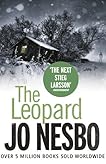
The LeopardThe Leopard by Jo Nesbø

My rating: 3 of 5 stars


This is the third book I have read by Jo Nesbø, where the protagonist is Oslo detective Harry Hole. The book opens with Harry on indefinite leave, hiding out in the opium dens of Hong Kong, and being brought back to solve a serial murder case -- two women have been found dead, drowned in their own blood.

I haven't read the book immediately preceding this one in the series, The snowman, which apparently explains why Harry was in Hong Kong, and perhaps one needs to read that to understand what happens in this novel, but I found it rather disappointing. The first book I read about Harry Hole, The redeemer I thought pretty good, the best of the flood of Scandinavian whodunits I'd read to date. So what was wrong with this one?

I suspect that Jo Nesbø has been influenced by the success of Stieg Larsson, and has been trying to imitate Larsson's style, and it doesn't quite come off. In most whodunits, the reader is exposed to clues as the detectives are, and has to work out the most likely suspects based on the same information, and that is part of the fun of reading whodunits. In this book, however, the reader has more knowledge than the detectives, and thus can work out the primary suspect long before they do. I won't go into the possible reasons for this, as that would probably be a spoiler.

In addition, Nesbø comes perilously close to jumping the shark by giving Harry Hole not one, but three near-death experiences. The book ends as it begins, with Harry Hole retiring to obscurity. I don't think that's a spoiler, but I do think that this time it's probably best if he stays there.

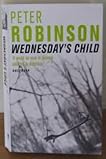
Wednesday's Child (Inspector Banks, #6)Wednesday's Child by Peter Robinson

My rating: 4 of 5 stars


A child is abducted from her mother's home by a couple posing as social workers, and while the police are looking for her the body of a murdered man is discovered. A good read.

View all my reviews

These two books provide an interesting contrast between British and Scandinavian whodunits. I'd read some of Peter Robinson's later books about Yorkshire detective Alan Banks, and recently a lot of the earlier ones have been reprinted, in more compact editions (take up less shelf space) and they also seem to be available fairly cheaply, so I've been starting from the beginning and gradually working through them.

Like Harry Hole, Alan Banks drinks and smokes, but unlike the protagonists in so many of the Scandinavian whodunits, including Harry Hole, he isn't an alcoholic. Earlier generations of detective fiction usually pitted talented amateur detectives against bumbling incompetent policemen (Conand Doyle, Agatha Christie) or else the police admired the talents of the amateur (Dorothy Sayers, G.K. Chesterton).

Robinson belongs to the more realistic version, where the protagonist is a police detective and an ordinary human being with ordinary human failings, with strengths as well as weaknesses. I don't know much about police procedure, but Alan Banks is at least credible. Harry Hole, however, stretches the limits of credibility, though not in the same way that the earlier talented amateur fictional detectives did. One simply cannot imagine the Norwegian police putting so much time and money and effort into bringing back a washed-up alcoholic ex-ace detective from the other side 0of the world to solve a murder mystery that they cannot solve without him.

I try to imagine a sequel.

Harry Hole in the intensive care unit of a home for recovering alcoholics, being consulted by rival factions of the Norwegian police and Interpol, who have to bribe the doctors to delay Harry's recovery by giving him stimulants to bring him out of his coma for long enough to tell them howe to catch the villains, and coming out of his coma on his own for long enough to foil the villains intent of switching off his life-support system.

27 December 2010

The butcher's theatre

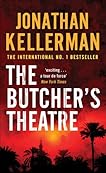
Butchers TheatreButchers Theatre by Jonathan Kellerman

My rating: 3 of 5 stars


I've read a few other crime novels by Jonathan Kellerman and found the palled after reading three of them -- they also seemed to be similar, and got more and more predictable. So I was a bit reluctant to start this one, because it seemed inordinately long, but I wanted some light bedtime reading and it was available, and so I started it, and found it refreshingly different from most of Kellerman's other novels. It has a different setting and different characters.

The story is set in Jerusalem in the 1980s, where a serial killer seems to be at work, though it is not the kind of case that Israeli police are normally called upon to handle, and the protagonist, Chief Inspector Daniel Sharavi, is luckily able to enlist the help of a visiting American policeman friend, who has more experience of such cases. The investigation is hampered by the religious, ethnic and political tensions in the city, which are sometimes reflected in the investigating team itself.

In part the great length of the book is because there are no easy solutions to the case, and it requires lots of plodding and patient police work to get to the bottom of things. We are introduced to the perpetrator and his thought quite early on in the book, and the development of his motivation and psychological state, though he is never a suspect, and his identity is only revealed by accident, towards the end.

So I think this is one of Kellerman's better books, and though it does seem to have some plot flaws, it was still and enjoyable read.

One of the oddities of the book is the strange mixture of US English and other Englishes. The title does not use the American spelling of "theater", but there are American spellings like "meager" sprinkled throughout the book. But there is also the use of "holidays" where one would expect, in a book written by an American, the American term "vacation". Or is American English becoming more international?

View all my reviews

29 November 2010

In the dark: book notes

In The DarkIn The Dark by Mark Billingham

My rating: 3 of 5 stars


A run-of-the-mill crime novel.

A pregnant London police officer is on maternity leave, and her boyfriend, also a police officer, is doing things that have little relation to his everyday duties. I found the first hundred pages, which set the scene, rather dull, and at several points contemplated abanding the book. But then the story picks up and becomes more interesting as one gets involved with the remaining characters. To say uch more would give away too much of the plot.


View all my reviews

02 November 2010

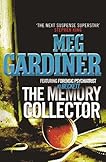
Book review: The memory collector

The Memory CollectorThe Memory Collector by Meg Gardiner

My rating: 2 of 5 stars


This book started off OK. There was a mystery about what had caused an airline passenger to go berserk on board a plane, and whatever it was seemed dangerous and possibly contagious. But after the first fifty pages or so, the plot seemed to come unravelled.

It reminded me of a book I had bought to read on a plane a few years ago, Temple by Matthew Reilly. Reilly was quite frank about his aim to write an action novel where the action never lets up, and so one improbable scene follows another until it descends into mind-numbing tedium. Well Meg Gardiner writes a little bit more articulately than Reilly (not very difficult) but after one or other character jumped the shark for the fifth or sixth (or was it the seventh?) time, I found myself nodding off to sleep in the middle of some exciting action-packed scene with no clear indication of how or why the characters got there. They simply move from one action scene to another.

Well, you get the picture. If you're on a long plane trip and don't mind dropping off to sleep in the middle of what you're reading, it will do.
___
Oh, and while I'm writing about books, NaNoWriMo started yesterday. I'll be giving it a miss this year... again. I'm too busy with non-fiction to spare writing time for fiction. The book I wrote with two co-authors on healing ministry in Zimbabwe is getting closer to publication. And I'm working on another book, on the history of the charismatic renewal movement in southern Africa with Prof John de Gruchy, so my writing time is already pretty fully occupied. I still read trashy novels to unwind, though.

View all my reviews

08 August 2010

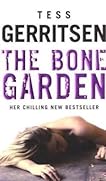
Recent reading: The bone garden

The Bone GardenThe Bone Garden by Tess Gerritsen

My rating: 2 of 5 stars


I quite like books that have a mystery in the past that has repercussions in the present; Robert Goddard is probably one of the better-known current exponents of that genre. This one is Tess Gerritsen's attempt to write a novel like that, where a recently-divoced woman, Julia Hamill, buys an old house, and finds a skeleton buried in the garden.

The previous occupant of the house had died, leaving a great accumulation of papers, and, instead of tossing them out, her relatives had passed them on to another member of the family who became interested in piecing together the family history, going back to Boston in the 1830s, where a hospital is suffering from an epidemic of child-bed fever and serial murders.

Tess Gerritsen, the blurb tells us, is a medical doctor and so familiar with the autopsies and emergency rooms she describes in her novels, particularly those featuring her usual protagonist Dr Maura Isles, who makes a cameo appearance in this one. But therein lies an anachronism, or at least what feels to me to be an anachronism. At least in the beginning, I found myself wondering if nurses were really as professional as they are portrayed in the book back in the 1830s? And did hospitals really have "emergency rooms" back in those days, and would people be tossing around modern buzzwords like "modalities"?

Obviously Tess Gerritsen has done some research into her subject -- to the extent of giving one of her minor villains, a resurrectionist, the name of Burke, which immediately calls to mind the real life (or should that rather be "real death"?) activities of the notorious Burke & Hare.

It improved a bit as it went on, and I found myself at least interested enough to want to see what happened at the end, but Robert Goddard she isn't. So two stars then. I've read plenty of worse books, but also plenty of better ones.

View all my reviews >>
04 December 2009

Recent reading: two novels, one good, one not so good

The Girl Who Kicked the Hornets' Nest (Millennium, #3) The Girl Who Kicked the Hornets' Nest by Stieg Larsson


My rating: 5 of 5 stars
This is the third book in Larsson's "Millennium" trilogy, the others being The girl with the dragon tattoo and The girl who played with fire. While there is something of a gap between the first book and the second, this one carried on right from where the second one leaves off, so if you've read the second book, don't wait too long before reading this one, because it is in effect one long book in two volumes. Leaving it too long might mean that you forget some important elements of the plot.

I also think that this one is by far the best of the three.

I won't describe it, because saying too much would probably be a spoiler for the second book if you haven't read it. I didn't learn much from it, and its nothing profound, just a good story, well told. It differs from the preceding one in that there's more police action, and a bit of courtroom drama thrown in.

The Friends of Meager Fortune The Friends of Meager Fortune by David Adams Richards


My rating: 1 of 5 stars
I haven't finished this book, and I doubt that I will. My wife picked it up cheap in a book shop that sells remainders, and read it. She said that she found the style difficult, and that she had to read each sentence twice.

It's about a logging family in eastern Canada before and after the Second World War, and small town gossip and rumours.

I picked it up for bedtime reading when I was too tired to read anything more demanding and found it too demanding. I too found I was having to read every sentence twice, though I'm not sure why. The sentences are not over long, nor are they complicated in structure. But on first reading, the meaning doesn't seem to get through, and one has to read it again to see how it connects with what went before.

Maybe I'll pick it up again later, maybe not.

View all my reviews >>
LinkWithin

Related Posts with Thumbnails