Showing posts with label recent reading. Show all posts

26 May 2012

Up at the villa (book review)

Up at the VillaUp at the Villa by W. Somerset Maugham

My rating: 4 of 5 stars


A widow, Mary Panton, is staying at a villa near Florence. Her marriage was not a good one, and when she receives several offers of marriage she is aware of the need to choose wisely. The problem is that she is not in love with any of the men who declare their love for her, and a lot more hangs on her choices than she thinks at first.

W. Somerset Maugham was aware of his own shortcomings as a writer, and regarded himself as being in the front rank of the second-raters -- an evaluation with which most critics agreed. Such a judgement is inclined to put one off, and so this book has sat on my shelf for more than 12 years (having bought it at a secondhand book stall) and I've put off reading it until I was desperate.

But the front rank pf the second-raters is not a bad place to be, when compared with some of the drek that one finds on the shelves of bookshops costing over R100 nowadays. So this one was an interesting and enjoyable read, and much better thabn a lot of the "also rans".


View all my reviews

30 May 2011

Detective novels and moral relativism

When is killing another person legitimate? What criteria do you use to decide? Does the fact that something is legal make it morally acceptable?

This book raises these questions and more.

Spoiler alert: if you have not read this book, and want to read it, stop reading now. This post contains spoilers that reveal important elements of the plot.

Strange AffairStrange Affair by Peter Robinson

My rating: 4 of 5 stars


Though this is a whodunit, the thing that stands out about it for me is the way it reflects the inconsistent and ever-changing moral values of society. And that makes it indeed a strange affair.

Writers of whodunits like to involve their fictional detectives in current crimes in the news, and so Peter Robinson involves Detective Chief Inspector Alan Banks in human trafficking and related crimes. It is hard to imagine such things happening in North Yorkshire, where Banks is based, so the story begins with a mysterious phone call from Banks's brother Roy, who lives in London. Banks, who is on leave, travels to see his brother, who is not at home, and appears to be missing. His brother's disappearance also seems to be linked to a murder victim in North Yorkshire, whose death is being investigated by Detective Inspector
Annie Cabbot, who is in charge while Banks is on leave.

It transpires that Roy Banks hsd been murdered too, in a similar fashion to the Yorkshire victim, who turns out to be Roy's latest girlfriend, whom he had sent to his brother to report their suspicions about human trafficking and prostitution. The girlfriend, Jennifer Clewes, worked in the management side of a chain of abortion clinics, and Roy Banks had met her when he took his previous girlfriend, Corinne, there for an abortion. There are several "late girls", who come to the clinic after hours when they are pregnant. They are prostitutes, many of whom have been abducted in Eastern Europe and the Balkans, brought there by their pimps, and too afraid to speak of their sexual slavery. An exception is Carmen Petri, who does not want an abortion, and is older and more sophisticated than the other girls. She agrees to have her baby adopted by Gareth Lambert, a wealthy businessman who has invested in the human trafficking and other schemes of dubious legality.

The moral cognitive dissonanance comes up when Banks discovers that Gareth Lambert does not intend to adopt Carmen's child and bring her up as his own. He rather wants to use the child as the source of a heart for his own ailing daughter. Banks shows extreme moral revulsion towards this idea, as well as to Gareth's role in the betrayal and murder of his brother.

The moral inconsistency lies in the fact that what Gareth proposes to do with the baby is not all that different from embryonic stem cell research, which many people find morally acceptable. In Britain, according to the novel, abortion is legal up to the age of 24 weeks. So in the book there is no there is no great moral revulsion about killing a child up to that age. But if it happens at 40 weeks, and for the purpose of harvesting organs for a heart transplant, then it suddenly becomes morally repuslive. And I want to ask why?

Surely the same arguments that are used in favour of embryonic stem cell research can equally be used for harvesting organs from unwanted children who are only a few weeks older?

Moral relativism is nothing new, of course, and one can expect detecive novels to reflect the current mores of the society in which they are written. Perhaps a detective novel written 50 or more years ago would reflect the same moral revulsion in the protagonist when confronted with any form of abortion, and those running the abortion clinics might be seen as the villains of the piece.

What stands out in this book, however, is the enormous difference that 16 weeks makes. An act that would be acceptable when the child is 24 weeks old becomes morally reprehensible when it is 40 weeks old. Perhaps in another 50 years, in a more enlightened age, people will see the inconsistency and shift the boundary to allow organs to be harvested from unwanted children up to school age, puberty, or even later, and, if anyone questions it, will say that "this is, after all, the 21st century", and will look down on the quaint ideas expressed by Alan Banks as "so 20th century".

O tempora! O mores!


View all my reviews

29 September 2010

Book Review: Prophecy, by Peter James

ProphecyProphecy by Peter James

My rating: 4 of 5 stars


When I began reading this book, I didn't like it much. Perhaps my initial dislike was just prejudice. One of the characters is a child called Edward, and I don't think that is really a child's name. Yes, as a child I knew other kids called Edward, but not many, and it makes me think of people like the late US senator Ted Kennedy.

I've also read books by Peter James before. He writes whodunits, featuring Detective Inspector Roy Grace of the Brighton police. But this wasn't a whodunit, it was more like a supernatural horror story along the same lines as The turn of the screw by Henry James.

Well, I've come across such things before. Phil Rickman started off writing supernatural horror stories like Candlenight, but has gradually drifted into the whodunit genre, and his exorcist-in-chief, Merrily Watkins, has turned into an amateur detective in his more recent books. Peter James seems to keep his genres more separate than that, and his exorcist has nothing in common with Detective Inspector Roy Grace.

I liked the story more as it went along, and it had occasional resemblances to some of the "supernatural thrillers" of Charles Williams, particularly his War in heaven.

This is not the sort of book one can say too much about without spoilers that give away the plot. Francesca (Frannie) Monsanto is an archaeologist working at the British Museum, and a chance meeting leads to the possibility of romance with a widower, whose young son, Edward, seems to have unpredictable moods. But the chance meeting seems to be more than pure chance, and "coincidences" seem to keep happening, including unpleasant things happening to Frannie's friends, until she thinks that there is a common thread linking them all.

I began the book not liking it much. A couple of the scenes seemed unnecessarily gruesome, and there are some plot holes, but in the end I thought it was a good read, and better than Peter James's detective stories. Not quite Charles Williams, though.

Another interesting, though minor, point about this book is that it was not listed in Good Reads at all, and the ISBN had no matches on any of the linked sites, like Amazon UK, and so I had to enter it from scratch. Yet it has been around for quite a while, having been first published in 1992, and in the current edition in 1999, and reissued in 2006.

View all my reviews

08 August 2010

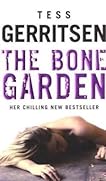
Recent reading: The bone garden

The Bone GardenThe Bone Garden by Tess Gerritsen

My rating: 2 of 5 stars


I quite like books that have a mystery in the past that has repercussions in the present; Robert Goddard is probably one of the better-known current exponents of that genre. This one is Tess Gerritsen's attempt to write a novel like that, where a recently-divoced woman, Julia Hamill, buys an old house, and finds a skeleton buried in the garden.

The previous occupant of the house had died, leaving a great accumulation of papers, and, instead of tossing them out, her relatives had passed them on to another member of the family who became interested in piecing together the family history, going back to Boston in the 1830s, where a hospital is suffering from an epidemic of child-bed fever and serial murders.

Tess Gerritsen, the blurb tells us, is a medical doctor and so familiar with the autopsies and emergency rooms she describes in her novels, particularly those featuring her usual protagonist Dr Maura Isles, who makes a cameo appearance in this one. But therein lies an anachronism, or at least what feels to me to be an anachronism. At least in the beginning, I found myself wondering if nurses were really as professional as they are portrayed in the book back in the 1830s? And did hospitals really have "emergency rooms" back in those days, and would people be tossing around modern buzzwords like "modalities"?

Obviously Tess Gerritsen has done some research into her subject -- to the extent of giving one of her minor villains, a resurrectionist, the name of Burke, which immediately calls to mind the real life (or should that rather be "real death"?) activities of the notorious Burke & Hare.

It improved a bit as it went on, and I found myself at least interested enough to want to see what happened at the end, but Robert Goddard she isn't. So two stars then. I've read plenty of worse books, but also plenty of better ones.

View all my reviews >>

01 August 2010

Recent reading: The final days

The Final DaysThe Final Days by Alex Chance

My rating: 3 of 5 stars


A psychotherapist, Karen Wiley, receives anonymous notes written
by a psychopath, or a child threatened by a psychopath.

This kind of plot has almost become a genre of its own, with some authors, such as Jonathan Kellerman, seeming to specialise in it. Reading the blurb and the opening chapters of this reminded me of The Analyist by John Katzenbach, which has a very similar theme. At least in this book the protagonist does not behave quite so stupidly as the one in Katzenbach's book. Both books, however, have a motif of the hidden dangers of the Internet.

It's difficult to write about such a book without including spoilers, so perhaps it's easier to write about the genre. One of the things that strikes me about the genre is that it is assumed that there is nothing remarkable about apparently normal people living apparently normal lives to have regular appointments with psychotherapists or psychoanalysts of some kind. If these books are an accurate reflection of American society, it would seem that psychotherapy has become a kind of religion, at least among the upper middle class. In America, in such circles, it seems that people would talk about "my shrink" without the slightest twinge of embarrassment, whereas in South Africa regular visits to such a functionary would be regarded as a shameful secret.

Of course in the book the normality of life is interrupted by the actions of a psychopath, but the solution isn't to be found in psychotherapy, at least not of the paid client/therapist kind. The solution requires police work, and in the story there is plenty of that, as police professionals, semi-professionals and anateurs get involved in trying to track down the psychopath, getting in each other's way and working at cross-purposes as the body count and gruesomeness rise.

But given the existence of such a genre, this book is one of the better examples, and a good one to help pass the time on a boring plane journey.

View all my reviews >>

26 July 2010

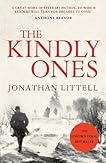
Book review: The kindly ones

The Kindly OnesThe Kindly Ones by Jonathan Littell

My rating: 2 of 5 stars


I typed quite a long review of this book, and then went back to correct something and Good Reads lost everything I typed.

To sum up, this is an interesting realistic, surreal, badly writtten, badly translated, and badly edited book.

I don't feel like rewriting everything that Good Reads lost right now -- maybe another time, though by then I probably won't remember what I said or why I said it.

View all my reviews >>

01 March 2010

Modernity: from dawn to decadence

From Dawn to Decadence From Dawn to Decadence by Jacques Barzun


My rating: 5 of 5 stars
I saw this book going cheap in a bookshop that sold remainders -- unsold copies of books returned to the publishers. I knew Jacques Barzun as one of the authors of The Modern Researcher, which I had helpful in writing my doctoral thesis. So I bought it, and I'm glad I did.

It's a kind of history and tourist's guide to modernity. It's taken me a long time to read it, because it's a long book. I read other stuff in the mean time, and when I was halfway through I forgot about it for a while. I was moved to pick it up again after an internet discussion on science, magic and miracles, and now at last I've finished it.

It covers a tremensous range of Western culture, and in this age of globalisation you could say it's global culture as well. A generation ago, back in the 1970s, the BBC did two TV series that produced books on similar topics -- Kenneth Clark on Civilisation and J. Bronowski on The ascent of man dealing with arts and science respectively. I still remember how uncomfortable I felt at seeing "civilisation" spelt thus. It needed to be spelt "civilization", and "civilisation" just looked wrong, and somehow uncivilized, though I've got used to it now.

Barzun's book deals with the last 500 years of both, and deals with culture, religion, politics and science, and how they have influenced the modern worldview. In doing so, he also draws attention to things one tends to forget or overlook. In thinking of modernity, I tend to think of the Reneaissance, the Reformation and the Englightenment as the shaping forces. Perhaps that's because, as a missiologist, I see those as the things that formed the worldview of Western missionaries who came to Africa, and that can lead to an over-simplification. I tend to overlook Romanticism, as a reaction against the Enlightenment. I don't forget it altogether, of course. I enjoy Beethoven's music, and J.M.W. Turner's paintings. But most of the 19th-century Western missionaries who came to Africa were anything but romantic in their outlook. Or if they were, they managed to hide it pretty well.

It's a long book, and that's why it took me a long time to read it, but it's also divided into short sections that make it easy to refer to a little at a time. So having read it through, I think I'll keep it at my bedside to refer to again and again.

Here are a few of my favourite bits, and there are many in a book this long:

The 18C, that is, Diderot on Painting, Lessing on the Laokoon, and finally Winckelmann on Greece, made detailed art criticism an institution. Its role is part scholarship, part advocacy. Winckelmann's lifelong work was to glorify Greek art and discredit the Roman and this to revivify Plato's belief that Beauty is divine and to be loved and worshipped. It may be a symbolic coincidence that Winckelmann was the victim of a homosexual murderer.

Every age has a different ancient Greece. Winckelmann's is the one that moved the 19C. By way of Goethe, Byron, Keats and lord Elgin, it inspired the universal urge to put a picture of the Parthenon in every schoolroom. It also aroused the Occident to support the Greeks' war of independence against the Turks.

And, of course, that helped to shape modern Greece as well. It was the Occidental supporters of Greek independence (like Byron), with their Romantic notions of the glories of ancient Greeks, that led modern Greeks to think of themselves as Hellenes rather than Romans, and to produce such abominable slogans as "Hellenism is Orthodoxy and Orthodoxy is Hellenism", and led to the inclusion of Byron in a Greek books of "Saints' names".

View all my reviews >>

12 February 2010

Recent reading: In the dark of the night

In the Dark of the Night In the Dark of the Night by John Saul


My rating: 3 of 5 stars
I was looking for a no-brain-strain novel to read before going to sleep, read the blurb on a few, and picked this one, and brought it home a couple of days ago.

It's a ghost story, sort of.

Three American high school boys are staying with their families in adjacent lakeside cottages for the summer. One family has rented an old house that has been unoccupied since the previous owner disaappeared a few years previously, in mysterious circumstances, but the reader already knows that he drowned in the lake trying to escape the voices in his head.

The boys discover a hidden room in an outbuilding with a lot of broken or dismantled objects, a table without a leg, a hacksaw without a blade, a doctor's bag without surgical implements, a lamp without a shade. There's an old ledger that shows that exorbitant prices were paid for some of these.

Then the boys start having identical nightmares of violence, in which one or all of them are involved. When some of the nightmares start coming true, they get scared, and think they myst keep away from the hidden room, but something keeps drawing them back.

It's an interesting plot idea, and at times I thought it might be a four star book, but in the end the author chickens out, and it degenerates into an unconvincing slasher story, a bit of an anticlimax after the build-up, and the symbolism of the objects isn't really made clear.

But still, wasn't looking for great literature when I bought it, just light bed-time reading.

The author is John Saul, who is apparently not the same as John Ralston Saul, another author whose books I have read.

View all my reviews >>

13 October 2009

Recent reading: The Girl Who Played with Fire

The Girl Who Played with Fire (Millennium, #2) The Girl Who Played with Fire by Stieg Larsson


My rating: 3 of 5 stars
Yet another Scandiwegian whodunit!

I seem to have been reading quite a lot of these recently. This on is the second of the "Millennium" trilogy, the first being The Girl with the Dragon Tattoo. The plots include the staff of Millennium magazine, based in Stockholm, Sweden.

Unlike most of the Swedish whodunits I've read, in this one the protagonist is not a boozy middleaged divorced or divorcing police detective with health problems and in trouble with his superiors, but is Lisbeth Salander, a young female computer hacker with antisocial attitudes.

One problem for me was that just about the time I started reading the book I read a post on Jarred Harris's blog Mary Sue gets me thinking - The Musings of a Confused Man:
A Mary Sue (sometimes just Sue), in literary criticism and particularly in fanfiction, is a fictional character with overly idealized and hackneyed mannerisms, lacking noteworthy flaws, and primarily functioning as wish-fulfillment fantasies for their authors or readers.

Jarret linked to a site, The Universal Mary-Sue Litmus Test, and I had a look at it and started doing the test for my own fictional characters. They seemed very remote from being Mary Sues, and hardly any of the criteria applied to them even slightly. Perhaps that's because I've always believed what G.K. Chesterton said about fairy tales -- fairy tales are not about extraordinary people, but about extraordinary thing happening to ordinary people.

But the further I went into the test, the more it seemed to apply to Lisbeth Salander. Could she be a Mary Sue?

I have to admit that for the first 100 pages or so I was tempted to abandon the book, mainly because my wife had just finished one that I wanted to read more. But I stuck with it, and the pace picked up, especially after page 200 or so (there are 569 pages) and in the end I would say that it was a good read, though I still have mo reservations and some of the other characters.

Perhaps some of the flaws in the book can be attributed to the fact that all three books in the trilogy are being published posthumously, and so are in a semi-raw state. A good fiction editor might have pointed out some of the flaws in the characters, for the author to revise. But with the author being dead, no one really can revise them any more.

View all my reviews >>

There are a couple of things I can add to this blog post, which I won't include in my review on Good Reads -- some of the questions in the test that made me wonder whether Lisbeth Salander is a Mary Sue:

  1. On the subject of your character and his/her family...

    1. Was your character orphaned, abandoned, kicked out, or at least raised by a family/person that was not his/her own family?
    2. Was a major villain responsible for the death of the parents or guardians?
    3. Was your character responsible for the death of his/her parents/guardians?
    4. Did your character witness the death of the parents/guardians?
    5. Was he/she adopted by a cruel family or person?
    6. Ran away at any point?
    7. Raised him/herself?
    8. Lived in the streets?
    9. The very last or only survivor of anything?
    10. Adopted by another species/racial group?

    1. What about any of these?
      1. Born/raised in extreme poverty?
      2. Born/forced into slavery?
      3. Banished from anywhere?
      4. A member of a despised, outcast, and/or downtrodden race?
      5. An illegitimate child?
      6. The parent of an illegitimate child?
      7. Abused?
      8. Raped?

    1. If your character has a torment-ridden, pain-filled past, do you believe it excuses his/her actions?

    1. Does a major villain have a personal fixation/obsession with your character?
      1. For no apparent reason?
      2. Something that has to do with your character's family, and not your character him/herself?

    Those are just a few of the things that seem to me to apply to the protagonist, but it may be just me. But if you've read the book, and have the time, perhaps you'd like to compare the protagonist, and the villains, with the Mary Sue Litmus test and see what you think.

LinkWithin

Related Posts with Thumbnails