Showing posts with label survival. Show all posts

10 May 2022

The Caliban Shore: anatomy of a shipwreck

The Caliban Shore

The Caliban Shore by Stephen Taylor
My rating: 5 of 5 stars

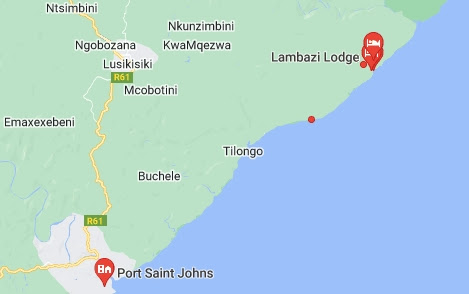
There have been many shipwrecks on the coast of southern Africa over the centuries, but only four stick in my mind -the wreck of the Grosvenor on the Pondoland coast in 1782, the Birkenhead just east of Cape Town in 1852, the Dunedin Star on the coast of Namibia in 1942, and the Oceanos in 1991, a little south of where the Grosvenor was wrecked. I learned about the first two at school -- they made it to the history books as being among the most famous shipwrecks on the southern African coast. The wreck of the Birkenhead was famous for establishing the principle of "women and children first", and the wreck of the Oceanos was famous for the abandoning of that principle.

All aboard the Dunedin Star and the Oceanos were rescued. Many of those aboard the Birkenhead died, but their fate was known. But the wreck of the Grosvenor became the stuff of legend, because the fate of the majority of its passengers and crew remains unknown to this day, nearly 240 years later. And that is what Stephen Taylor explores in The Caliban Shore -- what happened to the ship and the people in August 1782. In doing so he reveals some interesting facets of the history of India, southern Africa, and the UK.

The fascination of the story is partly in the mysteries. We quite enjoy watching the TV series Air Crash Investigation, where the interest is in the search to discover what happened and why. It is a puzzle to be solved. Was it a mechanical error or a human error, or an event outside human control, like weather, or a volcanic eruption? If it is a human error, it is sometimes caused by human relations -- what were the relations of the crew members? It can also be poor training and skill. These issues are explored in the TV series in a formulaic way, but in the case of the wreck of the Grosvenor, Stephen Taylor does it much more thoroughly.
We learn something about the economics of India, and especially of the trade between India and the UK, which the British East India Company sought to monopolise, but though it dominated the trade, it did not control it completely. We learn, for example, that of the 740 tons of cargo that the ship could carry, the Captain was entitled to use 58 tons for his own personal trade. The Captain also decided who could be passengers, and how much they should pay.

In addition to the mystery of what led up to the fate of the ship, there is the mystery of missing persons. The fate of the majority of people on board remains unknown. The nearest port where they could hope to get a ship to continue their journey to Britain was Cape Town, 800 miles (1290 km) away, measured by modern roads, but in those days there were no roads for about half the distance. There were young children, pregnant women and sickly old people among the survivors of the wreck, and most of them did not survive the journey, or else gave up.

[author Stephen Taylor] examines all the known remaining records of the event to trace the lives and careers of those who were aboard to ship, to try to piece together what happened to each. Some are known to have died on the journey. Others were abandoned by their fellows in circumstances where they were assumed to have died. The route to Cape Town passed through a war zone; it was the beginning of the 100 Years War between the Xhosas and the Cape Colony, though history usually divides it into nine "Frontier Wars". And the Dutch who controlled the Cape Colony were at war with the British, so British ships did not call there. A few of the survivors managed to get on Danish ships. But some decided to stay put and settle where they were, among the local Pondo people, others may have done so, but it is not certain who they were, or where they settled.

 The news of the shipwreck took a long time to reach Britain, and when it did it was sketchy and gasve rise to sensational and highly speculative press reports. The voyage from Britain to India in  the 1780s usually took 6-8 months. Much was made of the anxiety of the families of those involved, who lacked what the media nowadays call "closure". For many, it seems, the good news would be that their relatives had died, for to be marooned among a strange and unknown people was seen as "a fate worse than death". 

For the local people, the wreck was both an opportunity and a threat. Pondoland had no deposits of iron ore, so people in the vicinity of the wreck, ignoring the castaways and their plight, set about burning the wooden wrekage of the ship to retrieve nails and any other bits of scrap metal they could find. When the castawats tried to approach them, they drove them away, and this was seen and portrayed as evidence of the "savagery" of the local people, though it seems that in our day people who are shipwrecked while travelling from Africa to Europe are treated just as badly by Europeans, who seem to be equally savage, 

With hindsight, and research, Taylor explains this -- August, when the ship was wrecked, was the end of winter. The grazing was poor, the cattle were thin, and the previous season's crops were almost exhausted, so the prospect of 140 uninvited guests for dinner was just too much. Later, when the shipwreck survivors had split into smaller groups, they were treated more hospitably.

Another interesting thing is that the ship carried a report on corruption in the British East India company and its officials. Both the report and the bearer failed to make it to Britain as a result of the wreck. I found this interesting because I studied a related incident in history at university -- the Impeachment of Warren Hastings. This book made a great deal more sense of what he was impeached for and why, and perhaps also helps to explain some events in our own time, when the Gupta brothers engaged in state capture in South Africa, and promoted corruption in business, the civil service and in state-owned enterprises. It seems that the British East India Company was very much into state capture. I'm not sure whether they started it or just passed on what they had received from others, but it seems that the Guptas were heirs of that tradition, and have passed it on to the RET crowd in South Africa.

The books explores the history, the legends and the rumours, and tries to establish, as far as possible, what actually happened. So there is history, an investigation into a shipwreck, a survival story, and a search for what happened to missing persons as well.


View all my reviews

12 January 2009

Darwinism has all the answers - but what are the questions?

When I was an undergraduate I had an argument with a fellow student about racism. He was majoring in botany and zoology, and was convinced that some races were more evolved than others, and was in fact a Social Darwinist. He recommended that I read the works of Ayn Rand, whom I had never heard of before then. He said that if I read her works they would change my mind on the topic.

One result of his argument was that I avoided reading anything by Ayn Rand for about ten years, believing that if they contributed to his ideas, they were not worth reading. Later, when I realised that Ayn Rand's ideas were becoming more influential in the world at large, I did read some of her books to understand what was going on. I believe they contributed to the spread of neoliberalism, for example.

And today, thanks to The Western Confucian, I came across this piece.

Mercatornet: Darwinism 2.0 has all the answers:
The Economist’s contention is that all social policy ought to be framed in evolutionary terms. Otherwise, it is destined to fail. Traditionally, policy has been shaped by philosophy, sociology or even religion. But these are inadequate tools, it says:

They describe, rather than explain. They do not get to the nitty-gritty of what it truly is to be human. Policy based on them does not work. This is because they ignore the forces that made people what they are: the forces of evolution.

Welcome to social Darwinism 2.0. SocDar 1.0 used the ideas of natural selection and survival of the fittest to promote racism, eugenics, and robber baron capitalism. What fearsome ideas will emerge from 2.0?

The problem with Darwinism of any hue, at least when applied to society, is that its enthusiasts can cook up an explanation for everything in terms of survival and reproduction, the two pillars of Darwin’s theory. Whatever exists must somehow be necessary for survival, no matter how debased it may seem in old-fashioned moral terms.

This leads to some sticky problems. One of these, for instance, is genocide. Since it exists, it must confer an evolutionary advantage -- which is about as close as Darwinism gets to the old-fashioned notion of ethical goodness. Some evolutionary theorists even think that humans are programmed for genocide and war. Indeed, the old man himself seems to have thought genocide something between a jolly good thing and a regrettable necessity. As he wrote in his other great text, The Descent of Man and Selection in Relation to Sex: “At some future period, not very distant as measured by centuries, the civilised races of man will almost certainly exterminate, and replace, the savage races throughout the world.”

It seems to me, however, that Darwin failed to see the implications of his own theories. Civilisation may confer a short-term advantage, but not really a long-term evolutionary one related to survival. A lot of our "civilisation", for example, is built on the use of fossil fuels, which enable mechanised farming and conveying of food and other goods over vast distances. But what happens when fossil fuels are exhausted? Perhaps civilisation will collapse. In civilised societies the development of optics has allowed short-sighted people to survive and breed. In hunter-gatherer societies, such people would be less likely to survive. And if civilisation collapses, perhaps the few remaining hunter-gatherer societies in the Amazon jungles will prove fitter to survive.

Similarly, in civilised societies medicine has allowed babies with birth defects to survive and breed. There are endless news stories about parents of babies with defective hearts or other organs appealing for money for an operation that will save the life of their child. "Civilisation" does not necessarily confer a survival advantage, in the Darwinian sense.

And Mercatornet goes on to say

While evolutionary thought may shed some light upon why young men commit more murders than any other age group, the far more interesting question is why most of them do not. Human consciousness clearly indicates that man has a spiritual dimension which is not determined by the iron law of survival of the fittest. Even some of the more intelligent Darwinists acknowledge this.

Capitalism as an economic system evolved, without too much thought being given to it. Then some people realised that the system encouraged behaviour that was regarded as immoral on the basis of phlosophy, religion or social values. In response to this various forms of socialism were proposed as alternatives to capitalism. By the 19th century capitalism seemed to have developed into a "dog eat dog" society. For some, it seemed natural, and indeed, for Social Darwinists, it was seen as part of "natural selection". Socialist ideas took many forms, but most were based on the idea that cooperation is a better basis for economic activity than competition.

In some cases the ideas became ideologies, as in Marxism, which was linked to a deterministic philosophy. And in reaction to this, people like Ayn Rand decided to provide an ideology for capitalism, which led to the neoliberalism of today.

From a Christian point of view the problem with all this is that the economic ideologies, of both Marxism and neoliberalism, assert that man ought to be subjected to economic powers. Is that what St Paul was saying when he said "Let every soul be subject to the higher powers" (Romans 13:1)? Or did he also envisage a strouggle against them, as he says in Ephesians 6:10?

Perhaps there is indeed a Kulturkampf, and in the West there is an increasing divergence between Christian values and those of society. But many Christians tilt at windmills, and argue about things like how the world was created, arguing over things like "old earth" and "young earth", yet accept without question the values propagated by the likes of The Economist, showing that they have already capitulated. That is straining at a gnat and swallowing a camel.

LinkWithin

Related Posts with Thumbnails