Showing posts with label Scandiwegian whodunits. Show all posts

19 August 2012

Not your average Scandiwegian whodunit

Between Summer's Longing and Winter's Cold (The Fall of the Welfare State, #1) Between Summer's Longing and Winter's Cold (The Fall of the Welfare State, #1) by Leif G.W. Persson

My rating: 3 of 5 stars


Over the last 10 years or so Scandinavian crime fiction has come to dominate the genre in the English-speaking world. Many of the books in the genre have a gloomy boozy divorced (or about to be) detective as protagonist. This one is different.

There is no protagonist. We are given glimpses into the lives and loves and hates of members of different branches of the Swedish police as they are touched in some way by the apparent suicide of an American journalist who fell from the 16th floor of a student residence.

The book is not well-written; in many ways there seems to be too much irrelevant detail. Describing in detail how a single protagonist spends Christmas is one thing; doing it for five or six different characters seems to be overdoing it. Some of the problems in the writing may be problems in translation rather than in the original. The writing sometimes seems stilted.

One of the more disconcerting things is that it takes one a while to work out the period the story is set in. The book was first published in 2002, so one expects it to be at around the turn of the century, but the technology doesn't fit -- there are no personal computers, only typewriters. No cell phones. The technology used would seem to date it to about the mid-1970s, but the story also concerns the investigation of a possible plot to assassinate the Swedish prime minister, which links it to the assassination of prime minister Olof Palme in 1986. Though the prime minister in the book is not named, there are sufficient resemblances in the story to make that a possible period as well.

One of the minor characters is a South African student with an improbable name, and there were stories of South African connections to the assassination of Olof Palme, and in Totale aanslag by De Wet Potgieter this is presented as historical fact. As an aside (this is not mentioned in the story, and is rather a personal anecdote), in 1988 my wife worked in a factory and the office next door to hers was used by a company that was indirectly linked. Sometimes she could not help overhearding conversations in the next door office, and she got the impression that they were involved in some shady business -- money laundering, illicit diamond buying, or something like that, and possibly the assassination of the Swedish prime minister. At about that time we had a break-in at our house, and the house was thoroughly ransacked, cupboards and boxes were emptied, but the only things that were taken were the cheap loudspeakers for our radiogram, which had been carefully unscrewed from their cabinets (the cabinets themselves were left behind), and some food. We had the impression that the thieves were looking for something very specific, which they didn't find, and the usual things that thieves took, cameras, computers etc., were left behind.

But, to get back to the book, in spite of its deficiencies, it was an interesting story, even if it was not well-told, and ultimately worth reading.


View all my reviews

13 October 2011

Before the frost - book review

Before the FrostBefore the Frost by Henning Mankell

My rating: 3 of 5 stars

Detective Kurt Wallander's daughter Linda is about to join him on the police force in the town of Ystad in southern Sweden, and while she is waiting to start work Linda re-establishes contact with a couple of old school friends, Anna and Zeba. Then Anna says she thiinks she has seen her father, who had been missing for many years, and shortly afterwards goes missing herself. Linda begins searching for Anna, and thinks her disappearance may be linked to a case her father is working on, of animals that have been cruelly killed and then a murder, that seems to be linked to a religious motive.

Until about halfway through, I thought that this was the best book Henning Mankell had written. The point of view has shifted to Linda Wallander, and we see her father through her eyes, rather than his own rather jaundiced view of the world, and his battles with booze. There seem to be too many boozy policeman novels nowadays.

The second half doesn't hang together too well, and there seems to be too much of the deus ex machina. Perhaps, however, that is more what real police work is like -- strokes of luck and chance happenings.

Despite these faults, however, it is still one of Mankell's better novels.


View all my reviews

17 June 2011

The stonecutter - book review

The StonecutterThe Stonecutter by Camilla Läckberg

My rating: 4 of 5 stars


The first thjing I noticed about this book was the sticker placed on the cover, presumabl;y by the booksellers, saying "If you like Jo Nesbo you'll love this." And the books by Jo Nesbo have stickers saying "The next Stieg L:arsson". I'm not sure what these cvomparisons are supposed to achieve, except that Jo Nesbo's writing has recently come to look like a rather ineffectual attempt to imitate Stieg Larsson. But Lackberg has so far not tried to imitate either. Other than being crime fiction, and thus in the same broad genre, Lackberg is Lackberg, and there is little resemblance to Nesbo.

But the claim made me think of the differences between male and female crime writers, and this one is obviously written from a feminine perspective. For the first hundred pages or so I thought the protagonist was post-natal depression. And it got me thinking about differences between male and female crime writers.

One of the most notable ones is that the detective heroes of the male writers tend to be heavy drinkers, if not actual alcoholics, and are divorced or about to be. Alan Banks, Kurt Wasllander, Harry Hole and several other fictional detectives invented by male writers seem to fall into this category. Even Morse, though though unmarried, was unlucky in love, and tended to booze a lot. But the fictional detectives of female crime writers, though they may have faults, seem to be able to stay off the booze and avoid divorce -- Rex Wexford, Lindley, Adam Dalgleish and, in this book, Patrik Hedstrom.

In this book the murder of a child baffles the police, and when it is followed by apparently similar non-fatal attacks on young children the police find that find most of their suspects appear to have alibis for one or more of the attacks. In addition, many of the families involved in the investigation have secrets that they want to keep hidden. There is a kind of parallel story set in the past, which show that the roots of the crimes lie in an earlier generation, and in the upbringing of chiuldren in the past. Some of the police officers involved in the investigation have difficulties in bringing up their own children.

So the book turns out to be more than a simple whodunit, but is also an exploration of the ways in which dysfunctional families can produce criminals.If you love this book, you might not necessarily like Jo Nesbo.


View all my reviews

27 March 2011

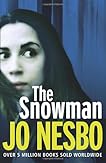
Book Review: The Snowman by Nesbø

The SnowmanThe Snowman by Jo Nesbø

My rating: 4 of 5 stars


I came to this book after reading The Leopard by the same author, which I found disappointing. My wife bought it, and I wasn't particularly keen to read it, as I thought it might be similarly disappointing, and was pleasantly surprised to find that it was vintage Jo Nesbø, except perhaps for the last couple of chapters.


Oslo detective Harry Hole is asked to investigate the case of a missing woman with his new partner Katrine Bratt, who urges him to check older unsolved cases in Bergen that seem to have some similarities. When a second missing woman is found murdered, it seems that a serial killer may be at work.


Towards the end, however, the story shows the same descent into the improbable that characterises The Leopard throughout, and the figure of the boozy Scandiwegian detective seems well on its way to becoming a literary cliche. Perhaps this is because Nesbø's publishers have taken to hyping him as "the next Stieg Larsson", which is a pity, because Nesbø writes better as Nesbø than as a faux Stieg Larsson.


View all my reviews

LinkWithin

Related Posts with Thumbnails