28 May 2026

AI: Uses and Abuses

There's a lot of talk about AI, which is supposed to stand for "Artificial Intelligence", but could equally well stand for "Artificial Idiocy", when one considers what the term is most frequently applied to -- LLMs (Large Language Models). 

LLMs are computer programs that are fed large quantities of text from various sources, and are programmed to handle the text in various ways, including generating new text based on the patterns they detect in the existing text they have been fed. This enables them to do things like produce summaries of documents, and to gather and present information gathered from a wide variety of sources.

Some of these publicly-accessible LLM bots are programmed to present a quasi-human user interface, which has led some people to regard them as persons and to treat them as if they were human beings.

Wisdom of the chip, compassion of the code

The Barna research group has found, for example, that 48% of practising US Christians say they would trust AI with their spiritual growth, and 34% say AI's spiritual guidance is as trustworthy as a human pastor's. Other research has found that some people even fall in love with chatbots, and develop a quasi-romantic love relationship with them. 

The problem with all this is not with the LLM bots themselves; it is with the human beings who make, promote and use them. 

In all this we need to remember that LLM bots are inanimate machines; they are not AI and cannot think. 

It is important to understand this to know what they are good at, and what they are not good at. One of the things they are not good at is knowing what they are not good at. or "knowing" anything, for that matter.

Some things LLM bots are not good at 

Some companies that have adopted AI agents have discovered that they have botched important tasks. The US military has used AI agents in its war against Iran, and some have suggested that a school full of children that was hit by a missile was a target selected by AI.

In these and similar cases the main problem is that a situation arose that was not foreseen by the programmers of the AI bot. A human being faced with something unforeseen, can make a decision based on what is actually happening. They may make a wrong decision, and often do. But they also can and often do make decisions that mitigate rather than exacerbate a bad situation. 

 Some things that AI bots can be useful for

One of the things that AI bots can be useful for is research, though some caveats are needed.

When I was working on my doctoral thesis some 30 years ago, long before LLM bots, I went to the periodicals section of the university library and walked along the shelves looking for journals with likely titles. Having found one, I would begin with the most recent and go through the indexes looking for articles with likely titles. When I found one I would read the abstract. If it looked relevant, I would put that journal in my pile to have the article photocopied. That is what is called a literature search. It was also very time consuming.

An LLM bot could search the same number of journals, and many more that weren't in the library, and come up with a list of articles in less than a minute. That could save a lot of time, time that could be better used in reading the greater number of articles the bot could (theoretically) find. 

The caveat, in this case, is that the bot may not have been trained on all the articles or journals that dealt with the subject, and, since it works by pattern matching, it could make up article and journal titles similar to those of the ones it found, which could be (and sometimes are) completely spurious. That is why LLM bots should be supplementary to, and not replacements for, a competent and trained subject librarian.

Creativity

The tendency of AI bots to make things up like this should not be mistaken for creativity. But we should be careful about the complaint that what they produce is simply piracy of what human beings have produced. This is especially noticeable in graphic art.  A bot that has been trained on hundreds of thousands of paintings mixes those elements and produces something different, and people claim that it is derivative. But a human artist has usually also been trained in like manner, by seeing pictures produced by thousands of artists before them.

Donkey-centaur (Isaiah 34:14)

I was once intrigued by the biblical description of a desolate place from which the human inhabitants had fled, leaving it to be occupied by various monsters (Isaiah 34:14). I asked a friend who had access to a graphic AI bot to get it to produce a picture of a donkey-centaur, and this is what it produced. I thought it was rather nice. All the elements are derivative: the style was learnt from hundreds of artists who painted in that style, but those artists themselves learnt from the other artists who painted in that style, often as semi-robots themselves, as apprentices painting a small part of a picture by an acknowledged master.

If a human artist sees a lot of paintings in a similar style, and then paints one in the same style, it isn't piracy, unless they try to pass it off as the work of someone else. Similarly, an author who reads a lot of books will be influenced in what they write by the books they have read. That is not piracy. Nor if a bot produces a document in a certain style. But if a bot produces it, though it is not necessarily piracy, it's not really creative either.  

I see nothing wrong with getting a bot to draw such a thing to illustrate an article like this. But I would not present such a thing to an art gallery, as a replacement for the work of human artists. Nor would I ask a bot to produce an ikon of a saint -- that would be analogous to asking a bot for pastoral advice, as described above. And in doing such things, bots also make mistakes, like putting right hands on left arms, adding fingers and toes etc. 

 Using LLM bots for creative writing

A couple of months ago a friend and I heard a talk on  Christian Nationalism. It is a topic at the intersection of theology, politics and history. My friend is a physicist, so it was a bit out of his field, so he asked Claude AI to produce an academic article on Christian Nationalism, which it did. Since that topic is more in my field, he sent it to me and I read it as though I were doing a peer review for a journal in my field.

The article contained quite a lot of information, but it was poorly arranged and poorly presented. It lacked a clear and consistent thread of thought. To put it briefly, Claude AI could not see the wood for the trees. It could connect one idea to the next, but it could not connect a string of five ideas to the next five. 

I had written an article on a related topic 25 years ago, and I was interested to see that Claude had used some sources that had not been available then, and it looked as though that might be more interesting than the article itself. My friend then gave Claude the feedback -- my "peer review" and the bibliography for my article, with the addition of a reference to my article as well. 

It spat out a new article, which was a little bit better than the original, but still suffered from the same faults. But this time my friend asked it to produce a bibliography on the subject, and that was far more useful. It had added mine to its original one, a dredged up a whole lot more. Some of the items, including some of the URLs, proved to be hallucinations, but it was useful nonetheless.

I would not use AI bots for writing stuff, but as a  kind of research assistant, they look useful. 

Claude AI tries fiction

I then asked my friend if he would try Claude on fiction.

I had seen somewhere that the name Tiffany was a short form of Theophania, which gave me the idea of writing a novel on the theme of "Tiffany had an Epiphany". So I wrote one.

My original (complete) MS was The Venn Conspiracy, a children's novel which I have written but not published.

My friend submitted the first two chapters to ClaudeAI. These chapters established the setting, the main characters and the beginnings of the plot. He asked Claude to complete the story. To distinguish it from my original, it was given the title Tiffany the Spy. Since the original is unpublished, Claude AI would be unlikely to find it on the internet and draw on it for the plot, but having a human-written original would make a comparison easier.

I made some comments on what I saw as the main shortcomings in Claude's version of the story. My friend submitted my comments to Claude AI which produced a revised version, on which I have made more detailed comments, though I haven't asked my friend to submit them to Claude. There is a limit to how many iterations one can go through.

I think the experiment shows that "AI" is not good at creative writing. 

One problem that stands out is that the AI bot lacks empathy (though sometimes the programmers try to give it the appearance of empathy) and so does not know what makes a good story. The lack of empathy may seem like a good thing to people like Elon Musk, who thinks that tech must rule, but I believe that tech, like the Sabbath, was made for man, and not man  for tech. 

In fiction, as well as non-fiction, Claude can't see the wood for the trees, and it can't even do trees very well. It can describe trees lyrically but cannot express their significance to human beings because it isn't one. It came up with a plot that was complex, but trivial and meaningless.

For an example of the lack of empathy, consider the following passage:

David looked at her sideways. "You sound like you've been talking to lawyers.",
"I have been," said Tiffany. "Mark's father. And a woman called Miriam Goldstein who's an advocate."
"What's an advocate?"
"A special kind of lawyer who goes to court."
David was quiet for a moment.
"That's brave," he said, in a tone that made it clear the observation was genuine. "Talking to lawyers about this."
"I don't feel brave," said Tiffany.
"Well you don't look it either," said David, which was as close as he could get to saying the same thing that Mark and Asha had both said, and which somehow, coming from David, meant a great deal.
Put yourself in the position of Tiffany in that conversation.
"I don't feel brave," said Tiffany.
"Well you don't look it either," said David.
How would you, or any other English-speaking reader, take that? I would see David's remark as rather offensive, wouldn't you?

The bot has no empathy, no feel for human reactions to things said. And that's because it has no feel for anything at all. It is an inanimate machine. It has a tin ear. All it can do is to spit out "rite words in rote order", to quote Marshall McLuhan. It does that rather well, but we must not mistake that for human intelligence.

So I repeat: It is important to know what AI bots are good at, and what they are not good at. 

One of the things they are not good at is knowing what they are not good at. or "knowing" anything at all. It's a tool; we should neither accept it uncritically nor reject it without qualification, but rather heed the advice of the apostle: test everything, hold fast to what is good (I Thess 5:21). 


15 May 2026

Father Seraphim Rose and 20th-Century Orthodoxy

Father Seraphim Rose
The decision of the Russian Orthodox Church Outside Russia (ROCOR) to consider the late Father Seraphim Rose as a candidate for canonisation as a saint has sparked off a great deal of controversy online, with some saying what a great saint he was, and some saying that such a great sinner could never be a saint.

I don't want to join that argument; it's not for me to decide, and I know I won't be called upon to make that kind of judgement. But as a missiologist and church historian it think it could be interesting to reflect on his place in mission and church history.

Before the 1960s Orthodoxy was little known among English-speaking people. Orthodox people living in countries where English was widely spoken might build churches, but the services were usually in Greek, Russian, Bulgarian or other non-English languages. After the Russian Revolution some Russian refugees lived in exile in Western Europe and through the ecumenical contacts they made began to make Orthodoxy better-known to a select few in Western denominations, often in academic circles.

One of these exiles was Nicolas Zernov, who influenced an Anglican student, Timothy Ware, who became Orthodox in 1954, and eventually succeeded his mentor as Spalding Professor of Eastern Orthodox Theology at Oxford University. Zernov had already been instrumental in founding the Fellowship of St Alban & St Sergius, which encouraged ecumenical contact between Orthodox and Anglicans.

In the early 1960s both Zernov and Ware wrote books on the Orthodox Christian faith in English. Ware's book The Orthodox Church has been reprinted several times as has Zernov's The Russian Religious Renaissance of the Twentieth Century. Timothy Ware became a monk, taking the monastic name of Kallistos, and later served as a bishop. Through his writings he influenced a growing number of English-speaking people, both in Britain itself and in the Commonwealth.

On the other side of the world, in California, USA, Eugene Rose, who was brought up as a Methodist, later became an atheist and then a student of Chinese religions, became interested in Orthodoxy. His spiritual father was Bishop John (Maximovich) of San Francisco (now better known as St John of Shanghai and San Francisco), who was, like Nicolas Zernov, an exile from the Bolshevik Revolution in Russia. Eugene Rose became Orthodox, and felt called to the monastic life, and with a friend, Gleb Podmoshensky, formed a monastery in Northern California, where Rose, when tonsured, took the monastic name of Seraphim, after St Seraphim of Sarov. There they began publishing a magazine, The Orthodox Word, and also translated and published several Orthodox books in English.

To these two sources of Orthodox literature in English may be added a third. Another group of Russian exiles had set up an Orthodox seminary in Paris for training clergy, mainly for the Russian diaspora. Some of them crossed the Atlantic and set up St Vladimir's Seminary in New York, and St Vladimir's Seminary Press also began publish Orthodox works in English.

From these three, and other sources, flowed an increasing volume of Orthodox literature in English.

In 1966 I went to England to study theology at the University of Durham as an Anglican. Some of the staff and fellow students at St Chad's College were interested in Orthodoxy to some extent, and in 1968 I went on a two week course on Orthodox theology for non-Orthodox theological students, sponsored by the World Council of Churches. It consisted of a week of lectures at Bossey in Switzerland, and Holy Week and Pascha at St Sergius Institute in Paris.

In July 1968 I returned to South Africa, having passed the Diploma in Theology course at Durham, and spent a term at St Paul's College, Grahamstown, where all the other students were busy preparing for their final exams, while I was free to read whatever I liked, and discovered some Orthodox books in the library, including one by Fr Alexander Schmemann of St Vladimir's in New York, called The World as Sacrament, later published in an expanded versions as For the Life of the World. It impressed me a great deal and seemed to provide the answer to some of the biggest problems I found with Western theology. At that stage I hoped that the Anglican Church would grow closer to Orthodoxy, and when, some years later I found that it wasn't, but was actually moving further away, I became Orthodox. The point of this personal excursus is that my movement to Orthodoxy was shaped mostly by the Paris/New York stream, rather than the California and Oxford streams.

It was when our family became Orthodox in 1987 that we were part of a move to start an Orthodox mission society, the Society of St Nicholas of Japan, that I became aware of Father Seraphim Rose. Among the activities of the Society of St Nicholas, was the selling of Orthodox books, mostly in English. We also appealed for literature to give away free and some people sent us back issues of The Orthodox Word. Some asked for his books, which we ordered. We also had some copies of his biography, Not of this World, one copy of which was damaged, so we could not sell it, and I kept it and read it, and was interested to discover that he was in San Francisco at about the time the Beat Generation authors were active there.

From the biography I gathered that Fr Seraphim Rose was critical of the St Vladimir's school that produced Orthodox literature in English in New York. The criticisms weren't very specific, There were some things that he wrote in his books that I was critical of too -- I'll return to those later. But the main point here is that during the 1960s there was a greatly increased production of Orthodox literature in English from three main sources -- Oxford, England; New York, USA; and California, USA,

It seems that the time was ripe for it.

And the timing seems remarkably exact. Bishop Kallistos Ware and Father Seraphim Rose were contemporaries, born within a month of each other in 1934.

What is more, those who were major influences at the time they were becoming Orthodox, Bishop John of San Francisco and Nicolas Zernov, were also close contemporaries, born within two years of each other. Both were exiles from the Bolshevik Revolution in Russia, and both, in their journeys into exile, arrived in Belgrade, Serbia, in 1921, and studied there between 1921 and 1925. Both were part of the Russian Orthodox Church outside Russia, and so must have known each other during that time.

These three streams of Orthodox literature in English had different emphases, which may have had the effect of appealing to a range of different temperaments. The result was, in most English-speaking countries, an increased interest in Orthodoxy, and a growing use of English in Orthodox services.

The "Oxford stream", if I may call it that, appealed especially to academic and ecumenical circles. Zernov began with ecumenical outreach, forming the Fellowship of St Alban and St Sergius to make contact with Anglicans.

The St Vladimir's/New York stream was mainly concerned earlier immigrant groups who had come from Orthodox countries in Europe and Asia to the USA before the Bolshevik revolution, which had cut off financial support from Moscow, and so was concerned with becoming an American Orthodox Church. The children and grandchildren of the original immigrants were becoming increasingly English speaking. It was concerned to provide clergy for parishes, and was therefore more focused on parish ministry. It was also to some extent academic and ecumenical.

Father Seraphim Rose, once he had become Orthodox, wanted to be a monk, and, with a friend, started a monastery, and so the vision of Orthodoxy that he promoted was largely monastic.

At the risk of over-simplification, then, one could say that the Oxford stream was academic, the New York stream was parochial, and the California stream monastic.

Father Seraphim Rose, or Eugene Rose, as he then was, had a vision of being a missionary, and, with the blessing of Bishop John of San Francisco, formed a missionary brotherhood of St Herman of Alaska with his friend Gleb Podmoshensky and a couple of others. The first thing they did was to open an Orthodox Bookshop. They were offered space on the cathedral premises, but they preferred to have it on a public street nearby. It became a kind of Orthodox information centre. One family that came to them, the Andersons, had been Roman Catholics, and involved with the Catholic Worker movement of Peter Maurin and Dorothy Day, and they became Orthodox.

Their next project was to start a magazine, The Orthodox Word, and Bishop John chose the title. The aim was to provide English-speaking people sources of the Orthodox Faith, which they did, mainly from monastic sources, interspersed with notes and other articles they themselves wrote.

After the death of Bishop John they felt the call not merely to read about the monastic life, but to live it, so they bought a piece of lonely isolated land near the small village of Platina in northern California, and moved themselves and their printing press to it. A few years later they were tonsured as monks, and Eugene Rose became Seraphim, and he was later ordained as a priest. Fifteen years after moving to Platina, in 1982, Father Seraphim died. By then thousands of people had been influenced by him, either personally, or through publications of the St Herman of Alaska Brotherhood.

After Father Seraphim's death things tended to fall apart, and some of the pieces fell into dubious places. I will not say much about that here, as there is information on it from other sources. The main point here is that Father Seraphim Rose was influential in spreading Orthodoxy among English-speaking people at a time when few of them knew much about it.

Much of the material came from traditional Orthodox sources, and so passed on some important aspects of Orthodox tradition. I have been one of its beneficiaries, and so have several other people I have known.

But there is another side to it as well.

Before he became Orthodox, Eugene Rose came under the influence of several other schools of thought, both religious and secular. Among other things he studied Eastern Religions at the American Academy of Asian Studies in San Francisco. Among his teachers were Alan Watts, a renegade Anglican priest who had become a Zen Buddhist, and Gi-ming Shien, a teacher of Chinese philosophy. He also became particularly interested in the writings of René Guénon, a French philosopher. As his biographer puts it, "For Eugene, he became... a single vantage point from which he could view the myriad fruits of man's immorial search for meaning." And Father Seraphim later wrote, "Guénon was the chief influence on the formation of my own intelectual outlook."

René Guénon (1886-1951) was a French philosopher who developed an ideology of Traditionalism as an antidote to modernity. He was antimodern, and believed that traditional forms of religion, any religion, were better than non-traditional forms. Eventually be became a Muslim.

Orthodoxy regards Holy Tradition as very important, so when Eugene Rose discovered Orthodox Christianity, it appealed to him because it seemed to be the most traditional form of Christianity. But there is a difference between tradition and Traditionalism.

In the modern age, conservatives tend to value tradition, and seek to balance the notion of progress with the value of what has been inherited from the past. Conservatives like to change things slowly and carefully. But to the right of conservatives are Reactionaries, who want to restore the past, the status quo ante, whether that past was real or imagined. Such people are not merely traditional, they are traditionalist. They value tradition for its own sake, and develop traditionalism into an ideology.

Traditions can be good or bad. The English word "tradition" comes from the Latin traditio, meaning to hand over, to deliver. The New Testament Greek word is paradosis. Whether traditions are good or bad depends on what is handed over, to whom, and why. It is good to hand over, or pass on, the gospel of Christ to those who have not heard it. St Paul urges the Thessalonian Christians to "stand fast, and hold the traditions which ye have been taught, whether by word, or our epistle" (2 Thess 2:15).

But handing over Jesus to be crucified was not a good tradition. A person who hands over their country to an enemy is called a "traitor", which also comes from the Latin traditio. During times of persecution Christians who handed over holy things to the police were called traditores.

So "tradition" is not good per se, it is good when something good is handed over to the right people for a good purpose. For the Orthodox, not all tradition is holy tradition. Some traditions are distinctly unholy.

But for traditionalists tradition is something good in itself, and can easily become an idol, and traditionalism becomes an ideology and a form of idolatry.

Other traditionalist philosophers have followed Guénon. Among them are Julius Evola (1890-1974) of Italy and Alexandr Dugin of Russia.

Evola advocated that "differentiated individuals" following the left-hand path use dark violent sexual powers against the modern world. For Evola, these "virile heroes" are both generous and cruel, possess the ability to rule, and commit "Dionysian" acts that might be seen as conventionally immoral. For Evola, the left-hand path embraces violence as a means of transgression (Wikipedia).

Dugin valued the esoteric forms of religion rather than the exoteric. In his youth be belonged to the Yuzhinsky circle, which was part of the Soviet "occult underground" an esoteric counterculture preoccupied with reading and experimenting with Western esoteric and occult literature in conjunction with Eastern religious texts.

Dugin declared that "Traditionalism is not a history of religions, not a philosophy, not a structural sociological analysis. It is more of an ideology or meta-ideology that is totalitarian to a considerable extent and places rather harsh demands before those who accept and profess it".

Father Seraphim Rose did good work in publishing and distributing the works of Orthodox monastic fathers, but in his own writings we should perhaps be careful to see what sort of spectacles he is looking through. It is better to look at traditionalism through Orthodox spectacles than to look at Orthodoxy through traditionalist spectacles.

04 May 2026

Writing as a business

 In my long and unsuccessful career as a fiction writer[1] I have read many books that purport to give advice to writers and would-be writers. Some of the advice has been good, some bad, though people might disagree with my criteria for what is good or bad, but one of the worst pieces of advice (in my opinion) was that "writing is a business", and that writers must therefore do market research to find what is selling at the moment, and write books that will sell. 

And the "traditional" publishing world works like that. Authors (or their agents) submit their work, and the first question they ask, in evaluating the work, is "will it sell?" Though they sometimes make mistakes, their experience of the book market is such that they usually have a pretty good idea of what will sell, and most of them have a marketing and publicity section that works hard to get the book into the hands of willing buyers. 

If they don't think your book will sell, but you still want to publish it, until about 20 years ago you had two options -- vanity publishing or self-publishing. Vanity publishers would publish your book for a fee, which would cover their costs of production and also their profit. They do minimal marketing, that is up to you. In self-publishing, you get your book printed bound and  sell it by whatever means you can.

More recently self-publishing has become easier with print-on-demand for  paper books, and ebooks. You submit your book, they print and distribute it at no cost to you, and keep a percentage of each book sold, to cover their costs and profit. And that leaves you free to decide whether writing, for you, is a business or not.

More recently still, however, Large Language Models (LLMs) like ChatGPT, Claude, CoPilot and many other examples of "generative AI" have outsourced the writing to machines. If you think of writing primarily as a business, then you don't need to write the book yourself, you get the machine to do it.  And so you find ads like the one on the right, for writing prompts to feed into AI bots that will, you hope, cause them to spit out the kind of book that will sell.

If you see writing as a business, and that is what you are looking for, you will find the kind of thing advertised on the right here.  And no, I'm not getting paid for displaying the ad or providing the link, I'm just putting it there to illustrate the "writing as a business" model, and to show where it leads.

Many people, including, no doubt, some who accept the "writing as a business" model, are shocked and horrified at the idea of generative AI writing books for them, and speak as though AI were something evil in itself. I don't share that view. I think AI is as good or as evil as the humans who use it, and determine the uses to which it is put. If you think writing is a business and that the primary purpose of writing is to make money, then you should have no more objection to having bots write books, than to having bots assemble cars and pack cornflakes. 

But the reason I write is not primarily to make money. It is more like a conversation between C.S. Lewis and J.R.R. Tolkien in which one of them, I forget who, said that if they they wanted more of the kind of stories they liked, they should have to write them themselves. I write because I want more of the kind of stories I like, and I write for the kind of people who like those kinds of stories. I would rather sell 50 books to people who like the stories in them and enjoy them than sell 5000 books to people who will never read them.

If I see writing as a business, then I must write what sells, or get a bot to write the books for me.  But I don't see it primarily as a business. I don't want to write what sells; I want to sell what I write to those who might enjoy reading it. That means targeted advertising, in order to find the people who might like such a book, and tell them that it exists and where to find it. But how? 

There are also ads for bots that will run your advertising for you. Sell more books. 

Out of curiosity I followed a couple of them up, and saw the kind of questions they asked in order to "draw up a business plan" for advertising. And the questions did not inspire confidence. They asked how many did you want to sell and how much did you want to spend. They did not ask what I was selling

At the beginning of this article I put "traditional publishers" in quotation marks, because while most people speak of the alternative to self-publishing as "traditional publishing", it is not really "traditional", but is rather commercial publishing. Traditional publishers, while they hoped to make a living from publishing, did not have that as their primary aim. They very often started their publishing house with the aim of making certain kinds of books available, usually the kind of books they liked to read, or books that they thought people ought to read. 

When the founders died, others took over, sometimes members of their family, or sometimes partners. Sometimes the original vision would remain, or in other cases it would become diluted as the publishing house was run by people who had different interests or a different vision. But though some of the names remain, very often the vision doesn't. If you look at the back of the title page of recently published book, you will find the publisher information, which may have the name of a "traditional" publisher, but you discover that it is a "Hatchette Company" or some other part of some other large conglomerate. If you really want a "traditional" publisher you might need to look for a small independent press, and not one that is a small part of a large conglomerate whose interests may extend into other fields than publishing. 

 The problem for those who don't see  writing primarily as a business is to find readers for the stuff they write. And that is often passed on by word of mouth -- people who liked a book telling others, recommending it to others, writing a bit about it on social media, asking for the book in libraries and bookshops, or even donating used copies.

So if you've read any of my books and liked them, please tell others, discuss them with friends, share links to them on social media and if possible write a review and post it on a blog, or a site like GoodReads.

And if you haven't read any of them, have a look at the right-hand column of this page, where they are listed, or see my author page here

----------------------

Notes 

[1] My long and unsuccessful career as an author began when, at the age of about 5-6 I began to write fan fiction based on my favourite stories at the time (some of which attempts I still have). I wrote short stories for school essays, and made a few attempts at writing novels, mostly unfinished. I wrote tracts, mafazine articles and news articles as a journalist, and a non-fiction book, Black Charismatic Anglicans, which was published by Unisa Press in 1990. The first novel I actually completed was Of Wheels and Witches, completed in 1999, published as an ebook in 2014. A second edition is due to appear some time.

27 April 2026

32 Years of Freedom

Today marks 32 years of freedom -- 32 years ago South Africa held its first democratic election. I described that quite fully in a blog post 12 years ago -- click here to see it.

This time I fell to wondering what I was doing 32 years before that. I was working as a bus conductor in Johannesburg, and having just reached the age of 21 years, I was eligible to be trained as a driver as well. And this is what I wrote in my diary for that day, Friday 27 April 1962: 

I did one Highlands North for scab and then went to the driving school and got a lot of instructions on how to get a learner's licence and then came home. I got 5c pay, which I spent on a cup of coffee. For bird's sake!

On my shift I read "Out of the silent planet" by C.S. Lewis, and then slept all the way home on the caboose.

My shift that day, which had been mine since the previous January, was four trips to Bellevue East in the evening rush hour in an old AEC Regent Mark III diesel bus, "Non-Europeans" only -- "Non-Europeans" got all the rattly old buses, the new shiny ones were reserved for white people. They were heavy work, because the trip was quite short, the buses were full, and so a lot of fares had to be collected in a short time. 

Steve Hayes as a bus conductor in 1962
Then there was a break, followed by 7 trips, in the same kind of bus, alternately to Crown Mines and Mayfair, for "Asiatics and Coloureds" only. There were usually only 5-10 passengers on the outward trip, and 1-3 going back to town, so once I had collected the fares, which I had usually done before the bus had travelled a block, there was plenty of time to read a book. Why did Johannesburg municipality run a bus service for so few passengers? Probably because, in those days of apartheid, the working-class white residents of Mayfair and Homestead Park did not like "Asiatics and Coloureds" riding on "their" buses, and the city councillors, elected only by white voters, took such things seriously, lest they not be reelected.

When not reading, I would stand on the rear platform on the bus and look at the passing scene. First Fordsburg, home of a lot of old buildings, with balconies and iron railings. home of Indian businesses, mostly "general agents" with names like Dhirubhai C. Desai and Dhadubhai P. Naik. Past the trolleybus garage in the dip, and up the other side, where, at that time of night, the only shops open were corner cafes or "tea rooms" (convenience stores), and most of them had closed by 9:00 pm. I finished work after the last bus that could have taken me home had gone, so went home on the caboose, a staff bus, which dropped me about a mile from home, and I walked the rest of the way, getting home about 1:30 am. 

In case anyone was wondering about why my pay was only 5c, that was the week in which deductions for the pension fund and the thrift fund were made. The savings in the "thrift fund" were so I could go to university the following year.

What else happened in 1962?

Balthazar Johannes Vorster, who had become Minister of Justice the previous year, presented a General Laws Amendment Bill in parliament, nicknamed by the media the "Sabotage Bill" because it provided for much heavier penalties for malicious damage to property if it could be shown to have been done with a political purpose. But it had lots of other provisions for administrative action against opponents of the government's apartheid policy, including house arrest. The first person to be put under house arrest was Helen  Joseph, who lived quite close to me, and though I did not know her personally, the fact that she lived nearby made the encroaching police state feel very real, and the freedom achieved on 27 April 1994 was, and is, very real also.

23 April 2026

Christianity and Civilization

When Western missionaries came to southern Africa in the 19th century to spread the gospel of Christ, they soon discovered a problem. The culture of the people they were preaching to was premodern, and the gospel they preached had, comparatively recently, been contexualised into the culture of Western modernity. The book to read on this encounter is Of Revelation and Revolution: Christianity, Colonialism, and Consciousness in South Africa by John and Jean Comaroff. Several missionaries studied the culture of the people they went to, but the Comaroffs were among the few that also studied the culture that the missionaries came from, which shaped their outlook and the way they responded to premodern cultures. 

One response of these 19th-century Western missionaries was to say that before Africans could be Christianised, they must first be civilised. The gospel they had brought had been contextualised to deal with the problems of Western modernity, problems that most Africans did not have. Therefore they must be taught to exchange their premodern problems for modern ones, ones that the Western gospel had been adapted to solve, and the way to do this was to civilise the Africans. 

The Westerners thought it important to distinguish between elements in African cultures that were compatible with Christianity, and those that weren't. They were often not as critical of elements in their own culture that were incompatible with Christianity. Western culture had undoubtedly been influenced by Christianity -- see Western civilisation and Christian values. By the middle of the 20th century the apartheid government of South Africa was claiming that it represented and was the defender of "White Western Christian Civilization", and that was the society that I grew up in -- see Christianity, Western Civilization, and me.

I've read quite a bit on this topic recently, indicating that quite a lot of people are concerned about it, and so I'm trying to bring some of the things I've read together in a traditional blog post -- traditional in the sense of a weB LOG -- an annotated log of web sites visited. Some of these are things I've written, and some have been written by others. 

One of the better ones I've seen, and also one of the most recent, is Against Christian Civilization by Paul Kingsnorth, who also quotes something that could perhaps summarise the whole theme:

It is my personal belief, after thirty-five years experience of it, that there is no such thing as “Christian civilization.” I believe that Christianity and modern civilization are opposed and irreconcilable, and the spirit of Christianity and of our ancient religion is essentially the same.

For something else on similar lines see Inculturation, indigenisation, syncretism and cultural appropriation. I also heard Thorsten Marbach speaking at TGIF[1] about Paul Kingsnorth's book Against the Machine, which I have not been able to read yet, but you can catch Thorsten's talk here. I discovered that Paul Kingsnorth had recently become an Orthodox Christian.

I have also written something on Orthodox Mission in the 21st Century, which deals with similar themes.

I will be adding more material and links to this post.   


__________

Notes & References

1. TGIF (Thank God It's Friday) meets early on alternate Fridays in the cities of Johannesburg and Tshwane, and someone speaks on some topic relating to Christianity in the modern world, followed by questions and discussion. Some of the talks have been recorded, and you can find them here.

19 April 2026

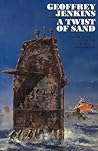
A Twist of Sand: a novel set in Namibia 65 years ago

A Twist of Sand

A Twist of Sand by Geoffrey Jenkins
My rating: 4 of 5 stars

I first read A twist of Sand about 60 years ago, before I ever went to Namibia, so because that is the setting, it played a big part in my preconceptions. It is set in the Skeleton Coast, the dry north-western part of Namibia, then known as South West Africa, and ruled by South Africa. The only other thing I had read about it was set in the same area, it was a piece in a children's encyclopedia about the wreck of the Dunedin Star on the same coast. When I saw a copy of the book in a second-hand bookshop, I thought it would be interesting to read it again, after having been in Namibia.

It is the story of the captain of a trawler operating out of Walvis Bay, Geoffrey Macdonald, who is asked by a man he takes an immediate dislike to, Dr Albert Stein, if he can charter his boat to take him up to the Skeleton Coast, an the vague pretext that he is searching for an unusual beetle.Because of his past criminal activity, we discover that Geoffrey Macdonald isn't even his real name.

A Twist of Sand was the first novel by Geoffrey Jenkins to be published, and when I read first read it, soon after publication, I enjoyed it, and thought it was quite good. I read a few of his later novels, and thought they were rather flat by comparison. On rereading it, I still enjoyed it, but became aware of things about it that I missed on the first reading. For one thing, the plot is as full of holes as a Swiss cheese. The protagonist is just as much an immoral criminal as the villain. That might not be a bad thing, in some ways, it makes the book perhaps more believable than those in which the good guys are too good and the bad guys too bad.

I first went to Namibia in 1969, just 10 years after the book was published, so the country would not have changed a great deal in that time. I got a job with the Department of Water Affairs, which took me to to most parts of the country within my first three months there. and I am pretty sure that in those three months I saw more of Namibia than most people who were born there saw in their life time. In the month I spent with Water Affairs (before being fired for suspect associations with the Anglican Church and the Christian Institute) I had been to Lüderitz in the south-west (including the Koichab Pan in the prohibited diamond area that Jenkins writes about); to Kamanjab in the northwest, and had driven down the dry beds of the Hoanib and Hoarusib Rivers, experienced a break-down in a Jeep in the Kaokoveld (the dreaded Skeleton Coast that Jenkins writes about); and gone to Rundu and Mukwe and camped on the banks for the Okavango River. On these journeys, which lasted for a week to 10 days, we camped out every night, and took a trunk of tinned food to eat on the way. Any tins left over at the end of the trip looked like rugby balls and had their labels rubbed off from bouncing over rough roads and tracks.  So I know that quite a lot of what Geoffrey Jenkins said about the country was inaccurate. 

At one point in the story he has his characters going up the dry bed of the Cunene River, but it is, in fact, one of the few perennial rivers in Namibia. All the perennial rivers in Namibia are on its borders -- the Kunene (Cunene if you're in Angola), the Okavango and the Orange. All the rivers wholly within the country are seasonal (my job at Water Affairs involved servicing instruments to measure the depth of the water in the rivers when they did flow). For any one interested, you can find more descriptions of journeys in some of the remoter areas of Namibia here.

I read some of the other reviews on GoodReads, and noted that some of the reviewers said that the book was "dated" because of the racism and sexism displayed by the characters. But at that time quite a lot of the white people in Namibia were racist or sexist or both, and that was perhaps one of the more accurate portrayals in the book. he, like The violence and criminality of the main characters in the story are perhaps exaggerated; if there were characters like that back then I didn't meet them, but the racism and sexism were not exaggerated. After I was sackedand she transformed the  from Water Affairs I worked for the time on the Windhoek Advertiser, and a South African journalist, Willie Lamprecht, came to work as the assistant editor. His wife Madeleine took over the women's page, and she was a feminist, though not one spoke of feminism back then, we said rather that she was into women's liberation, and she transformed the women's page from being full of cosy housekeeping tips into pointing out how women, including black women, were overworked and underpaid. This did not go down well with the establishment at the time, and Willie and Madeleine Lamprecht were sacked after a few months.

Jenkins contrives to give the impression that the Kaokoveld was virtually uninhabited, yet if anyone entered it without a permit the police would be on to them within 24 hours. In the desert areas along the coast it was largely uninhabited, but there were people living in most places though the population was sparse. And though the police were not quite as efficient as Jenkins suggests, they did nevertheless arrest people for being there without permits -- my wife's great-uncle, Frederick Alwyn Greene, served time in prison for being in that part of the world without a permit, and he, like the characters in the story, seems to have lived on the wrong side of the law for most of his life. 

In spite of its shortcomings, however, I still enjoyed the book on a second reading. It was a toss-up whether to give it 3 stars or 4, and in the end I thought it deserved 4.


View all my reviews

17 April 2026

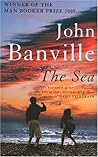
The Sea -- a novel of first love, marriage, loss and death

The SeaThe Sea by John Banville
My rating: 5 of 5 stars

Max Morden reflects on some of the turning points of his life after his wife dies and he tries to come to terms with widowerhood. He recalls first love, marriage, being a parent and experiencing the loss of people he has loved.

I looked at a few of the other reviews, and see that some complained that it had no plot, or that it was too slow-moving. Earlier today I read on social media about some children's programmes on TV that were said to be too fast, and recommended that parents should not allow their children to watch them, because studies had shown that they ruined children's attention span. They were fast, noisy, and no scene lasted longer than three seconds.

I found something different. The Sea was in a batch of books I had bought at a second-hand book shop a few days ago, and I looked at them all to see what I had got. And having picked this one up, I couldn't put it down. I put other books I had been reading aside, so I could finish this one. It was, as they say, a "pageturner". But why?

I think in part it was because of Banfield's detailed descriptions, both of settings and people. It made the people and places in the story seem more real, more three-dimensional. I cared what happened to them and their relationships, not only to the protagonist, but to each other. As Max Morden reflected on his experience of other people, so I reflected on mine. I appreciated the detail that came with the slow pace, which one would never see in a TV programme with scenes lasting 3 seconds or less.


View all my reviews

04 April 2026

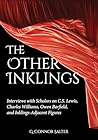
The Other Inklings: interviews with scholars of the Oxford Inklings

The Other Inklings: Interviews with Scholars on C.S. Lewis, Charles Williams, Owen Barfield, and Inklings-Adjacent Figures

The Other Inklings: Interviews with Scholars on C.S. Lewis, Charles Williams, Owen Barfield, and Inklings-Adjacent Figures by G. Connor Salter
My rating: 4 of 5 stars

I have often found that I enjoy reading literary biographies as much as, and sometimes more than I enjoy the works of the authors themselves. Though The Other Inklings is not biographical, but rather a series of interviews with people who have studied the work of the Oxford Inklings, I enjoyed it immensely.

In reading it I came across several names that I was familiar with, either because I had read what they had written in books, journals or blogs, or because I had seen their names in footnotes or bibliographies. I was pleased to learn something about them and how they had encountered and enjoyed books that I too had enjoyed. I also appreciated the way in which G. Connor Salter had added comprehensive references to each of the interviews, making it easy to follow up things I wanted to know more about.

There were, however, a couple of deficiencies (the reason I did not give it five stars). One is that it had no index. Of course in the ebook edition, which I read, it is possible to search for text, but even so it is good to have at least a list of names of persons mentioned in the text. The other deficiency was that there were more than the usual number of typing or spelling errors. I know it is not possible to get rid of such errors completely, and I've often checked something for the fifth time and then spotted a new error as the page comes out of the printer. Some of the errors were in the names of authors or the titles of books and articles.

One thing that I was not expecting was that nearly half the interviews were of scholars of the work of William Lindsay Gresham, the biological father of C.S. Lewis's stepchildren. I'm not complaining; it just came as a bit of a surprise. Gresham was the first husband of Joy Davidman, who later married C.S. Lewis. Gresham therefore does fit the description "Inklings adjacent", and also, I learned, wrote an introduction to one edition of The Greater Trumps by Charles Williams. From those interviews I learned that both Gresham and Davidman were authors in their own right, and had been quite prominent figures in the American Literary Left.

There were some things that I had half-hoped to find, and didn't. This is not a flaw in the book, but just a hint for future research, or perhaps a second volume. Why no interview with Brenton Dickieson, when one of the citations was to a guest post by G. Connor Salter in Dickieson's blog A Pilgrim in Narnia? Why no Tolkien scholars?

When I first got access to the Web, thirty years ago, I looked for fellow Inklings fans, and one of the first I found was The Avenging Aardvark, fellow by the name of Ross Pavlac. Alas he died soon after I discovered his pages, but I half-hoped that his name might crop up in one of the interviews. 

And I wondered why I seemed to be the only one (yes, I was among the interviewees) who mentioned fantasy authors like Alan Garner or Phil Rickman whose fantasy works seemed comparable with those of the Inklings?

Anyway, many thanks to G. Connor Salter for giving us this book, and I hope there will soon be a second volume, and perhaps a third.

View all my reviews

01 April 2026

The Day we met a Saint

Thirty years ago today we met a man I believe should be numbered among the Saints. 

On Monday 1 April 1996 I spent most of the day working at my job as an editor at the University of South Africa, editing a Science of Religion study guide. When I got home, Fr Nektarios Kellis phoned. 

He was a missionary priest in Madagascar, and said he was on his way back to Madagascar from
Zimbabwe, and was staying in a hotel near the airport waiting for his connecting flight which only left the next morning. The hotel he was staying in was in an industrial area, so there was nothing to do there. Going for a walk among dark empty factories closed for the night was not an appealing prospect, so he tried to phone someone just to talk to. He had my phone number as a contact, and so he phoned me.

I had never met Fr Nektarios, but I knew of him from a student of his whom I had met in Nairobi the previous year when I was doing research for my doctoral thesis on Orthodox mission methods. As part of my research I had interviewed Jean Christos Tsakanias, who came from Madagascar. 

He told me that the Orthodox Church there had been started by Greeks in 1953, and had been purely Greek. It had closed in 1972, when foreigners, including the priest, had been expelled after political disturbances on the island. It had remained closed until last year, when the Greek community made announcements in various periodicals, and an Australian priest, Archimandrite Kellis, had come to the
island, and began active mission right away. They were then under Bishop Chrysostomos of Zimbabwe, who had already ordained several local priests, and the Divine Liturgy was celebrated in the Malagasy
language. 

It sounded as though Father Nektarios had achieved an amazing amount in the 18 months he had been there. Jean Christos told me he would travel with Fr Nektarios down the east coast of Madagascar, and when he saw a village without a church he would stop, and ask the chief of that place if he could meet any people who might be interested in Orthodox Christianity. If the chief agreed, he would make a date to return and speak to the people, and if any were interested, would start a new parish there. In this way he started about 12 parishes within 18 months.

So when Fr Nektarios phoned on that Monday afternoon I didn't just want to alleviate his boredom by chatting on the phone, I wanted to meet him. My wife Val then worked in Klipfontein, which was halfway to Kempton Park, where the airport was, so she went to fetch Fr Nektarios from the hotel after work and brought him to our house in Kilner Park, Pretoria. I thought we could take him out to supper, so he could be with people instead of just sitting in a hotel room. 

We took him down to Johannesburg to show him the parish we then belonged to, the Church of St Nicholas of Japan in Brixton. Then we looked for a place to eat, but being Monday, all the restaurants were closed. 

We took him to see Fr Chrysostom, then our parish priest, and then took him back to his hotel at 11 pm. 

In the course of all this driving around Father Nektarios told us a bit of how he had got to Madagascar. He had been in Adelaide, South Australia, as chaplain to an old age home, and read an article in a publication from Greece about Madagascar, appealing for a priest there. It turned out later that the article was phony -- no one in Madagascar was appealing for a priest, just someone in the magazine office thought it would be a good idea.  But he thought God was calling him to Madagascar anyway, though he had a difficult job persuading his bishop, who was reluctant to lose a priest from his diocese. Eventually the bishop allowed him to go only because he saw that he would be resentful if forced to stay. 

Father Nektarios had been visiting Zimbabwe, where the Patriarch of Alexandria was blessing a monument to the first bishop, who had died in Bulawayo. While they were there the Metropolitan of
Zimbabwe, Archbishop Chrysostomos, had had a heart attack, and had only just come out of hospital, so Fr Nektarios had stayed until he was well enough to go home, and so only now was he returning to Madagascar. There were no direct flights from Harare to Madagascar, which was why he had had to come to Johannesburg and stay overnight. 

Fr Nektarios was very interested in mission and was keen to see mission happening in Mocambique and other places in the diocese. He thought we should go to Zambia, where there were several people who wanted to become Orthodox.

Well, that was thirty years ago, and a lot has happened since then. Madagascar was later made a diocese in its own right, and Fr Nektarios was elected as its first bishop. Sad to say, he was killed in a helicopter crash along with several other clergy, including the Pope and Patriarch of Alexandria, Petros VII, on 11 September 2004.

May their memory be eternal!


29 January 2026

Mistborn: The Final Empire -- book review

Mistborn: The Final Empire (Mistborn, #1)

Mistborn: The Final Empire by Brandon Sanderson
My rating: 3 of 5 stars

I think a couple of people recommended this book, probably at one of the literary coffee klatsches we had before Covid put an end to them. it is somewhat reminiscent of A Game of Thrones in that it deals with political rivalries and conspiracies, But whereas A Game of Thrones deals with rivalries between different kingdoms, in this one the rivalry is between aristocratic families in the same empire.

In The Final Empire there is also a clear class division between the privileged nobles and the oppressed underclass. In that respect it seemed to be a kind of parable of the old Rhodesia, with a great contrast between the privileged nobles and the oppressed underclass, the skaa.

I didn't like it as much as A Game of Thrones, and it was only after about 500 pages (of 643) that I began to feel sympathy for any of the characters. Perhaps it was partly because I don't like the genre much -- books where the heroes have superpowers of some sort, which sets them apart from other people. In this case it is due to the ability of some people to consume and "burn" metal, with different kinds of metal enhancing different abilities. Those who could do this were called "Mistborn", and there are some whose abilities are limited to one metal only, who are called Mistings. In addition there are Obligators, who form a kind of bureaucratic class, and a group of enforcers, called Inquisitors, who also have special superpowers.

Those who like superheroes with superpowers will probably enjoy it more than I did. 

Oh, and, for what it's worth, you can click here to read my review of A Game of Thrones. And (spoiler alert) I gave that series up halfway through the second book. It was just too much. 

View all my reviews

10 January 2026

Abandoned books

There are many reasons one might abandon a book before finishing it. When I do, it is usually because I find it boring, or because I have a lot to do and after a few busy days or weeks have lost the urge to read it. But here is a book that put me off before I reached the end of the first page.

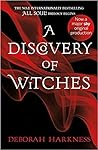
A Discovery of Witches (All Souls Trilogy, #1)A Discovery of Witches by Deborah Harkness


I'm not going to rate it, because I haven't read it.

I don't usually write reviews for books I haven't read, but I thought I would say why I don't think I'll finish this one, and in fact I didn't get further than the first page. There were two things on the first page that put me off.

"...the summer crush of visiting scholars was over and the madness of fall term had not yet begun."

The speaker, the first person protagonist, is apparently something like a visiting scholar, and is in the Bodleian Library at Oxford University in England. Oxford University does not have a "fall term"; it has a Michaelmas Term. Calling it a "fall term" tells me either that the supposed scholarship of the protagonist is phony, or the author has done a poor job of research for the book.

I suppose one could argue that the author is American, the character is American, and the envisaged (or should that be envisioned?) readers are American, so "fall term" would be understood by them all, whereas "Michaelmas term" might not be. But what would be wrong with "...the summer crush of visiting scholars was over and the madness of Michaelmas term (as the fall term is called at Oxford) had not yet begun." It makes the characters and the setting more authentic, and the readers learn something about the setting. 

And then the visiting scholar or whatever she is thanks the librarian for getting the books she had ordered, "flashing him a grateful smile". I'm not quite sure why, but that phrase put me off completely. It's the kind of language I associate with badly-written and poorly-edited self-published Y/A fantasy novels (for an example, see my review of The Enchanted Crossroads).

I found more examples of such usage in another such book I read recently, The Raven Moonstone, which had phrases like I tossed Jesse a questioning look and Jesse shot me a dopey grin

The thought of another nearly 700 pages of the same put me off. If it were 200 or even 250 pages I might persevere in the hope that it would improve, but this fat book is just too long. I read one Twilight book, and that was enough.

But perhaps if I post this here someone who has read it might tell me that my judgement is too hasty, and if I read on it might improve, and I might even enjoy it.

I read somewhere that Stephen King said that Fritz Leiber had written some good books, so when I found Ill Met in Lankhmar in the library I took it out and began to read it, but didn't finish it. Leiber may have written a good book, but this wasn't it.

But there are some bad books (or at least books that I have thought bad) that I've not only finished, but have actually read twice, mainly because I couldn't believe they were as bad as I thought them after the first reading. More on that here: On Reading Unbelievably Bad Books

LinkWithin

Related Posts with Thumbnails